






In the summer of 2024, President Xi Jinping responded to Anna Pao Pui-hing, Ronald Chao Kee-young, and other Hong Kong entrepreneurs of Ningbo descent, affirming the patriotic and hometown-loving traditions of the Ningbo Merchants Group and encouraging them to integrate into the national reform and opening-up agenda.
In his letter to these entrepreneurs, President Xi mentioned, "You have inherited the excellent tradition of patriotism and hometown love from your predecessors, actively innovated and started businesses, donated to education, and contributed to the construction of your hometown and national development, interpreting the spirit of patriotism and hometown affection through practical actions."
Behind the correspondence lies the enduring sentiment and commitment of many Hong Kong individuals from Ningbo, who have been devoted to their hometown and serving their country for decades.
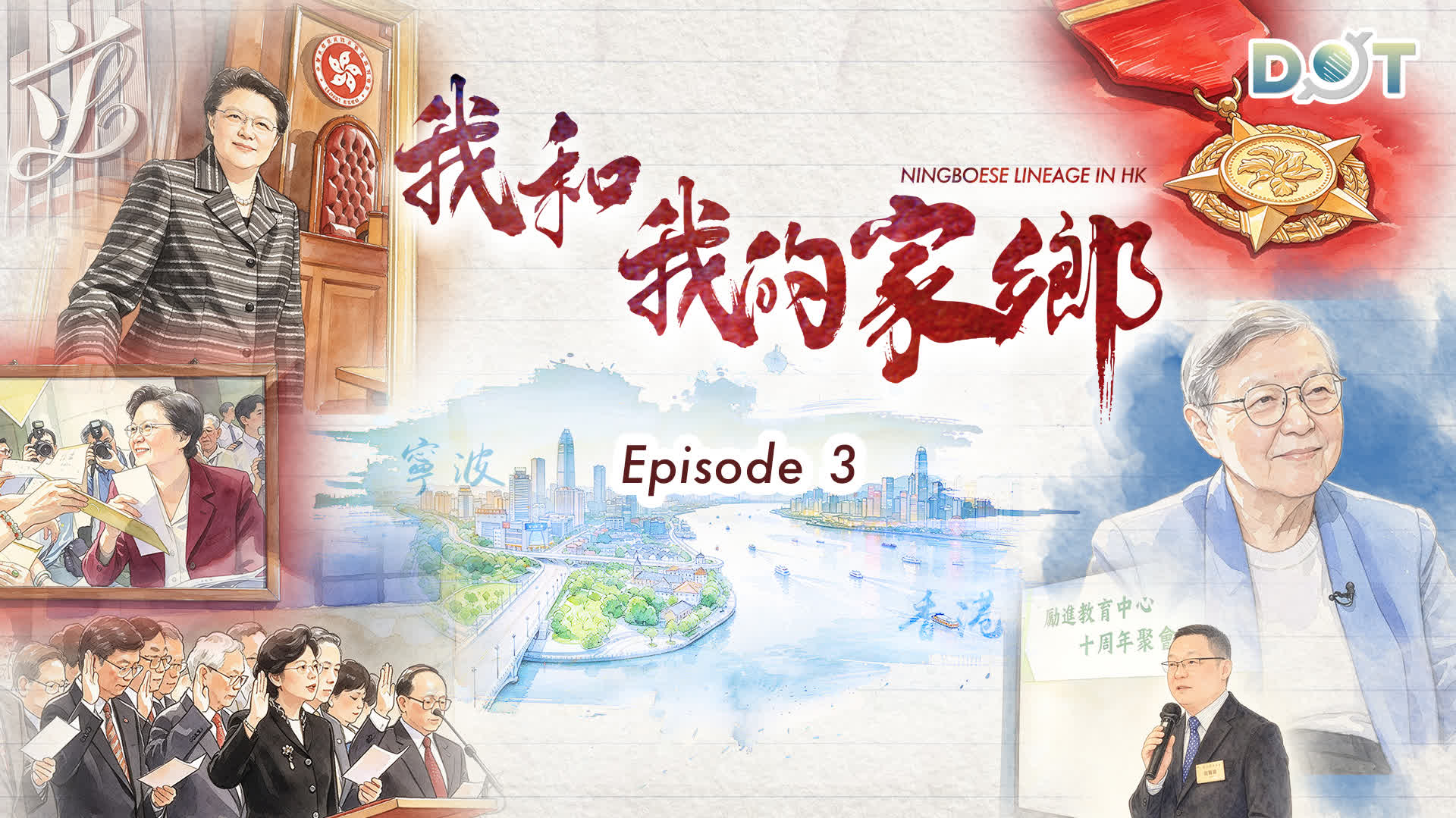
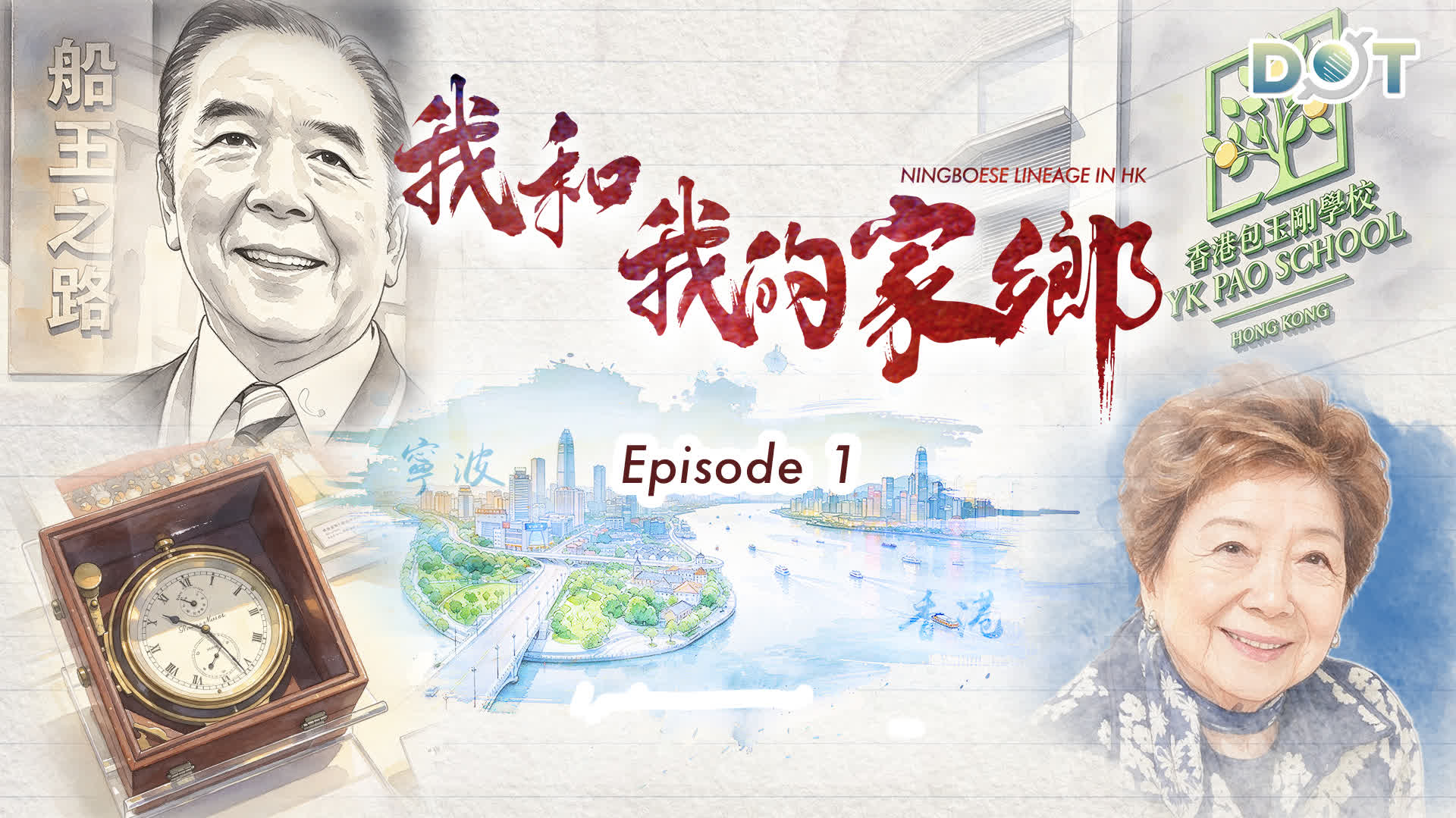
DotDotNews' special feature, "Ningboese Lineage in HK," interviewed Rita Fan Hsu Lai-tai, a Hong Kong resident of Ningbo origin, the first President of the HKSAR Legislative Council, and a Council Member of the Endeavour Education Centre, along with her son Andrew Fan Chun-wah. The feature explores the profound bond between Ningbo and Hong Kong through their perspective and examines future collaboration opportunities between the two regions.
At the Ningbo Museum, there is an old fire engine from Xujiayan, Zhenhai, Ningbo. A few kilometers away, the Ningbo Merchants Group Museum houses two medals from Hong Kong: the Commander of the Order of the British Empire and the Gold Bauhinia Star.
These two sets of objects, spanning several decades and seemingly unrelated, connect the cultural ties between Hong Kong and Ningbo. This is because both are linked to a Hong Kong resident of Ningbo origin: Rita Fan.
Rita Fan's ancestral home is Zhenhai, Ningbo. In 1949, at the age of four, she moved with her family from Shanghai to Hong Kong. Her impression of her hometown since then has been the occasional Ningbo dishes on the dining table, becoming a place in her heart with "a somewhat 'romantic' feeling."
Rita Fan admitted that initially, she wasn't quite sure which village she hailed from. It wasn't until around 2000, when she visited Ningbo at a friend's invitation, that the warm welcome from local folks deeply moved her. It was during that trip that she saw the old fire engine her father had donated to Zhenhai at the Ningbo Museum, officially confirming her ancestral home as Zhenhai, Ningbo. Later, when the Ningbo Merchants Group Museum was being established, she unhesitatingly donated her two medals, bringing this blood-linked connection to her hometown into the public eye. This deep affection for her native land has also permeated her political career and life journey of serving Hong Kong and the motherland.
From Language barrier to swearing-in for the return
Rita Fan's first impression of Hong Kong began with a sweet, refreshing cup of fruit cocktail on the plane. "My first impression was on the plane, the flight attendant gave me a very sweet and delicious fruit cocktail; after arriving in Hong Kong, my father took me to the beach, and I thought it was great fun, so I had a very good impression of Hong Kong."
However, her subsequent school experience presented a significant challenge for her as a child. Her father hired a tutor to teach her Chinese, English, and mathematics in Putonghua (Mandarin), but when she officially started school in Hong Kong, language became a huge barrier. "I couldn't understand or speak Cantonese at all."
She vividly remembers a scene from physical education class: the teacher asked students to line up and count off, but the counting would stop abruptly when it reached her because she simply couldn't understand what the teacher was saying. Eventually, the PE teacher penalized her by disallowing her from participating in the school sports day. "I was very unhappy that time, and I didn't even know what I had done wrong," Rita Fan recalled. However, her inherent determined spirit led her to secretly intensify her practice, and by the second semester, she could fully understand and fluently speak Cantonese.
Later, Rita Fan rose from a university staff member to become the President of the Hong Kong Legislative Council, a Hong Kong deputy to the National People's Congress, and a member of the NPC Standing Committee. On July 1, 1997, as the then-President of the Provisional Legislative Council, she led a group of legislators in taking their oaths. Recalling the scene, Rita Fan still remembers it vividly. "During rehearsals, a colleague reminded me that my Putonghua pronunciation wasn't good enough, which made me a bit nervous for a while."
But the moment before stepping onto the stage, she had a sudden realization, "The most important thing at that moment was that when I walked up there, I had to show the confidence of Hong Kong people in the return." Letting go of her concerns about pronunciation details, she completed the oath with poise and confidence, becoming a unique footnote in the significant historical moment of Hong Kong's return to the motherland.
Promoting LegCo openness
After the handover, Rita Fan served three consecutive terms as President of the Hong Kong Legislative Council. She admitted that in the early days after the handover, ordinary Hong Kong citizens knew very little about the LegCo's work. How could such a serious, even seemingly lofty legislative body become more accessible to ordinary citizens? Rita Fan decided to establish LegCo Open Days, inviting citizens, organizations, and students to visit the Legislative Council. "We hoped to let citizens come in person and see what the places they saw on TV were actually like," Rita Fan stated, adding that citizens should be given an opportunity to understand how the council operates, how the LegCo works, and how to seek help from legislators.
During the Open Days, Rita Fan personally served as a guide. The events were unexpectedly successful, with enthusiastic public response and evident curiosity about the LegCo's work. The relationship between legislators and citizens was thereby brought closer, becoming a vivid embodiment of Hong Kong's tradition of valuing the rule of law and respecting public opinion.
"One of Hong Kong's core strengths is the rule of law. We not only have a comprehensive legal system and excellent judges, but also a strong respect for the rule of law among the general public," Rita Fan noted. She added that this advantage provides ample room for business cooperation between Ningbo and Hong Kong.
She pointed out that with increasing economic and trade exchanges between Ningbo and Hong Kong, Hong Kong is actively developing international arbitration services, which offers an excellent platform for Ningbo enterprises to "go global." "For commercial disputes, arbitration is a very good solution, offering lower costs and higher efficiency than going to court. Ningbo enterprises can certainly designate Hong Kong as the arbitration venue when signing international contracts. Hong Kong has many legal professionals, many of whom are Ningbo natives. Conducting arbitration in a city that is both international and part of one's own country is convenient and reassuring for Ningbo enterprises."
Over a decade of cultivating national education
During her guide work for the LegCo Open Days, Rita Fan encountered many Hong Kong young people. She keenly realized that the long-term prosperity and stability of Hong Kong society fundamentally depend on the younger generation's sense of identity with and belonging to the nation.
"In the early days after the handover, Hong Kong lacked dedicated institutions to promote national education, and young people were like rootless duckweed." To help Hong Kong youth find their "roots," Rita Fan initiated the establishment of the Embrace China Education Centre in 2016. With the promotion of national conditions, history, and culture as its mission, it has been deeply cultivating national education among youth for over a decade. In 2019, the center further organized a delegation of Hong Kong educators and staff to Ningbo to inspect high-tech industries and their applications in daily life, bringing the motherland's latest development experiences back to Hong Kong classrooms.
Today, this important responsibility has been passed to the next generation. Andrew Fan, Rita Fan's son, has taken over as the Chairman of the Council of the Embrace China Education Centre. Inheriting his mother's vision of nurturing youth and connecting with the mainland, he continues to expand the scope of activities, leading more Hong Kong young people to experience the nation's vigorous development from multiple perspectives.
Complementary strengths, mutual benefits
Ningbo and Hong Kong, one a major port city in the Yangtze River Delta, the other an international hub in the Guangdong-Hong Kong-Macao Greater Bay Area, both prospered by the sea and share the spirit of adventure and hard work inherited from the Ningbo Merchants Group for over a century.
As a new generation Hong Kong resident of Ningbo origin, Andrew Fan is deeply impressed by the recent changes in his hometown, Ningbo. Andrew Fan stated that Ningbo people possess a strong spirit of adventure, daring to strive and innovate. They are now transitioning from traditional economy into science and innovative technology. Ningbo and Hong Kong share a common heritage, with extremely close ties in economy, culture, and talent. He believes that in the future, cooperation between Hong Kong and the Yangtze River Delta region, especially Hangzhou, Ningbo, and Shanghai, will only grow closer and develop better.
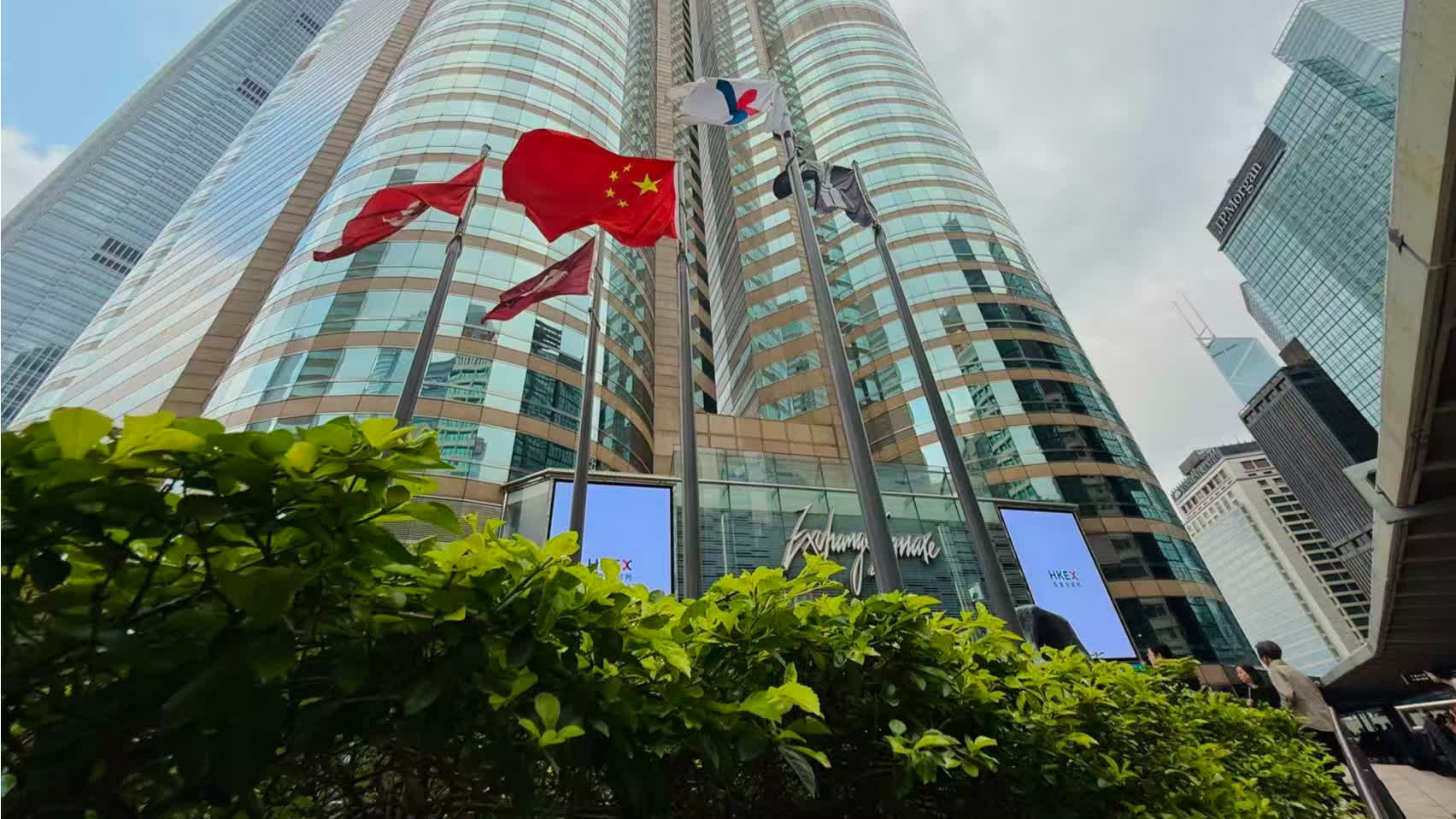
Looking ahead, Rita Fan emphasized that the prospects for Ningbo-Hong Kong cooperation are vast and naturally aligned. Against the backdrop of Hong Kong's active development in innovation and technology, Hong Kong can not only provide listing and financing platforms for Ningbo enterprises but also assist them in sailing together to jointly explore international markets and achieve higher levels of mutual benefit and win-win outcomes.
Related News:




















Comment