






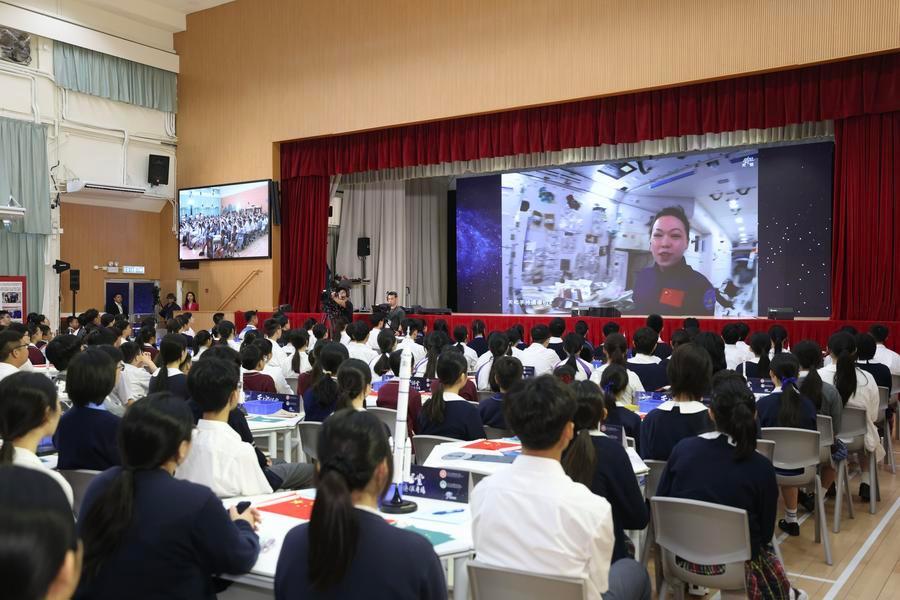
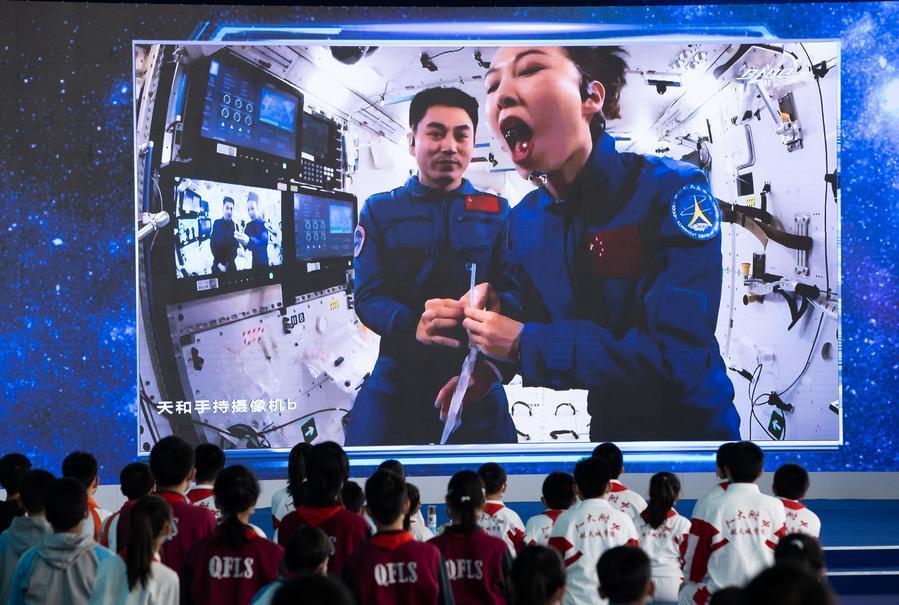
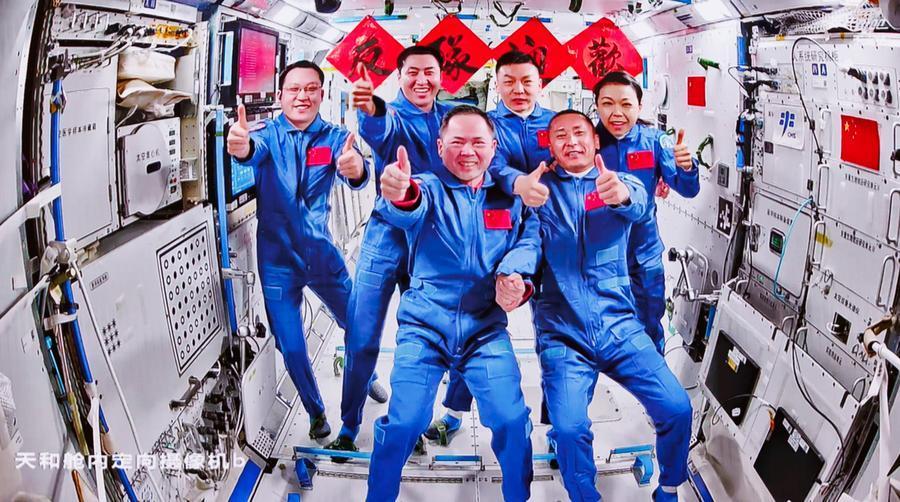
China's Tiangong space station is increasingly being shaped into a livable "space home," with astronauts now able to enjoy familiar, home-style dishes in orbit thanks to expanded menus, smarter cooking equipment, and longer-term life-support planning.
The station's space kitchen now offers nearly 200 food items, ranging from dumplings and mooncakes to dishes such as Kung Pao chicken, mapo tofu, and fried rice. Videos of astronauts eating freshly prepared meat and baked desserts have attracted widespread attention online, highlighting how daily life aboard Tiangong has evolved beyond early-era space rations.
Yang Liwei, China's first astronaut, joked at a recent press conference that he felt envious of today's crews. He recalled that during his Shenzhou V mission in 2003, which lasted less than a day, meals were limited to packaged instant foods that could not be heated. By contrast, astronauts can now use air-frying equipment in orbit and even eat baked chicken wings.
Space diets remain tightly constrained by the realities of microgravity, radiation, and an enclosed cabin. Floating crumbs, droplets, and fumes can interfere with sensitive instruments, a challenge that historically pushed astronauts toward paste-like foods and compressed energy bars. Even so, China has gradually introduced culturally significant foods to support morale during major holidays. During the 15-day Shenzhou X mission in June 2013, astronaut Wang Yaping famously floated a zongzi—a leaf-wrapped rice dumpling—at a time when the Dragon Boat Festival coincided with the mission.
By the Shenzhou XIII mission, Wang spent Spring Festival aboard Tiangong during China's first six-month space stay. Meals were tailored to crew preferences, including seafood-filled dumplings reflecting Wang's coastal upbringing and spicier dishes for crewmate Ye Guangfu, who comes from Sichuan. Footage from that mission also showed the station's dedicated living zones—areas for work, sleep, dining, and exercise—alongside cultural activities such as calligraphy and tai chi that resonated with audiences on social media.
China completed the construction of its space station in 2022, forming a 110-square-meter orbital complex with one core module and two lab modules. The station can fully regenerate oxygen and recover more than 95% of water, enabling routine long-duration missions and hosting up to six astronauts at a time. As stays lengthen further, diet is becoming an increasingly strategic part of mission design. One member of the Shenzhou XXIII crew currently aboard Tiangong is set to carry out a one-year in-orbit stay, underscoring the shift toward extended residency.
Nutrition targets must also address the physical impacts of weightlessness, including bone calcium loss and muscle atrophy. Space food is designed to be high in calcium and protein, low in sodium, and balanced with dietary fiber. Researchers at the Astronaut Center of China say they have developed foods intended to counter oxidative damage, support immunity, reduce fatigue, and help regulate the gut microbiome.
Taste and appetite present another hurdle. In microgravity, blood shifts upward and can cause nasal congestion, reducing smell sensitivity by at least 30% and making food seem bland. To compensate, stronger-flavored options have been added, including liquid soy sauce and concentrated chili sauce.
Technology upgrades have helped close the gap between nutrition needs and everyday comfort. Working with private companies, the astronaut center has equipped Tiangong with intelligent appliances for drinking water, reheating, and baking, enabling astronauts to eat hot meals within about 20 minutes. Liu Weibo, an expert at the center, highlighted a hot-air baking oven designed for space use that can remove cooking fumes efficiently and even support barbecue-style foods in orbit.
Supplies have also become more varied, with increased fruit and vegetable options alongside items such as frozen steak and chicken wings. Looking ahead, the next-generation cargo craft Qingzhou is expected to provide stronger cold-chain capacity for future deliveries.
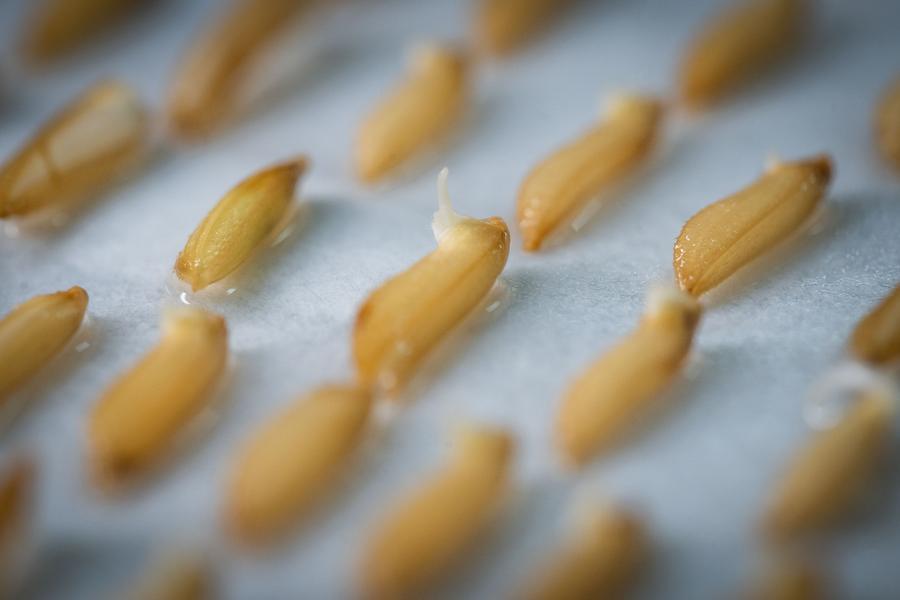
At the same time, planners are working to reduce reliance on Earth resupply. Expert Bian Qiang said controlled ecological life-support tests aim to build systems that regenerate water, air, and food on-site. Since the Shenzhou XVI mission in 2023, China has grown plants in orbit, testing more than 20 varieties across 14 plant species, including lettuce, carrots, potatoes, and wheat. The Shenzhou XVIII crew in 2024 also carried out fish-raising experiments in an orbital "aquarium" to study growth in space—research that could one day support in-orbit harvesting.
China is targeting a crewed lunar landing by 2030, a goal that would make resupply far more difficult because of the distance from Earth. Bian said plans include building a Chinese "lunar vegetable garden" on the moon.
From smarter heating and baking to on-orbit farming, feeding astronauts well is being treated as mission-critical infrastructure—supporting health, performance, and morale while making life in space feel increasingly like home.




Comment