






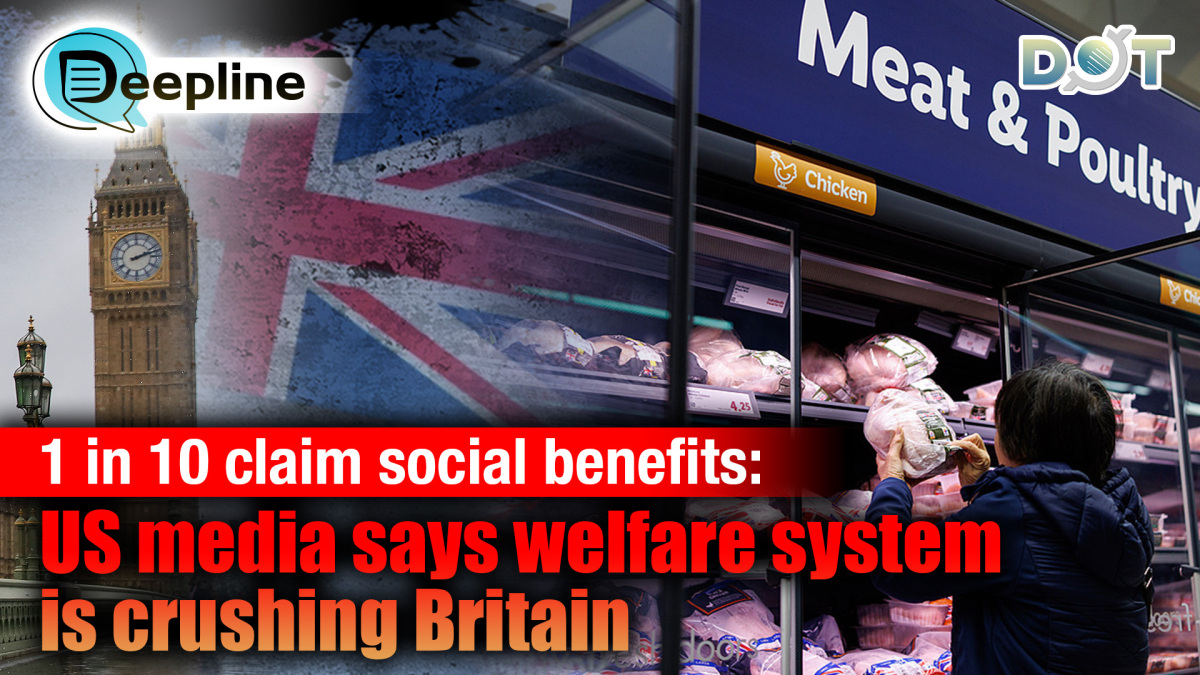
Ahead of UK Chancellor John Healey's first budget for the Burnham government, Britain's troubled welfare system has once again become a media focus. The Wall Street Journal said in an article on Oct. 11 that the UK's welfare system is "crushing" the country.
About 7 million people claim disability or health benefits
The report said about 7 million people in Britain claim social benefits because of disability or health problems — more than one-tenth of the population. Claims from people of working age are growing fastest: in 2019, 2.9 million people claimed disability or health benefits. Six years later, that number had risen to 4.7 million, an increase of more than 60%.
The surge has been driven by a combination of factors, including an ageing population, rising awareness of mental health conditions, and what critics say are overly loose assessment criteria. The COVID-19 pandemic also played a role, with many people reporting long-term health problems afterwards. In addition, the cost-of-living crisis has pushed more people to seek benefits as a way of making ends meet.
Abuse of welfare policy under scrutiny
Alongside the surge in claims, abuse of welfare policy has become a major focus. Under current rules, eligible disabled people can use their mobility allowance to lease a new car for three years. Disabled people's vehicles now account for about one-seventh of UK new car sales, with the government paying large sums. The report said some recipients' disclosed conditions have been surprising. According to UK government statistics, among those who received welfare car benefits last year, 50 had wheat intolerance, and 320 had dyslexia. The information exposed overly loose criteria for defining disability.
In addition, many new disability benefit claims involve mental health issues, including depression, anxiety and even ADHD, which are often harder to verify. Statistics show that between 2017 and 2025, the number of benefit claims involving mental health problems surged fourfold. While mental health conditions can be genuinely debilitating, the sharp rise has raised concerns about the system's ability to distinguish between those who genuinely need support and those who may be exploiting the rules.
Typical fraud case exposed
Recently, the media also exposed a typical case of a British woman named Weyland defrauding disability benefits. The woman, who had suffered emotional trauma, received £700 a month in benefits on the basis of her "disabled status" and was able to drive a BMW after paying only a small deposit. She was later found frequently dining out and travelling abroad, and was ultimately convicted of fraud by a court.
The case sparked widespread public anger and became a symbol of what many see as a broken system. It also highlighted the difficulties authorities face in monitoring benefit recipients and detecting fraud, especially when claims are based on conditions that are not easily verifiable.
Welfare dependency in poor areas
The Wall Street Journal said that with stagnant wages and soaring prices, finding ways to claim disability benefits has become a lifeline for many Britons. Statistics show that in poor areas of the UK, especially former industrial cities like Liverpool, large numbers of residents rely on government benefits. Walton in Liverpool is one of the poorest communities in Britain, where about half of households claim government benefits.
In these areas, the decline of traditional industries has left few well-paid jobs, and many residents have turned to the welfare system as their main source of income. While the benefits provide a crucial safety net, critics argue that the system can also create a cycle of dependency, especially when there are few opportunities for stable employment.
Soaring costs and fiscal pressure
Statistics show that this year UK spending on benefits for people with disabilities and health problems is expected to exceed £100 billion — one-third more than UK defence spending in the 2026-27 financial year. According to UK government estimates, in four years the figure is expected to rise further to £130 billion.
The soaring welfare bill is putting enormous pressure on public finances. As welfare and other government budgets rise, the government is increasingly relying on debt issuance to maintain its finances. The UK 10-year gilt yield has soared from 4.5% at the start of the year to 5.5%, making Britain's debt interest burden heavier than Greece's during its sovereign debt crisis.
Combs, an executive at Rathbones Asset Management, said the surge in UK welfare spending is "clearly unsustainable in every way", and rising UK gilt yields are a reflection of this serious problem. He warned that unless the government takes decisive action to reform the welfare system and bring spending under control, Britain could face a worsening fiscal crisis in the years ahead.
Political pressure ahead of the budget
The welfare debate is intensifying ahead of Chancellor Healey's first budget for the Burnham government. The government is under pressure to find savings while also protecting the most vulnerable. Proposed reforms could include tightening assessment criteria, increasing checks on claimants, and encouraging more people back into work.
However, any attempt to cut benefits is likely to face strong opposition from charities, opposition parties, and the public. The government must balance the need for fiscal discipline with the need to maintain a fair and effective safety net for those who genuinely need it. How it handles this delicate balance could define the Burnham government's early record and shape the political landscape in the run-up to the next election.
(Source: Wall Street Journal, Global Times | Editor: Liu Yu)
Related News:
Deepline | HK attracts global fashion names as KIM JONES picks city for first flagship store
Deepline | Chinese innovation and engineering take center stage at the Aichi-Nagoya Asian Games




Comment