






Spanish workers launched a nationwide general strike on Nov. 11 to protest the worsening housing affordability crisis. Despite bad weather, picket lines were set up across the country. This is the first general strike in 14 years jointly backed by Spain's two major unions — the General Union of Workers (UGT) and the Workers' Commissions (CCOO) — and comes just weeks before a snap general election, injecting uncertainty into the country's political landscape. Multiple riots broke out in cities across the country that day, resulting in at least 42 arrests.
The strike comes as Spain prepares for parliamentary elections. After two housing decrees were defeated in parliament, Spanish Prime Minister Pedro Sánchez announced on Oct. 5 that snap parliamentary elections would be held on Nov. 29.
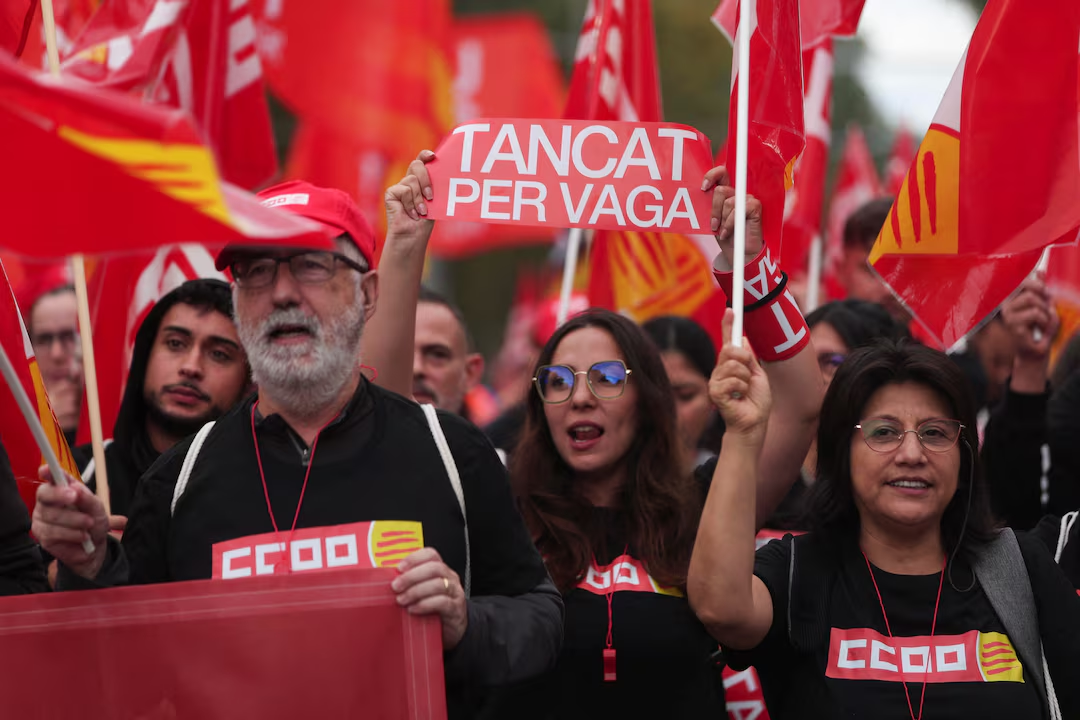
The trigger for the strike was the death of an 87-year-old woman, Abascal, in Madrid after being forcibly evicted, an incident that sparked national outrage and prompted the government to call early elections on Nov. 29. The strike's slogan was "Wages, Housing, Prices." Río, a spokesperson for the Madrid Tenants' Union, said at the start of the strike: "We will not stop until we fundamentally change this country's housing model, so that housing returns to its essence of being for living, rather than serving a minority landlord class."
Roads in major Spanish cities including Madrid, Barcelona, and Valencia were blocked, causing traffic congestion and severely affecting public transport. About 24% of high-speed rail services, about 10% of commuter train services, and more than 250 flights were cancelled; facilities including Barcelona's train station and port were blockaded.
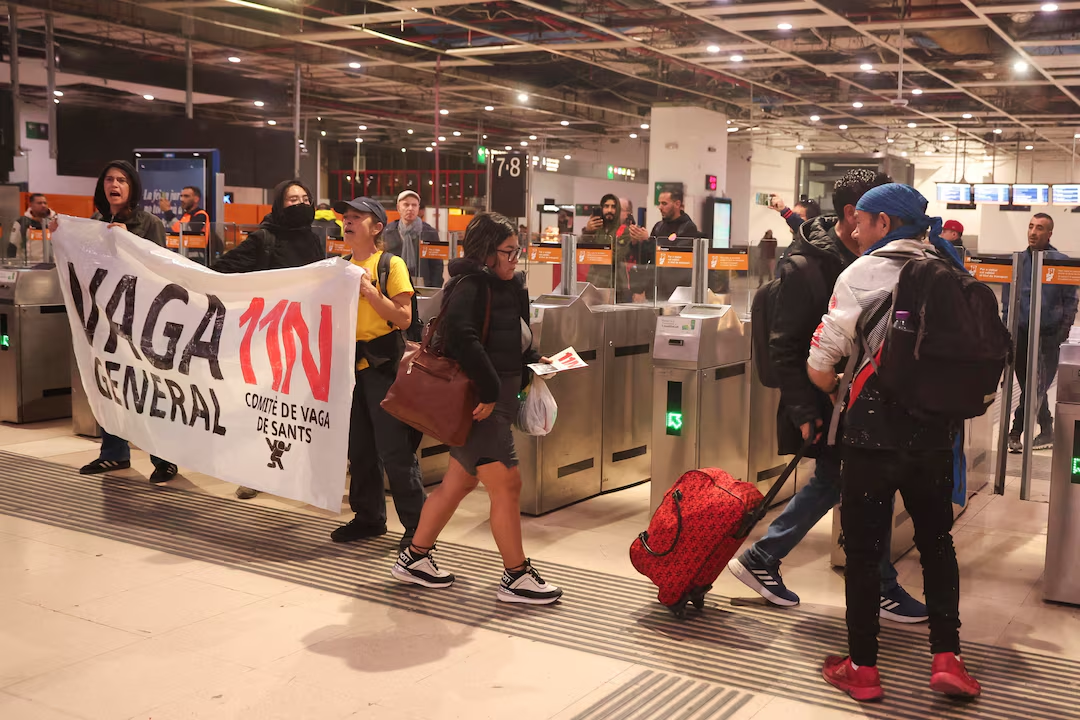
According to Reuters, the housing crisis data in Spain is startling. Data from the Bank of Spain shows a nationwide housing shortage of about 750,000 units, with the gap expected to widen to more than 1 million by 2028. More and more people cannot afford to buy homes, and surging rental demand has driven rents ever higher — according to the Spanish Youth Council, average rent stands at 1,176 euros, equivalent to about 98.7% of young people's average monthly salary, meaning ordinary young people are effectively "working for their landlords."
The strike was massive in scale. The two major unions said that in the early stages of the strike, participation rates in the port and automotive industries reached 90%, with Volkswagen's plant in Navarra and Seat's plant in Barcelona "completely halted"; participation in the meat industry reached 85%, garbage collection 82%, and the energy sector 75%.
Related News:
Spain train collision | Death toll rises to 68, Spain declares three days of national mourning
La Liga chief meets Chinese ambassador after Mbappe controversy, vows to protect ties with China




Comment