






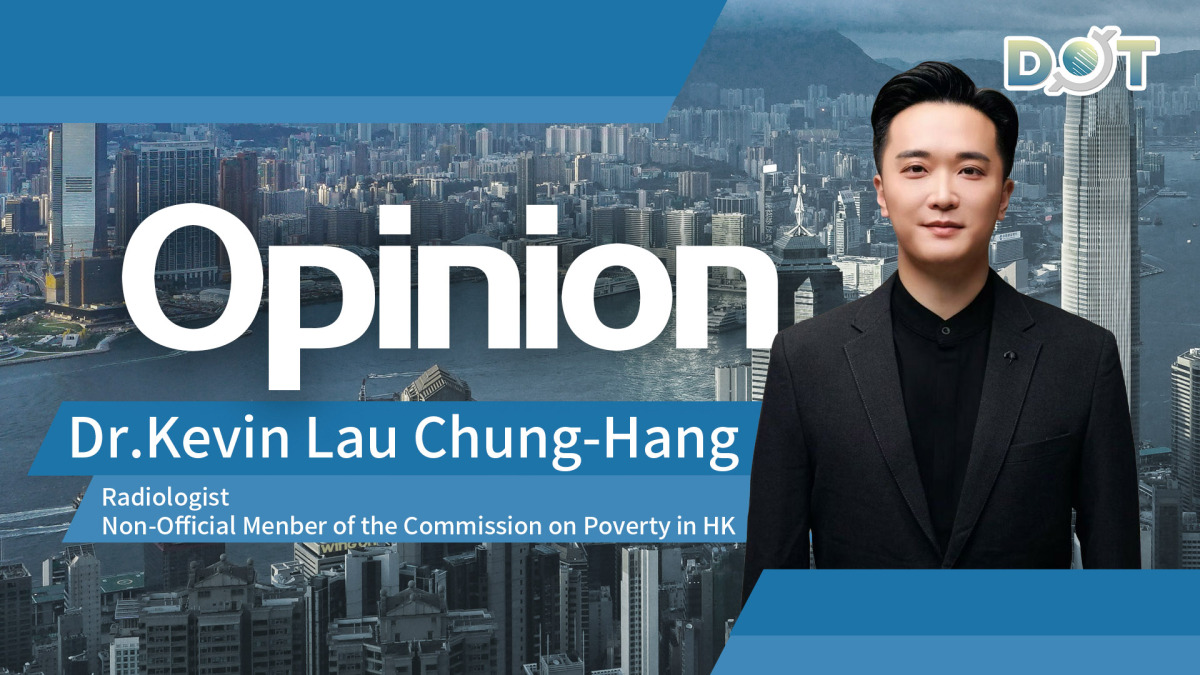
By Dr. Kevin Lau
The Global University Presidents and Leaders Summit 2026 has offered Hong Kong more than a welcome vote of confidence. It has presented the city with a strategic choice. Professor Bill Flanagan, President and Vice-Chancellor of the University of Alberta, described Hong Kong as a truly international city with world-class universities, situated at the meeting point of global and regional networks. He also expressed a keen interest in the evolution of the Northern Metropolis University Town and in how other universities might participate. In my view, these remarks should be read neither as ceremonial courtesy nor as a finished verdict on Hong Kong's success. They are an invitation to turn international regard into institutional commitment.
Hong Kong begins from a position of genuine strength. According to the Government's August 2026 international education fact sheet, the city has five universities in the world's top 100 under both the Times Higher Education World University Rankings 2026 and the QS World University Rankings 2027. The University Grants Committee's 2025 pamphlet further records that, in the 2024/25 academic year, more than 77,000 non-local students were enrolled in programmes at UGC-funded universities, including self-financing programmes, while around 70 per cent of academic staff came from outside Hong Kong. These figures demonstrate that internationalisation is already embedded in the system. The task now is not to manufacture credibility, but to deploy it more effectively.
The Northern Metropolis University Town provides the spatial and institutional platform for that next step. The 2026 Policy Address proposes three university towns in San Tin, Hung Shui Kiu and Ta Kwu Ling, with campus areas totalling about 300 hectares and overall planned areas exceeding 1,000 hectares when the surrounding technology, industry and living community areas are included. This scale matters because the project is not merely an expansion of university floor space. Its "One Town, Five Elements" concept links education, technology, industry, talent and urban development. Properly executed, it can connect the lecture theatre and laboratory with the production line, the investment community and the wider Greater Bay Area.
The first priority must therefore be clarity of mission. San Tin's emphasis on medicine, life and health technology, artificial intelligence, robotics and microelectronics should not be diluted by every institution attempting to do everything. Hung Shui Kiu's focus on applied post-secondary education and smart manufacturing, and Ta Kwu Ling's proposed integration of arts and blue-green development, likewise offer the beginnings of differentiation. The upgraded Committee on Construction and Development of the University Town should use these distinctions to allocate sites, convene partners and assess proposals. International partners will be attracted not by a collection of similar campuses, but by well-defined platforms in which their expertise fills a genuine gap.
Second, participation must mean more than signing memoranda of understanding. Hong Kong should invite overseas and Mainland institutions to establish jointly governed research centres, co-funded doctoral programmes and shared laboratories with explicit commitments on staffing, intellectual property and research duration. A standardised framework for negotiating IP ownership, licensing and revenue sharing would reduce transaction costs and give partners greater certainty. The Government could also provide a single coordination window for visas, campus approvals, research ethics and cross-boundary research arrangements. Such administrative precision would make Professor Flanagan's interest in participation easier to translate into concrete projects.
Third, the university towns must close the gap between discovery and application. Hong Kong has no shortage of excellent research, but academic excellence alone does not guarantee economic or social impact. The 2026 Policy Address rightly commits to increasing UGC-funded research postgraduate places from about 7,200 to 9,600 by 2030/31, raising the annual Hong Kong PhD Fellowship Scheme quota from 400 to 550 by 2029/30, and providing an additional HK$20 million a year for knowledge transfer from 2027/28. These measures should be matched by professional technology-transfer teams, accelerator facilities, regulatory guidance and patient private capital. Public support should be tied to milestones such as licensed technologies, prototypes tested with industry and sustainable start-ups, rather than to research activity alone.
Fourth, internationalisation must be broad enough to create durable networks. Raising the ceiling for self-financing non-local students in taught programmes at UGC-funded universities from 40 to 50 per cent of local student places from 2026/27 expands capacity, but recruitment should be judged by diversity and quality, not headline numbers alone. Universities should deepen links with ASEAN, Belt and Road, European and North American partners while preserving the close academic connections with the Mainland that give Hong Kong its distinctive advantage. A university town that attracts only students, without scholars, entrepreneurs and research partners, would fall short of its purpose.
Finally, global ambition must deliver local value. The 2026–27 Budget earmarks HK$10 billion in loans to support campus development; a commitment of this magnitude warrants transparent public reporting. The authorities should publish milestones for construction and partnership formation, together with indicators covering joint laboratories, non-local student diversity, industry research income, technology licences, start-up survival and graduate retention. Local students must benefit through better facilities, internships and exposure to international research, while transport, housing and community facilities must keep pace with expansion. The Immigration Arrangements for Non-local Graduates, which allow eligible graduates to stay for two years, should be complemented by clearer pathways into research and industry employment so that talent can not only come, but also stay.
Knowledge is hard currency, but confidence is the credit on which future investment is built. The praise voiced at the summit confirms that Hong Kong retains substantial academic credit in the eyes of international university leaders. It must now be converted into partnerships with defined obligations, research with routes to application, and development with benefits that residents can see. If government, universities, industry and investors proceed with discipline and openness, the Northern Metropolis University Town can become more than a major construction project. It can be the place where Hong Kong's academic strength, national connections and international character are assembled into a lasting engine of innovation and prosperity.
The author is the Founding Convenor of the Hong Kong Global Youth Professional Advocacy Action, a specialist in radiology, Master of Public Administration, Master of Public Health of the University of Hong Kong, and an adviser of the Our Hong Kong Foundation.
The views do not necessarily reflect those of DotDotNews.
Read more articles by Kevin Lau:




Comment