






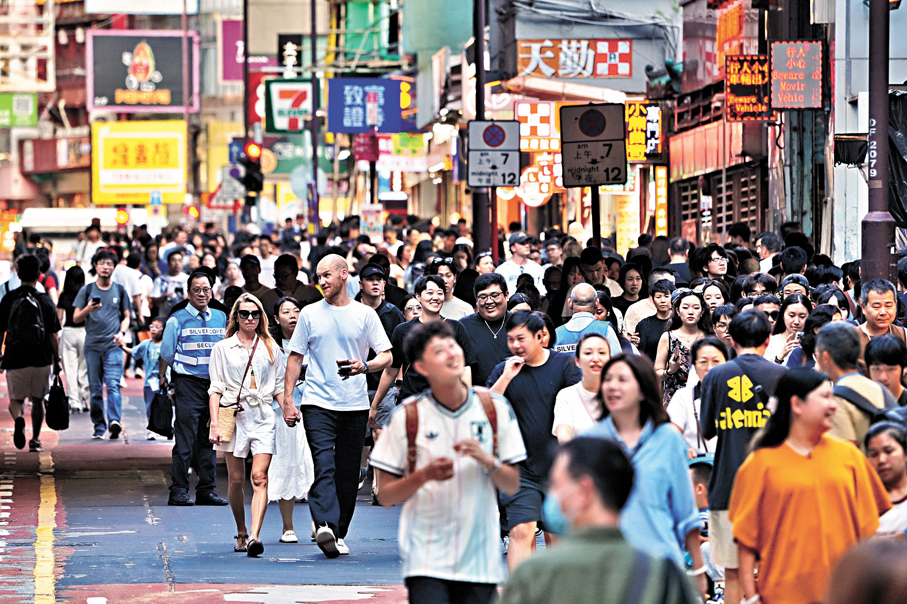
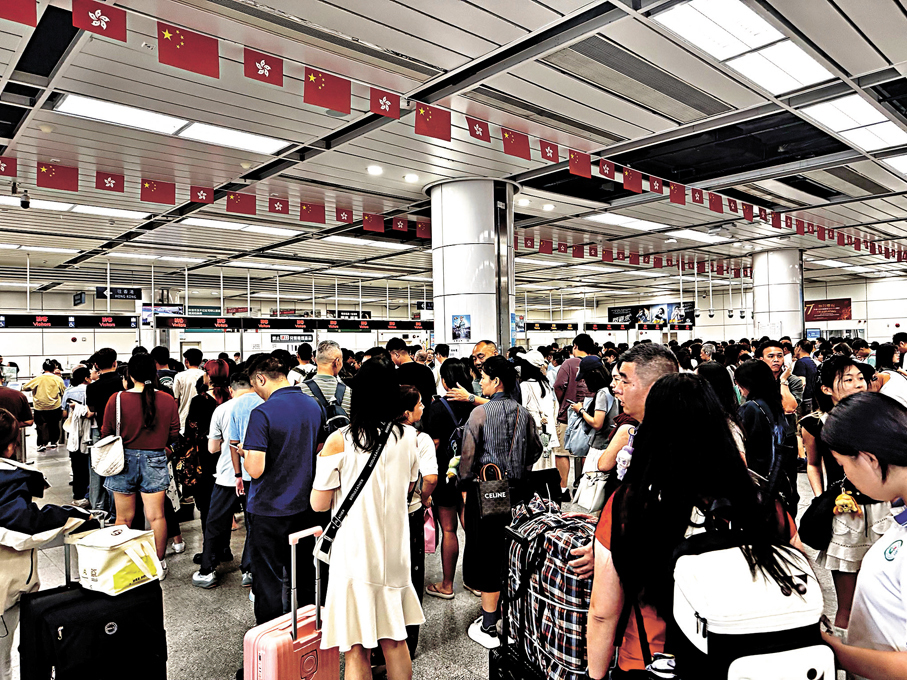
The mainland's National Day Golden Week entered its fourth day yesterday. Data from the SAR government's Immigration Department shows that as of 9 pm last night (Sept.4), mainland visitor arrivals stood at 198,518, bringing the cumulative total for the first four days to 931,395. Financial Secretary Paul Chan wrote in his blog yesterday that over 732,000 mainland visitor arrivals were recorded in the first three days of the Golden Week, up about 8.4% year-on-year. The rise in footfall has also boosted the city's atmosphere. Industry estimates suggest the catering sector will see average daily revenue of HK$250 million during the Golden Week, up over 10% year-on-year, driven by recovering visitor spending power and increased local consumption. In retail, popular categories such as jewellery and gold, watches, cosmetics, and dried seafood also recorded double-digit growth — truly a case of both crowds and fortune booming.
In his blog, Chan noted that with the start of the mainland's National Day Golden Week, Hong Kong's festive atmosphere has become more pronounced, with many restaurants and shops — especially those in tourist areas — seeing business growth. Citing Immigration Department projections, he said about 1.29 million mainland visitors are expected to visit Hong Kong during the entire Golden Week, with average daily arrivals up over 5% year-on-year. Beyond mainland visitors, Chan shared that visitor numbers from Europe, the US, and some emerging markets have also recorded considerable growth this year.
Catering sector: Business better than expected
The influx of domestic and overseas visitors has boosted business across Hong Kong's industries. Simon Wong, President of the Hong Kong Federation of Restaurants and Related Trades, said the industry's business during this year's National Day holiday has been ideal, with strong footfall and higher willingness among residents to spend. Overall revenue exceeded expectations, with HK$320 million recorded on National Day alone — a 10% increase over last year. He estimated average daily revenue of HK$250 million during the entire Golden Week, up over 10% year-on-year. Factors driving the increase include a higher number of mainland visitors than in previous years, with some coming from more distant cities and staying longer than Greater Bay Area visitors, directly boosting catering spending.
He observed that visitor spending power has increased recently, possibly due to the appreciation of the renminbi making Hong Kong more cost-effective for shopping, as well as enhanced promotion by the industry through social media platforms, benefiting restaurants across different cuisines and price points. He also believes the trend of Hongkongers travelling north to spend has shown signs of waning, and with local restaurants offering festive promotions and more dining options during the holiday, more residents have been persuaded to spend locally.
Wong also noted that visitors from Southeast Asia and other emerging markets during the holiday generally have stronger spending power, with some using Hong Kong as their first stop before travelling to the mainland. He believes strengthening promotion of "multi-stop" itineraries could help attract long-haul travellers to adopt "packaged" travel routes, further boosting tourism spending.
LegCo member pleased to see retail improvement
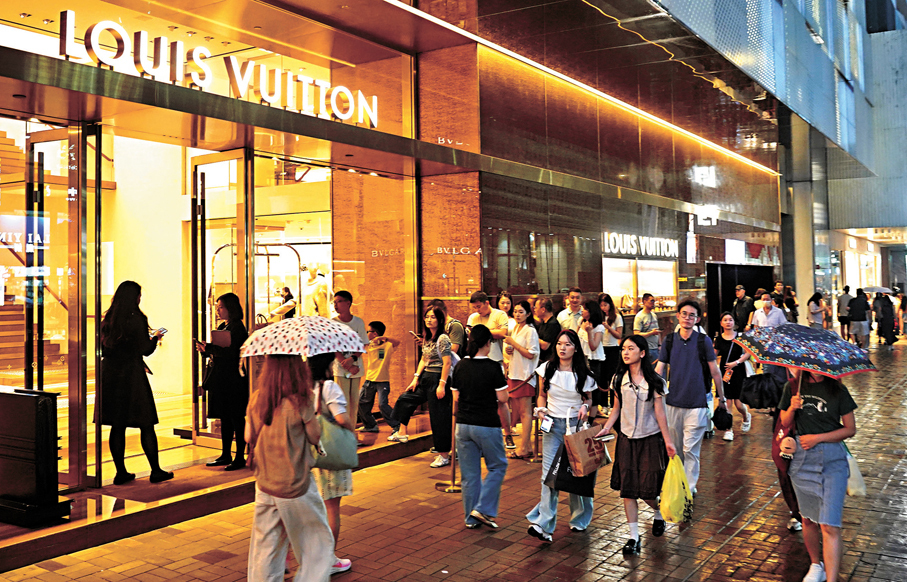
Wholesale and retail sector lawmaker Shiu Ka-fai said during the National Day period, tourist districts saw huge crowds, which also boosted the retail market, with multiple sectors recording double-digit business growth.
He particularly noted that in recent years, many mainland visitors may not have been aware that dried seafood can be brought back to the mainland for personal use within reasonable quantities. After enhanced promotion by the industry over the past two weeks, sales of dried seafood products have improved noticeably.
He added that traditional tourist districts such as Yau Tsim Mong and Causeway Bay generally performed better, and hoped more methods could be used in future to divert visitors to other districts, boosting business and the economy across all areas.
(Source: Wen Wei Po)
Related News:




Comment