






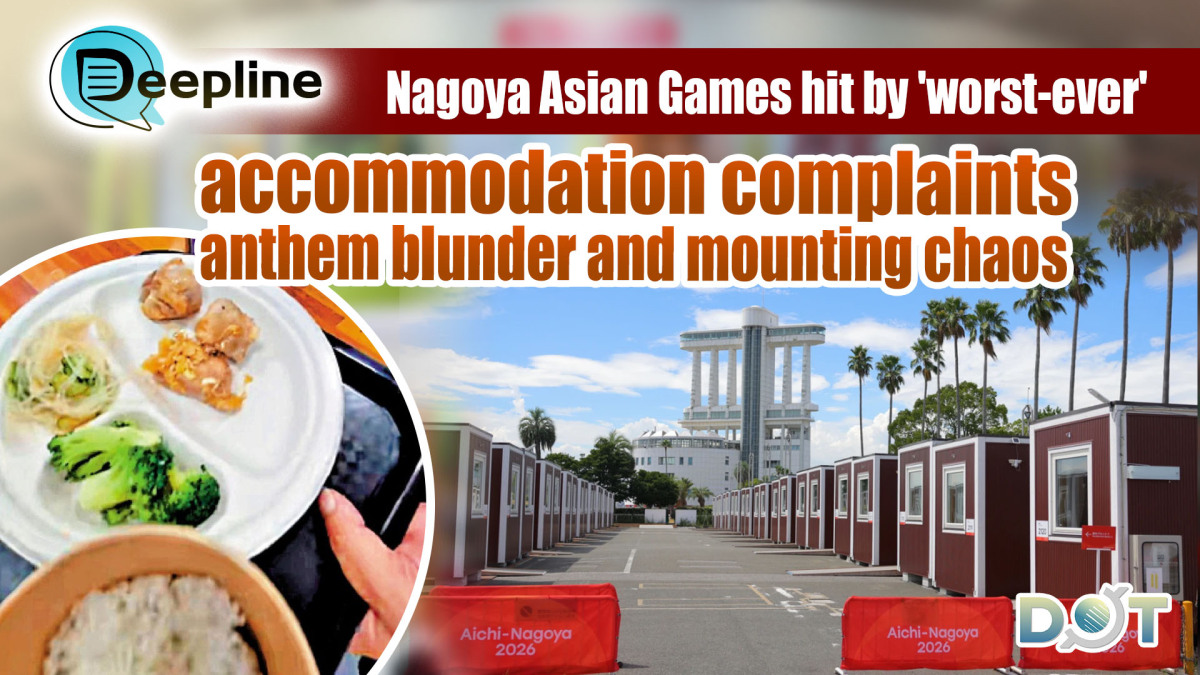
The 20th Asian Games opened in Japan's Aichi Prefecture on Saturday (Sept. 19), marking the country's return to hosting the continental multi-sport event after 32 years. But the Games have been marred in recent days by complaints over accommodation, transportation and event management, drawing criticism from several national and regional delegations.
Athletes have been housed in cruise ships, converted shipping containers and hotels, with South Korean officials describing the conditions as the "worst ever." The head of India's delegation also criticized the organizers for poor management, saying Japan's image had gone from "very good" to "very bad."
Anthem blunder: Organizers play North Korean anthem for South Korean team
On Sept. 18, organizers played the North Korean national anthem instead of South Korea's before a men's hockey group-stage match between South Korea and Bangladesh at the Aichi-Nagoya Asian Games, prompting strong protests from the South Korean delegation.
The Korean Olympic Committee called on the Asian Games organizing committee to issue a formal apology.
The national anthems of South Korea and North Korea are both titled "Aegukga," but their melodies and lyrics are completely different. Before the match, South Korean players lined up as usual to await the anthem. They soon realized that the wrong anthem was being played and appeared confused, with some not placing their hands over their chests as they normally would. Some players ran their hands through their hair, while others lowered their hands and turned toward officials to signal that something was wrong.
The stadium announcer soon acknowledged the mistake and apologized. The organizers then played Bangladesh's national anthem, but South Korea's anthem still did not play. It was only shortly before kickoff, after the referee instructed the players to shake hands and the two teams had completed their formalities, that the South Korean anthem was finally played.
Growing complaints: No athletes' village, with teams housed in containers and on cruise ship
Accommodation problems had already sparked controversy before the opening ceremony. Delegations from South Korea, India and Thailand publicly complained about their arrangements, while even Japan's own delegation was affected.
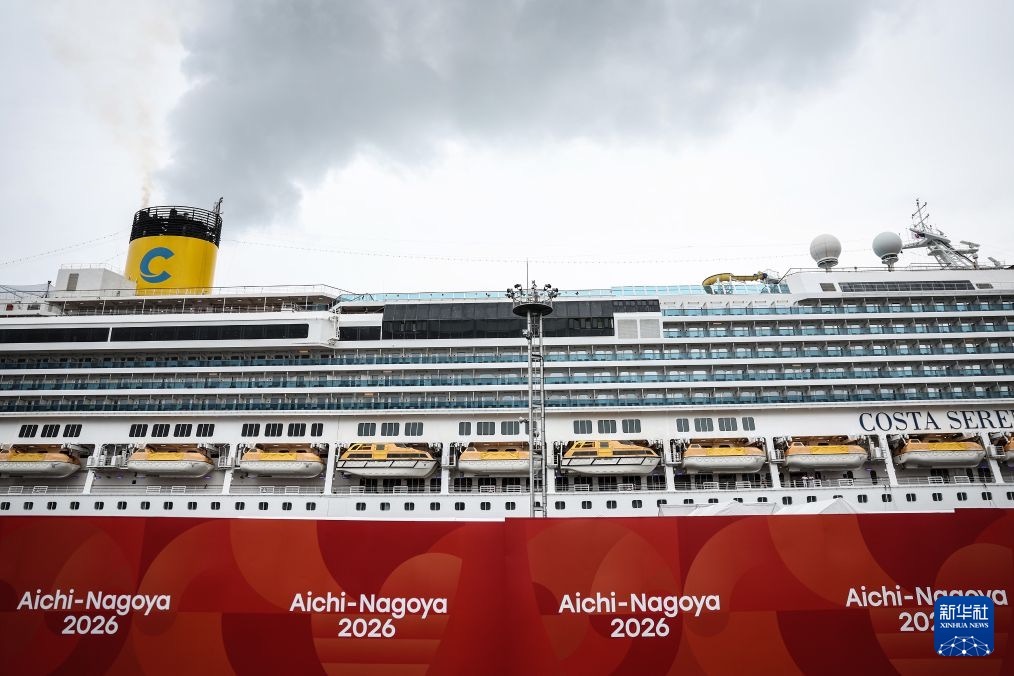
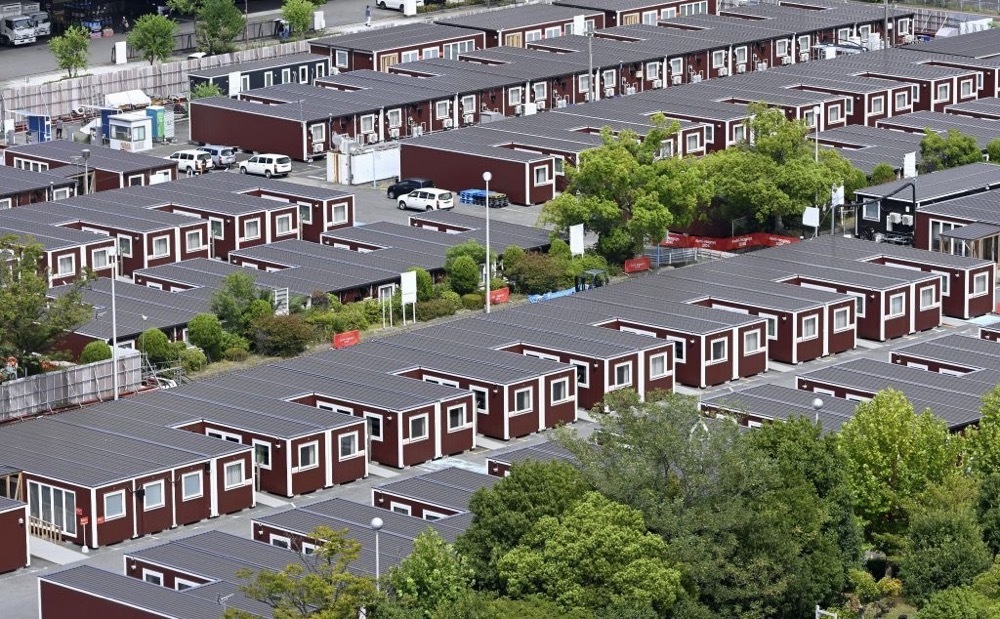
The Games do not have a traditional athletes' village. Instead, participants have been dispersed among a cruise ship, container-style temporary accommodation and hotels. The first major controversy centered on accommodation converted from shipping containers at Nagoya Garden Pier.
On Sept. 11, South Korean basketball player Byeon Jun-hyeong posted a video on social media showing water leaking continuously from beneath a bathroom sink, leaving the bathroom floor flooded. He captioned the video, "Please help us."
Jung Jae-yong, vice-president of the Korea Basketball Association, later said that four beds had been placed in a 35-square-meter unit, with each single bed measuring only 1.95 meters long. He said athletes taller than two meters could not even stretch their legs out properly, calling the arrangement "very unreasonable."
He described it as "the worst ever."
The South Korean men's basketball team moved together to a hotel in central Nagoya on Sept. 16.
The cruise ship accommodation has been even more chaotic.
Several delegations were assigned to the Costa Serena, a cruise ship berthed at the Port of Nagoya. An Indian mixed martial arts athlete arrived on the ship on Sept. 16 but was told during check-in that his information could not be found. After waiting for about 10 hours, he was finally given a double room.
Just 30 minutes after he went to sleep, two other Indian athletes were placed in the same room, turning the double room into a three-person room.
Yadav, head of the Indian delegation, criticized the organizers for poor management and said the image of Japan as "very good" had now completely collapsed.
Thailand's sepak takraw team also faced problems after organizers failed to enter the athletes' information into the system. The entire team was unable to check in and remained in the cruise ship's boarding lobby for as long as 24 hours. Some team members, exhausted from waiting, lay down on the floor to rest.
Hong Kong table tennis player Doo Hoi-kem was also assigned a room on the cruise ship. In a video showing her boarding experience, she complained after seeing the room, saying it was too small. Once two suitcases were opened, there was barely enough space left to walk around.
On Sept. 18, the deputy head of Japan's delegation confirmed that the cruise ship accommodation had seen cases in which male and female athletes were assigned to the same room, while some athletes were also housed together with coaches.
He said the organizing committee had allocated rooms mechanically according to the number of people, without properly taking gender combinations into account.
The Japanese Olympic Committee (JOC), however, had anticipated potential accommodation problems and had reserved hotel rooms in Nagoya as a backup. The move has prompted public criticism over what some described as a "double standard."
Rising costs: Host cuts spending as 'frugality' turns into bare-bones arrangements
The Aichi-Nagoya Asian Games have promoted a "frugal" approach, but problems have emerged across accommodation, transportation and catering, prompting criticism that cost-cutting should not come at the expense of basic living conditions for athletes.
When Nagoya bid to host the Games in 2016, it promised to stage a "simple" event with a budget of about 85 billion yen (approximately HK$4.2 billion).
But inflation, a weaker yen, and rising construction material and labor costs have pushed the estimated actual cost to nearly 240 billion yen (about HK$11.9 billion), according to estimates.
Ticket sales have also been weak. Organizers initially planned to sell 2.75 million tickets, but fewer than 30 percent had been sold by the eve of the opening ceremony. Tickets originally priced at 10,000 yen were reportedly being offered for as little as 3,000 yen on resale platforms without attracting buyers.
Sponsors have also been reluctant to commit or have withdrawn amid the corruption scandal surrounding the Tokyo Olympics. Japanese media reports put sponsorship revenue at only about 27 billion yen (approximately HK$1.34 billion).
The resulting budget shortfall has had to be covered by local government finances, prompting organizers to cut costs in areas including the athletes' accommodation.
The Nagoya Asian Games organizing committee planned accommodation for a maximum of 15,000 participants. The cruise ship has about 1,500 cabins and can accommodate around 4,000 to 5,000 people, while the container-style temporary accommodation can house about 2,000. The rest were to stay in hotels.
However, the actual number of registered participants exceeded 17,000.
Organizing committee chairman Hideaki Omura had previously acknowledged that the organizers had "neither the manpower nor the budget" to provide accommodation and meals for the additional participants, saying that those who still wished to come would have to make their own arrangements.
Some experts have said the problems at the Games highlight an imbalance between local governments' desire to host major international sporting events and their willingness to bear the associated costs, exposing shortcomings in budget management, event planning and organizational capacity.
Long waits: Registration system failure leaves athletes stranded at airport
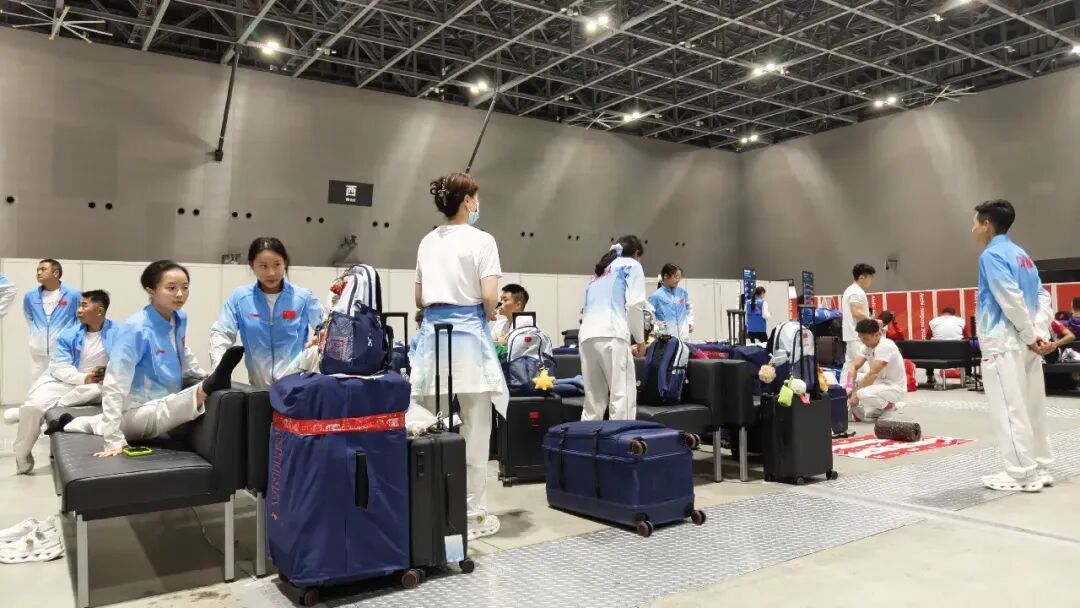
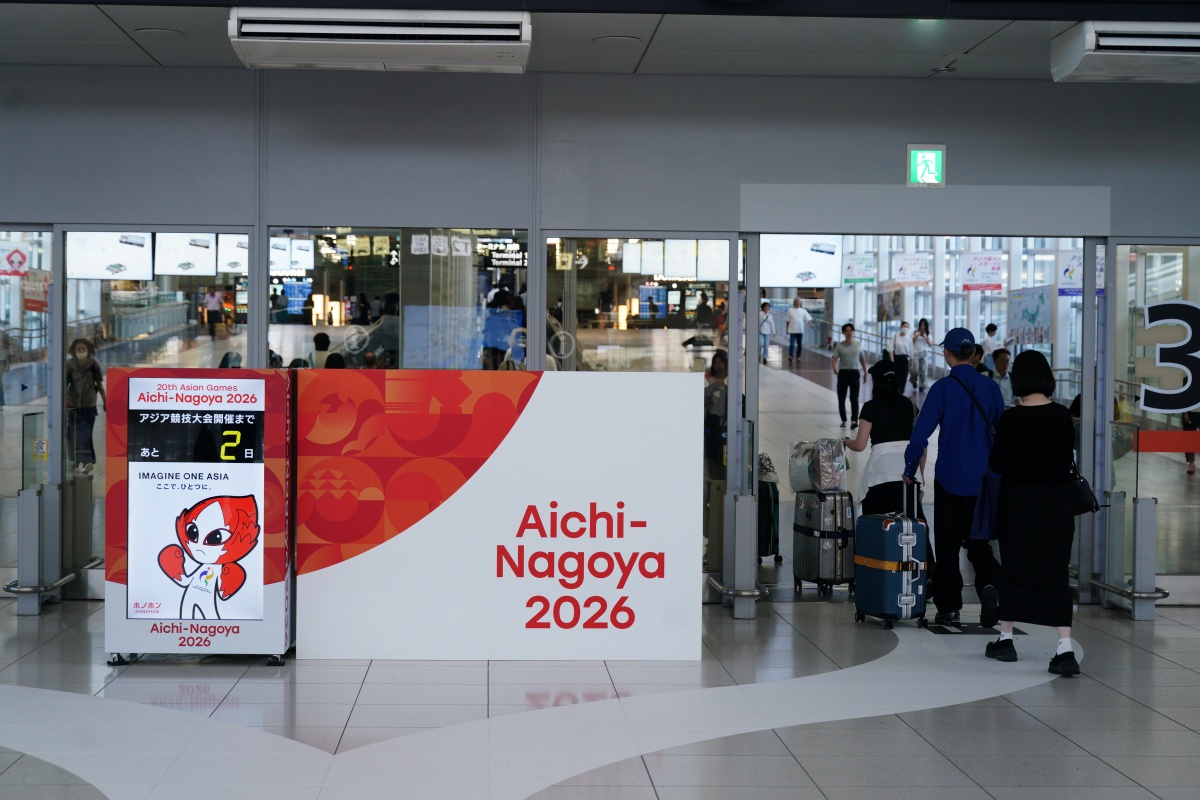
With the opening ceremony approaching, athletes from several countries arrived at Chubu Centrair International Airport in Nagoya in recent days, only to become stranded for hours after a failure in the organizers' event registration and verification system.
Because athletes' information could not be found in the system, they were unable to complete registration. Only drinking water was provided at the airport, with no food available. Some teams were not taken to their accommodation until late at night.
India's delegation was among the worst affected.
The Indian rowing team landed at Chubu Centrair International Airport at around 10 a.m. on Sept. 16 but remained there for more than four hours. A rowing coach said the athletes' information could not be found in the staff's system, preventing shuttle buses from being dispatched as scheduled.
He added that some teams had arrived even earlier and had also been waiting for two or three hours without transportation.
India's shooting team likewise waited at the airport for about three hours and eventually reached its hotel at around 4 a.m.
Indian athletes also complained about a lack of food. One athlete said that although organizers provided drinking water while they waited, they did not provide a proper meal.
Indian media reported that some athletes had to rely on food they had brought with them before departing.
The Indian delegation had left Pune on Sept. 15, traveled to New Delhi and then flew via Bangkok to Japan the following day. Many athletes were already exhausted by the time they arrived at Nagoya airport and could only rest on airport seats and floors.
The Kazakhstan shooting team waited for more than two hours after leaving the airport, with one athlete saying that "the staff did not tell us why we had to wait."
An official from Sri Lanka's delegation said that, including the time spent traveling from their home country, the team's total travel and waiting time had reached 24 hours.
One exhausted athlete said the problems off the field were "harder to endure than the competition itself."
Extreme weather: Typhoon threatens to disrupt Games schedule
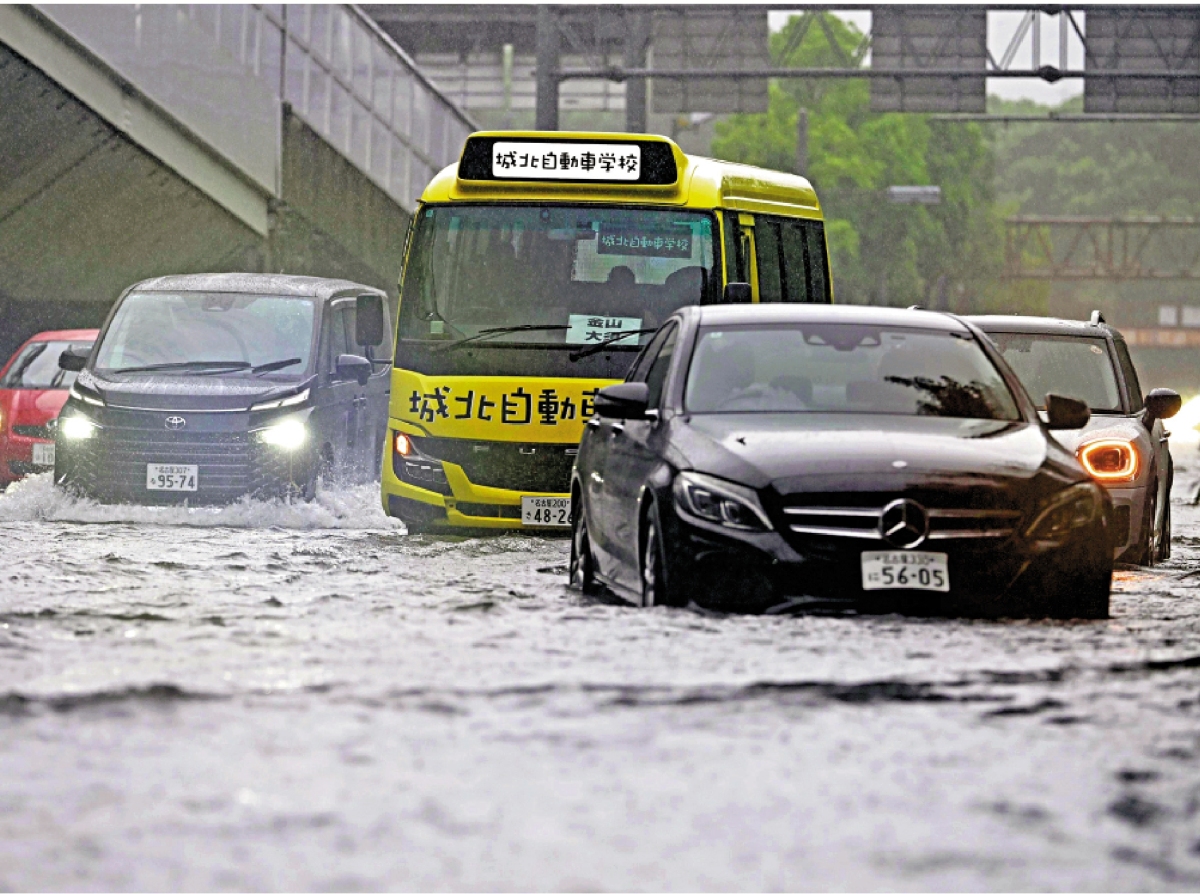
Japan enters its typhoon season in September and October, and the Games' schedule is facing another major challenge as Typhoon Dujuan, the year's 25th major typhoon, is expected to affect Japan this weekend, particularly outdoor events.
The Japan Meteorological Agency said on Sept. 18 that Dujuan was moving northwest over waters off Japan's Pacific coast toward the central region, where Nagoya is located. It was expected to make landfall on Japan's main island of Honshu on Sept. 20 or 21, bringing severe weather.
Nagoya was already hit by record-breaking torrential rain on Sept. 8, leaving parts of the city flooded. Several Asian Games venues also suffered water leaks.
On Sept. 17, a women's cricket match between China and Bangladesh was canceled before play began because rainfall had affected the playing conditions.
Rowing events were also affected by the heavy rain on Sept. 8, which damaged or led to the removal of floating pontoons and other facilities originally installed along the course. As the venue had to be rebuilt, the preliminary races originally scheduled for Sept. 20 were postponed to Sept. 21.
Kosei Inoue, head of Japan's Asian Games delegation, said on Sept. 17 that heavy rain had already caused some events to be delayed or postponed, while a typhoon remained a potential threat after the opening ceremony.
Around 4,000 athletes are currently staying aboard the cruise ship, raising concerns over its ability to withstand a typhoon.
"We can only pray that the worst-case scenario does not happen," an official from a sports federation said.
Regarding the possibility of a typhoon hitting the area on Sept. 21, Asian Games Coordination Committee chairman Mohammed Tayyab Ikram said on Sept. 18 that specific disaster-prevention plans had been prepared for all competition and non-competition venues.
Large evacuation areas have also been designated at accommodation facilities, including the cruise ship and container-style housing.
Related News:
Nagoya Asian Games opening ceremony set for today as Ivan Yang, Lydia Sham named HK flag bearers
Asian Games | Chinese athletes stranded at Nagoya airport for nearly six hours




Comment