






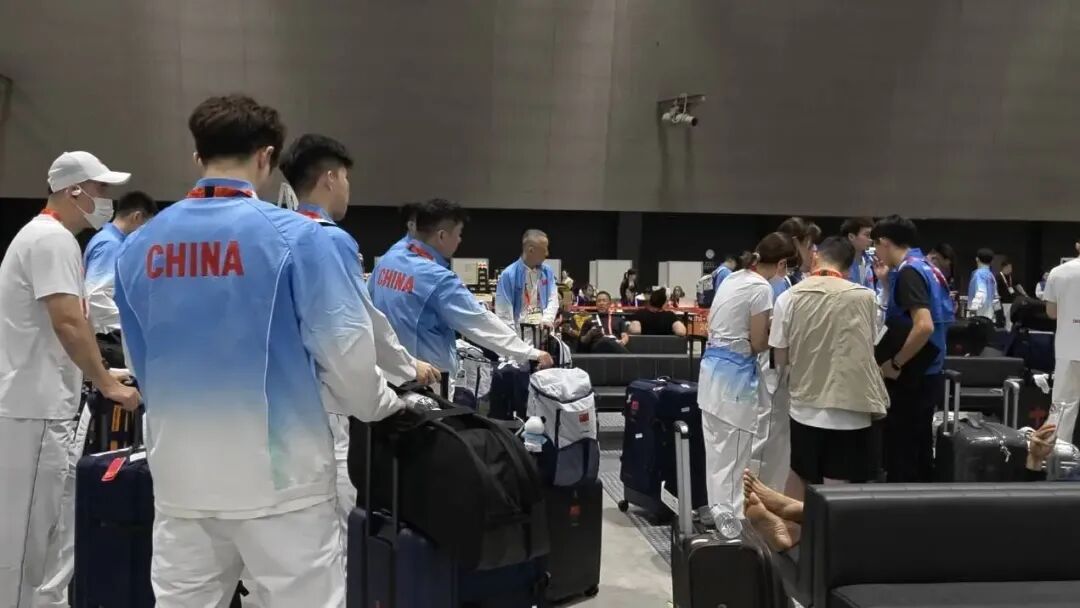
The Chinese sports delegation and members of several teams arrived in Nagoya, Japan, at around 12:15 p.m. on Wednesday (Sept. 16), ahead of the upcoming Asian Games. But while their flights arrived on time, many athletes were left stranded near the airport for hours, unable to board buses to their accommodation.
Under the arrangements, delegations arriving that day were supposed to take buses from the airport area to their accommodation. However, by 2 p.m., many athletes from different countries and regions could still be seen slumped over or lying around at the airport transport center as they waited for buses, visibly exhausted.
A coach from the Indian rowing team said the team had landed at around 10 a.m. but had already been waiting at the transport center for more than four hours.
"The system used by the staff couldn't find our athletes' information, so they couldn't arrange a bus for us," the coach said. "There were teams that arrived even earlier. They had already been waiting for two or three hours and still hadn't got on a bus."
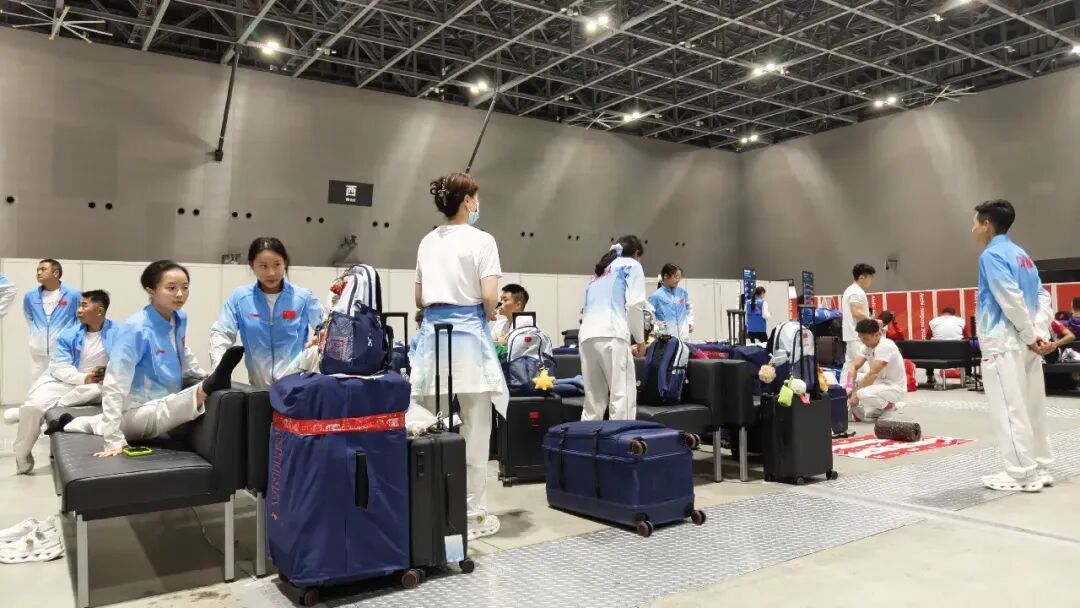
The Chinese gymnastics team faced a similar situation. Of the 21 members in the team, only two had their information properly displayed in the system, leaving the team unable to board a bus for hours.
While waiting, several Chinese athletes laid out yoga mats and began working out with foam rollers and resistance bands.
"No one has said when a bus will arrive. Everything is just waiting," a delegation member said. After asking the staff, the member found that they were also at a loss. "Everyone is asking everyone else, and no one seems to know."
At around 4 p.m., Kazakhstan's shooting team prepared to leave. One athlete said they had "only" been waiting for more than two hours, but "the staff didn't tell me why we had to wait."
A volunteer appeared helpless, saying: "We don't know the exact reason either. Maybe one link in the chain failed to connect with another. Delegations can also make their own arrangements, but they have to pay for them."
The Chinese badminton team, unable to get on an official bus, decided to find its own way out. They initially tried to take a public airport bus nearby, but there were not enough tickets. Some members left first, while the rest encountered staff from the Chinese Consulate-General in Nagoya, who helped them contact members of the Chinese community to rent vehicles.
By around 4:30 p.m., the badminton team had finally all boarded vehicles and left.
It was not until around 5 p.m. that some members of the Chinese table tennis, wushu and rowing teams managed to get on buses. The gymnastics team did not leave until around 6 p.m.
By then, nearly six hours had passed since they arrived at Nagoya airport.
At the transport center, only water was provided, and no food was available.
"I haven't really eaten much during the day. It's been more than five hours since we got off the plane, and we've been waiting until we're tired, sleepy and hungry. We have training tomorrow," one athlete said.
Another athlete said with a bitter smile: "This is harder than the competition."
The accommodation arrangements for the Nagoya Asian Games have also drawn complaints from delegations from several countries, according to previous reports.
Jung Jae-yong, vice-president of the Korea Basketball Association, expressed strong dissatisfaction with the container-style temporary cabins where the South Korean men's basketball team was staying.
"Based on my experience, this is the worst ever," he said. "Athletes who are more than two metres tall cannot even fully stretch out their legs on the beds. This is unreasonable."
In addition, with competition venues spread across a wide area, some athletes staying in container cabins and on cruise ships need to take shuttle buses for as long as one and a half to two hours to reach their competition venues.
The president of the Philippine Olympic Committee confirmed that all Filipino athletes had been assigned rooms, but "some officials, such as coaches, were moved to different hotels and Airbnbs."
The Philippines men's basketball team has reportedly booked a local hotel through sponsors.
Last week, heavy rain hit Nagoya, forcing hundreds of athletes to evacuate temporarily from the container cabins where they were staying, adding further pressure to already tight accommodation arrangements.
More than 17,000 athletes and officials have registered for this year's Asian Games, a figure even higher than the number at the Olympic Games. Organizers had initially prepared for around 15,000 people.
Hideaki Omura, chairman of the organizing committee, previously acknowledged that they had "neither the manpower nor the budget" to provide accommodation and meals for the additional participants, saying that "if they still wish to come, they will have to make their own arrangements."
To cut costs, the Games have abandoned a dedicated athletes' village, instead using a combination of cruise ships, container cabins and hotels in different locations.
The cruise ships will accommodate between 4,000 and 5,000 people, while the container cabins will house around 2,000. The remaining participants will be spread across hotels, with some staying as far away as Tokyo, where swimming, diving, and equestrian events will be held.
Related News:
Japan travel alert: Historic downpour floods Nagoya, turning streets into rivers




Comment