






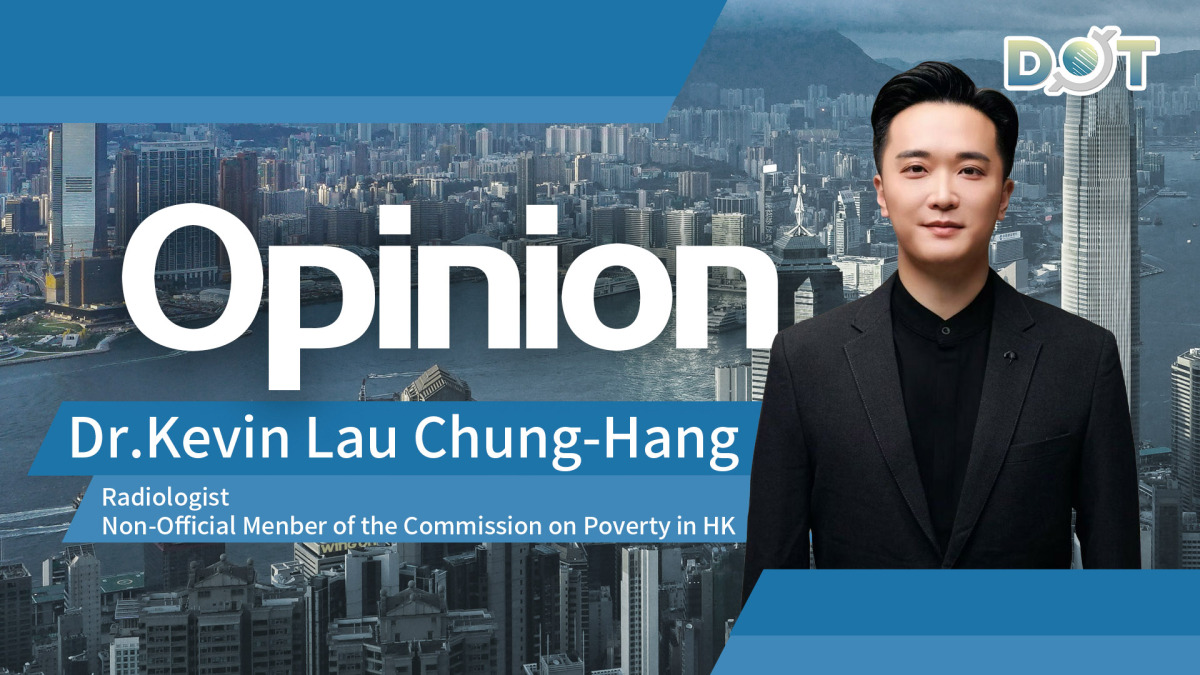
By Dr. Kevin Lau
In an era of intensifying regional competition and geopolitical realignment, Hong Kong has once again demonstrated that institutional depth, policy coherence, and market openness are not easily replicated. The Asian Cities Internationality Index 2026 (ACII 2026), commissioned by the Hong Kong General Chamber of Commerce (HKGCC) and independently conducted by Ipsos, ranks Hong Kong first among 11 Asian cities with an overall score of 74.6 out of 100, widening its lead over second-placed Singapore (72.6) from a razor-thin 0.2 points in 2025 to a decisive 2.0 points this year. The findings demand more than perfunctory celebration; they require a sober analysis of how strategic policy choices are translating into measurable, internationally recognised competitiveness.
Any assessment of Hong Kong's international standing must begin where its dominance is most pronounced: business and economy. In the ACII 2026, Hong Kong scored 78.6 in this dimension, retaining its top position, while Singapore trailed at 77.3. The divergence is even starker when examining the financial markets sub-dimension, where Hong Kong recorded 82.0 points against Singapore's 61.0. This is not merely an abstract metric. It reflects concrete capital-market performance. According to Hong Kong Exchanges and Clearing (HKEX), Hong Kong finished 2025 as the world's top IPO fundraising venue, with proceeds surging 231 per cent year-on-year to US$37.4 billion across 119 listings—its highest total since 2021 and exceeding the combined volume of the preceding three years. The presence of sovereign wealth funds and long-only investors from North America, Europe, and the Middle East among cornerstone investors underscores that international capital is voting with its feet.
Critics who reduce Hong Kong's appeal to pure financial metrics overlook a critical shift in the ACII 2026 data. In the Quality of Life dimension, Hong Kong scored 74.6, placing second regionally and comfortably ahead of Singapore's 66.3. This advantage is anchored in tangible attributes. Independent environmental data confirms that Hong Kong maintains approximately 47 per cent urban green space, a remarkable ratio for a territory of its population density. Meanwhile, the 2026 Michelin Guide recognizes no fewer than 77 starred restaurants across the city (57 one-star, 13 two-star, and 7 three-star establishments), affirming a culinary and cultural infrastructure that rivals any global metropolis. When combined with world-class healthcare, public safety, and transport connectivity, these factors explain why the ACII survey found "high quality of life" to be the primary motivation (45.2 per cent) for business executives choosing to reside in a city.
Perhaps the most strategically significant finding in ACII 2026 is Hong Kong's ascent in the Innovation and Ideas dimension, where it climbed from fourth to third place (61.0), overtaking Singapore (60.6) for the first time. Within this dimension, Hong Kong ranks first in International Talent Attraction (85.5), a clear signal that government initiatives to recruit global researchers and professionals are yielding empirical results. This aligns with broader global indices: the International Institute for Management Development (IMD) placed Hong Kong fourth globally in its World Talent Ranking 2025, marking the city's highest-ever position and first in Asia. The policy architecture behind this shift is deliberate—ranging from enhanced innovation investment and the "mega-events economy" to the long-term development of the Northern Metropolis and the Hetao Cooperation Zone. These are not aspirational slogans; they are structural commitments that are now registering in independent, cross-border benchmarks.
What distinguishes the ACII 2026 from generic city rankings is its methodological rigour: 113 indicators across seven dimensions, blending 69 statistical metrics with survey data from over 1,100 business executives. The fact that Hong Kong placed in the top three in five of the seven dimensions—Business and Economy, Quality of Life, Infrastructure and Connectivity, Human Capital Diversity, and Government and Legal System for Business—demonstrates a breadth of competitiveness that no other city in the study matched. It also validates the government's multi-pronged strategy: strengthening the financial "super-connector" role, expanding the innovation and technology ecosystem, and enhancing liveability through urban planning and environmental policy.
There is a temptation in policy discourse to mistake transient headlines for structural trends. The ACII 2026 offers a corrective. Hong Kong's retention of the top spot—and the widening margin over its nearest rival—reflects accumulated institutional capital, targeted policy execution, and an enduring ability to attract global talent and capital simultaneously. As the HKGCC itself notes, the city must continue to scale innovation investment and accelerate the commercialisation of research through Greater Bay Area integration. But the overarching message of the data is unambiguous: Hong Kong need not engage in self-deprecation. The metrics are speaking, and they speak clearly in its favour. In a contested Asian century, the city's internationality is not a nostalgic legacy; it is a living, quantifiable, and expanding advantage.
The author is the Founding Convenor of the Hong Kong Global Youth Professional Advocacy Action, a specialist in radiology, Master of Public Administration, Master of Public Health of the University of Hong Kong, and an adviser of the Our Hong Kong Foundation.
The views do not necessarily reflect those of DotDotNews.
Read more articles by Kevin Lau:
Opinion | Fifteen years aloft: The enduring code behind HK's air cargo supremacy
Opinion | Beyond handshake: Turning Qatar Airways Cargo's bet into lasting hub strength




Comment