






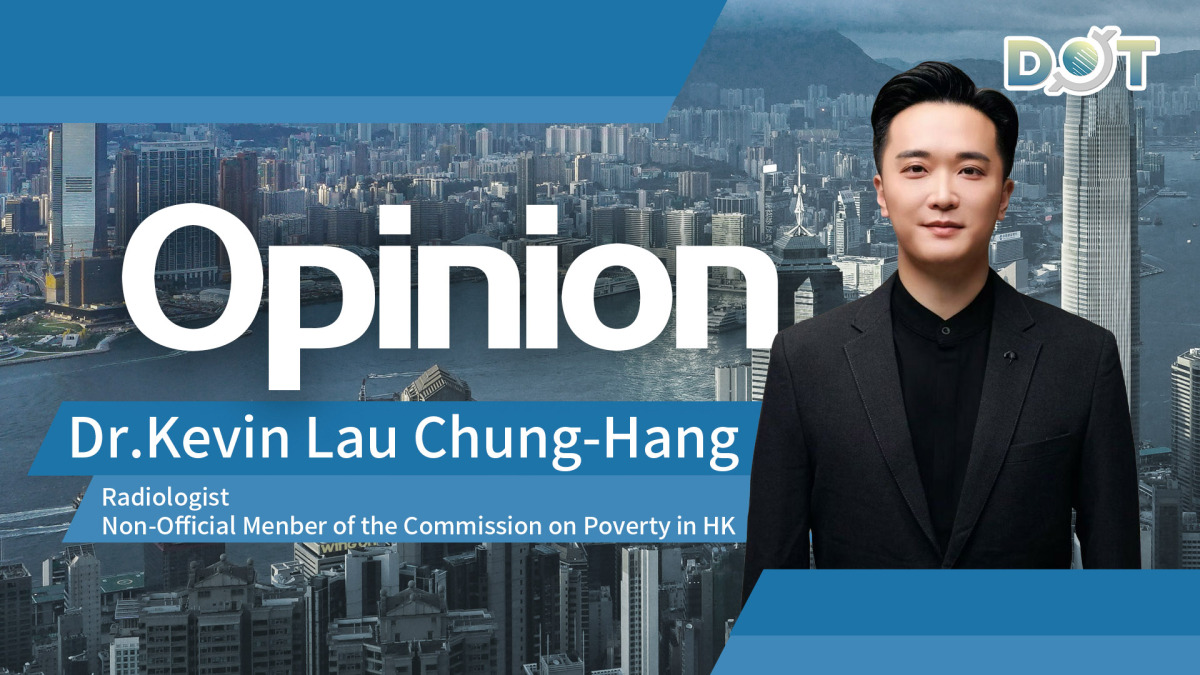
By Dr. Kevin Lau
In April 2026, Airports Council International confirmed what has become an annual ritual: Hong Kong International Airport (HKIA) was once again the world's busiest cargo airport, handling 5.07 million tonnes in 2025—the fifteenth time it has topped the global rankings since 2010. Fifteen years of sustained primacy, spanning a global financial aftershock, a pandemic that grounded aviation, and profound geopolitical realignment, cannot be attributed to luck. It is the product of what might be called a success code—the rare convergence of the right timing, the right geography and the right partnerships—and the events of August 2026 suggest that the code remains very much intact.
The clearest recent proof came on 19 August 2026, when Qatar Airways Cargo, the world's largest air cargo carrier, established its regional headquarters in Hong Kong and signed a Memorandum of Understanding with Airport Authority Hong Kong (AAHK) to strengthen air connectivity and pursue joint aviation development. The carrier already operates around 56 weekly flights through HKIA and plans to add frequencies and launch new routes via the city. Speaking at the signing ceremony, Secretary for Transport and Logistics Mable Chan described the move as a clear expression of confidence in Hong Kong's status as an international aviation hub, while Qatar Airways Cargo's Senior Vice-President for Cargo Sales, Eric Wilson, cited the airport's world-class infrastructure, outstanding handling efficiency and strategic location. Notably, industry reporting linked the decision in part to recent instability in the Middle East, which has driven global carriers to diversify operational risk rather than concentrate their business in a single region—a calculation in which Hong Kong's strategic value stands out all the more sharply.
Qatar's choice is best understood not as an isolated coup but as the latest chapter in a long pattern of institutional commitment. DHL Express has operated its Central Asia Hub—one of only three global hubs in its network—at HKIA since 2004, and completed a third-phase expansion in November 2023 that lifted total investment to EUR 562 million, its largest infrastructure commitment in Asia-Pacific, with a peak sorting capacity of 125,000 shipments per hour handling close to a fifth of the company's global shipment volume. Cainiao, Alibaba's logistics arm, opened its 12-storey, 4.1-million-square-foot Smart Gateway at the airport in 2023, a facility expected to add 1.7 million tonnes of annual cargo volume. And in March 2026, UPS broke ground on a new HKIA hub which, upon completion in 2028, will be capable of handling nearly one million tonnes a year. Capital of this durability does not migrate on sentiment; it follows connectivity, reliability and market access.
The foundations of that appeal are, first, geographic. Hong Kong lies within five hours' flight time of half the world's population, served by some 120 airlines operating over 1,100 daily flights to more than 220 destinations. Second, and less visible, is institutional competence. HKIA is the first airport community in the world to attain the full suite of IATA Center of Excellence for Independent Validators (CEIV) certifications covering pharmaceutical cold chain, fresh and perishable cargo, live animals and lithium batteries. These are precisely the fastest-growing and most demanding freight segments, where certification functions as a pre-clearance for the most profitable cargo of the future.
The third foundation is the one that most distinguishes Hong Kong from every regional rival: its integration with the Greater Bay Area's manufacturing heartland. The Dongguan–Hong Kong International Airport logistics channel, the world's first cross-boundary sea-air intermodal project with direct airside access, has extended HKIA's security screening and cargo-handling functions into the mainland. In its first three years it handled imports and exports exceeding RMB 65 billion in value, cutting comprehensive logistics costs for enterprises by around 30 per cent; in the first half of 2026 alone it processed RMB 22.01 billion, up 56.4 per cent year on year. Permanent facilities now under construction will raise annual capacity beyond one million tonnes.
For policymakers the implications run in both directions. The convergence of commitments by Qatar Airways Cargo, DHL, Cainiao and UPS vindicates the strategy of investing ahead of demand—above all in the Three-Runway System, which Secretary Chan noted has substantially expanded airport capacity and which the government intends to leverage, together with national support for the "Air Silk Road", to deepen links with emerging markets in South America, Central Asia, Africa and the Middle East. Yet AAHK Chief Executive Vivian Cheung has been candid that regional competition is intense and the global economic outlook uncertain, pledging that the authority will redouble efforts to enhance competitiveness. Shanghai, Singapore and Doha are all investing aggressively; leadership conferred by fifteen years of performance confers no guarantee of a sixteenth.
The prudent course is therefore to press forward on three fronts: complete the capacity pipeline, from the UPS hub to the Dongguan permanent facilities; deepen the customs and regulatory innovations, such as the dedicated air-land express channel for fresh products launched in 2025, that convert infrastructure into throughput; and continue the digitalization of the cargo supply chain through platforms such as HKIA Cargo Connect, which knits the airport community into a single intelligent ecosystem. Fifteen years at the summit of global air freight is an achievement; ensuring the next fifteen will require the same discipline that produced the first. The world's leading carriers have cast their votes in tonnes and headquarters. Hong Kong's task is to keep earning them.
The author is the Founding Convenor of the Hong Kong Global Youth Professional Advocacy Action, a specialist in radiology, Master of Public Administration, Master of Public Health of the University of Hong Kong, and an adviser of the Our Hong Kong Foundation.
The views do not necessarily reflect those of DotDotNews.
Read more articles by Kevin Lau:
Opinion | Reading the silent cry of young people
Opinion | China's green resolve is its strongest shield when the oil routes close
Opinion | Knowledge is hard currency: Academic strength will underwrite HK's long-term prosperity




Comment