






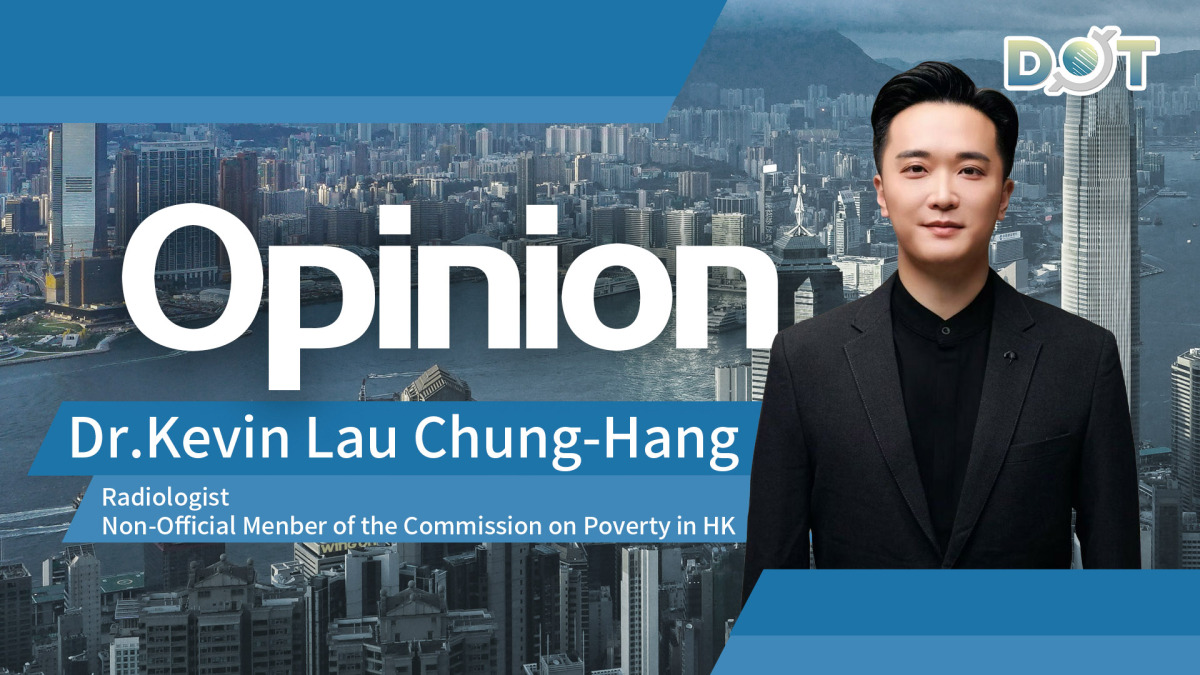
By Dr. Kevin Lau
When Qatar Airways Cargo relocated its regional office to Hong Kong on 19 August and signed a memorandum of understanding with Airport Authority Hong Kong (AAHK), the ceremony was easy to read as a feel-good headline. The carrier, which already operates around 56 flights each week between Hong Kong International Airport (HKIA) and destinations across its global cargo network—using a mix of passenger-aircraft belly hold and freighter capacity—says it intends to increase frequencies and develop new routes via the city. Officials were quick to cast the agreement as strategically significant, a step toward seamless global cargo flows and deeper links with high-potential markets, including South America. The instinct is understandable. But the real test of this partnership lies not in a signing photo; it lies in whether Hong Kong converts one airline's commercial decision into durable, institutional hub capability.
The fundamentals that attracted Doha are genuine. HKIA retained its position as the world's busiest cargo airport in 2025, handling roughly 5.07 million tonnes—5,066,345 tonnes, up 2.7 per cent, in Airports Council International's final figures—the fifteenth time since 2010 it has topped the ranking. The same year brought 61 million passenger trips, a 15 per cent increase. The momentum has broadly continued: in the first seven months of 2026, passenger volume grew 11.2 per cent year on year to 38.4 million, and cumulative cargo throughput rose 3.2 per cent to 2.92 million tonnes. Nor is this a purely local story: IATA reports global air cargo demand, measured in cargo tonne-kilometres, grew 3.4 per cent in 2025, with Asia-Pacific airlines up 8.4 per cent. A global carrier planting its regional flag here is a rational bet, not a favour—and that is exactly why it is valuable, because commercial logic, once earned, tends to outlast political goodwill.
Yet honesty requires the caveats. July 2026 saw airport cargo volume actually decline 1.9 per cent year on year, to 422,000 tonnes, even as the seven-month cumulative figure remained positive. A hub that quotes only flattering months will misread its own cycle, and cargo demand—tethered to trade policy, tariff shocks and inventory swings—is the most cyclical segment of aviation. Resilience must be designed for the downturns, not extrapolated from the peaks. Competition, too, is unforgiving: Singapore, Dubai and the mainland's expanding gateways all court the same carriers and the same transshipment flows. And geopolitics cuts both ways. Closer integration with Gulf carriers brings exposure to Middle Eastern instability— airspace closures, rerouting costs, capacity suddenly parked or redeployed—precisely the kind of correlated risk a prudent hub strategy must diversify against rather than deepen unthinkingly.
The Qatar agreement should therefore be read as one instrument within a broader policy, not the policy itself. Encouragingly, that policy exists. The 2025 Policy Address named South America, Central Asia, Africa and the Middle East as priority regions for new air services agreements and expanded traffic rights, leveraging the Three-Runway System to add long-haul and transit routes. The Air Network Development Programme had, by end-May 2026, attracted 40 airlines to launch 89 new routes and increase frequencies on 14 existing ones; HKIA now serves 223 destinations, 43 added since 2025. Cathay Pacific's planned Hong Kong–Almaty service—its first Central Asian destination, scheduled to begin on 9 January 2027 with three weekly flights, still subject to regulatory approval—extends the same logic westward. Together Cathay Pacific and HK Express already operate close to 600 return flights weekly to 33 Belt and Road destinations. The Cathay Group's July figures—cargo tonnage up 6 per cent year on year, passenger numbers up 9 per cent—suggest home-based carriers remain capable partners in this build-out.
What, then, would institutional hub capability actually mean? First, network diversification pursued systematically rather than opportunistically: signing an MOU is the beginning of a negotiation about slots, fifth-freedom rights and ground handling, not its conclusion, and the government has not yet published the additional frequencies, destinations or dates Qatar Airways Cargo is contemplating. Deliverables, timetables and transparent reporting should follow. Second, cargo digitalisation: paperless air waybills, interoperable data-sharing among forwarders, customs and handlers, and predictable truck-to-air transfer times are what convert runway capacity into reliability that shippers will pay for. Third, Greater Bay Area intermodality: the delta's factories generate the freight, and seamless cross-boundary bonding and barge links determine whether that freight flies from Hong Kong or from a rival airport an hour away. Fourth, talent—licensed engineers, cargo systems specialists and air services negotiators—without which new routes wither; the industry globally is short of precisely these skills, and Hong Kong competes for them against the same hubs it competes with for traffic. Fifth, sustainable aviation: as global customers price carbon into supply chains, a hub that cannot offer sustainable aviation fuel pathways will quietly lose mandates to one that can. Each of these pillars is measurable, and each should carry its own published milestones, so that the public can judge progress by delivery rather than by announcement.
None of this diminishes the significance of what happened on 19 August. A leading Gulf cargo operator choosing Hong Kong as its regional base is a vote of confidence cast with real assets. But votes of confidence are perishable. Hong Kong has been the world's busiest cargo airport fifteen times since 2010; staying there will depend less on celebrating individual airlines than on the unglamorous work of building a diversified, digital, well-connected and sustainable system in which many airlines—and the traders who depend on them—can prosper. The MOU is an invitation to do that work. The city should treat it as such.
The author is the Founding Convenor of the Hong Kong Global Youth Professional Advocacy Action, a specialist in radiology, Master of Public Administration, Master of Public Health of the University of Hong Kong, and an adviser of the Our Hong Kong Foundation.
The views do not necessarily reflect those of DotDotNews.
Read more articles by Kevin Lau:
Opinion | Reading the silent cry of young people
Opinion | China's green resolve is its strongest shield when the oil routes close
Opinion | Knowledge is hard currency: Academic strength will underwrite HK's long-term prosperity




Comment