






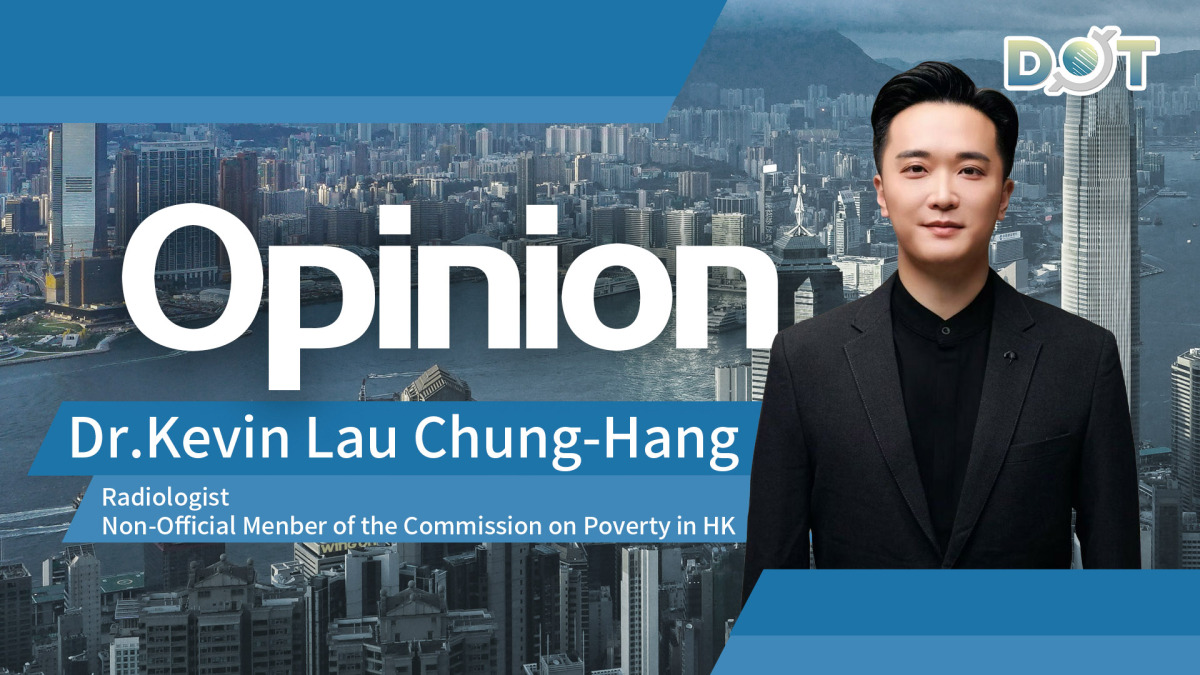
By Dr. Kevin Lau
When the Strait of Hormuz turned turbulent earlier this year and the arteries of the global oil trade were constricted, economies dependent on imported crude were thrown into visible anxiety. China, by contrast, has faced what the International Energy Agency has described as the most severe supply disruption in history with striking composure. In my view, that composure is no accident of fortune. It is the logical outcome of more than two decades of determined electrification and energy transition—a national endeavour whose environmental contribution is beyond dispute and deserves to be recognised squarely by the world.
Consider first the emissions record. According to analyses by the UK-based Carbon Brief published in May and August this year, China's carbon emissions in the first quarter of 2025 fell by 1.6 per cent year on year, by 1 per cent over the preceding twelve months, and by 3 per cent in the power sector alone.
What makes this notable is that it marks the first time such a decline has been driven by the growth of clean-energy generation rather than by an economic slowdown—in other words, the expansion of clean power has fully covered the growth in electricity demand. This is the distinction that matters. Past dips in emissions, in China as elsewhere, tended to mirror the business cycle; a fall that occurs while the economy and electricity consumption are still growing signals something structural.
A December report by the Centre for Research on Energy and Clean Air (CREA) likewise indicates that China's power-sector carbon emissions are on track this year for their first decline since 2016, and that the annual output of newly added clean electricity now exceeds Germany's entire annual electricity consumption. Research by Tsinghua University's Liu Zhu team, published in Nature Reviews Earth and Environment, corroborates the trend: China's total emissions this year fell by 0.6 per cent while non-fossil power generation grew by 13 per cent. A peak in emissions is coming into view—no small achievement for an economy of China's scale.
Consider next the sheer scale of clean energy. The International Energy Agency's Global Energy Review 2026 notes that in 2025 China added nearly 500 gigawatts of new renewable capacity, a record accounting for more than 60 per cent of global growth. Its Renewables 2025 report adds that by the end of 2024 China's combined wind and solar capacity had already surpassed 1,400 gigawatts, reaching its target six years ahead of schedule.
The People's Daily-affiliated China Energy News reported on April 6 this year that last year wind and solar installations together reached 1.84 billion kilowatts, historically overtaking thermal power for the first time, while green electricity's share of total electricity consumption broke through 38 per cent for the first time. The elevation of clean energy from a "supplement" to the "mainstay" of the system is a transformation with few parallels anywhere in the world.
The electrification of transport is equally impressive. The China Association of Automobile Manufacturers announced in January this year that in 2025 both production and sales of new-energy vehicles surpassed 16 million units, up roughly 29 per cent year on year, accounting for 47.9 per cent of new-car sales, with exports doubling year on year to 2.615 million vehicles. Every electric vehicle that takes to the road represents one further increment shaved off dependence on oil—and the cumulative effect of millions of such vehicles is now visible in the national accounts.
It is precisely for this reason that the nation has shown such resilience amid the oil-route crisis. According to figures cited by China Energy News, China's apparent onshore crude inventories at the end of last year exceeded 1.2 billion barrels—enough, even in the extreme scenario of an 80 per cent drop in imports from the Middle East, to sustain supply for 260 days. The Middle East's share of China's crude imports has fallen from 52.3 per cent a decade ago to 42.3 per cent, while onshore pipeline gas now accounts for about 49 per cent of supply, forming a "land-and-sea in parallel" configuration that diversifies risk away from any single chokepoint.
Yet intellectual honesty requires a caveat: China's dependence on imported crude still stands at 72.7 per cent. The transition remains unfinished, and deepening reform is essential. Only by continuing to expand clean energy and accelerating the electrification of end-use consumption can energy security be placed on truly firm foundations.
For Hong Kong, the lessons run particularly deep. Our city is likewise an energy-importing economy, exposed to the tremors of international geopolitics whenever a strait narrows or a tanker route is threatened. The mainland's experience—from grid upgrading and energy-storage deployment to the mass adoption of electric vehicles—offers a rich reference for our own planning, and its burgeoning green industries open tangible opportunities for Hong Kong's green finance and technology sectors.
In September 2020 the nation announced its "dual-carbon" goals: to peak carbon emissions before 2030 and to achieve carbon neutrality before 2060. Five years on, the record shows a government that delivers on its word, with progress running ahead of schedule. For a financial centre seeking to position itself at the crossroads of global climate capital, that trajectory is not merely reassuring—it is a strategic asset our city would do well to engage with rather than observe from the sidelines.
Looking ahead, the path is clear. So long as the nation holds its course, green mountains and clear waters need not be traded against energy security; the two can be secured together. And as China's green contribution deepens, it will inject still greater confidence into global climate governance at a moment when that confidence is sorely needed.
The author is the Founding Convenor of the Hong Kong Global Youth Professional Advocacy Action, a specialist in radiology, Master of Public Administration, Master of Public Health of the University of Hong Kong, and an adviser of the Our Hong Kong Foundation.
The views do not necessarily reflect those of DotDotNews.
Read more articles by Kevin Lau:
Opinion | Medical Council reform: Balancing professional autonomy and public interest
Opinion | Targeted poverty alleviation: From assistance to social mobility




Comment