






By Jason Harding
China-West relations are the key to a prosperous future for millions of people, not least for those of us who live and work in Hong Kong. Understanding how the past shapes the present and the future is crucial to this relationship.
Harvard sinologist John Fairbank claimed that British activity in the mid-19th century was a decisive turning-point in China-West relations. China traded along the Silk Roads and maritime routes for millennia, tolerating foreign "barbarians" for commercial benefits. Fairbank argued the Treaty of Nanjing in 1842, forcibly opening treaty ports with foreign settlements and concession areas in Hong Kong, Guangzhou, Xiamen, Fuzhou, Ningbo and Shanghai, offered gateways for Western cultural influence in China, but grafted on areas outside of the older walled cities, thus circumscribing cross-cultural interactions. Fairbank concluded that these entrepôts integrated China into the global economy and international system of nation-states.
The shameful exploitation of the opium trade is a disturbing part of this legacy, yet some 19th-century Chinese scholars, notably Wei Yuan, contemplated Western interventions in China with a degree of optimism. Over time, mutual financial and business interests created genuine cosmopolitanism on the Bunds at Shanghai, Guangzhou, Ningbo, and as far inland as Hankou, marked by hybrid architecture, fashion, art, and daily culture. Modernization brought rapid urbanization and industrialization to these port cities.
Western-educated Chinese intellectuals, however, returned home holding reformist or revolutionary ideologies, forging a nationalism that resented the unequal treaties and extraterritorial rights of foreigners, eventually leading to the end of treaty ports in 1943. By then, foreign settlements and concessions were under Japanese occupation.
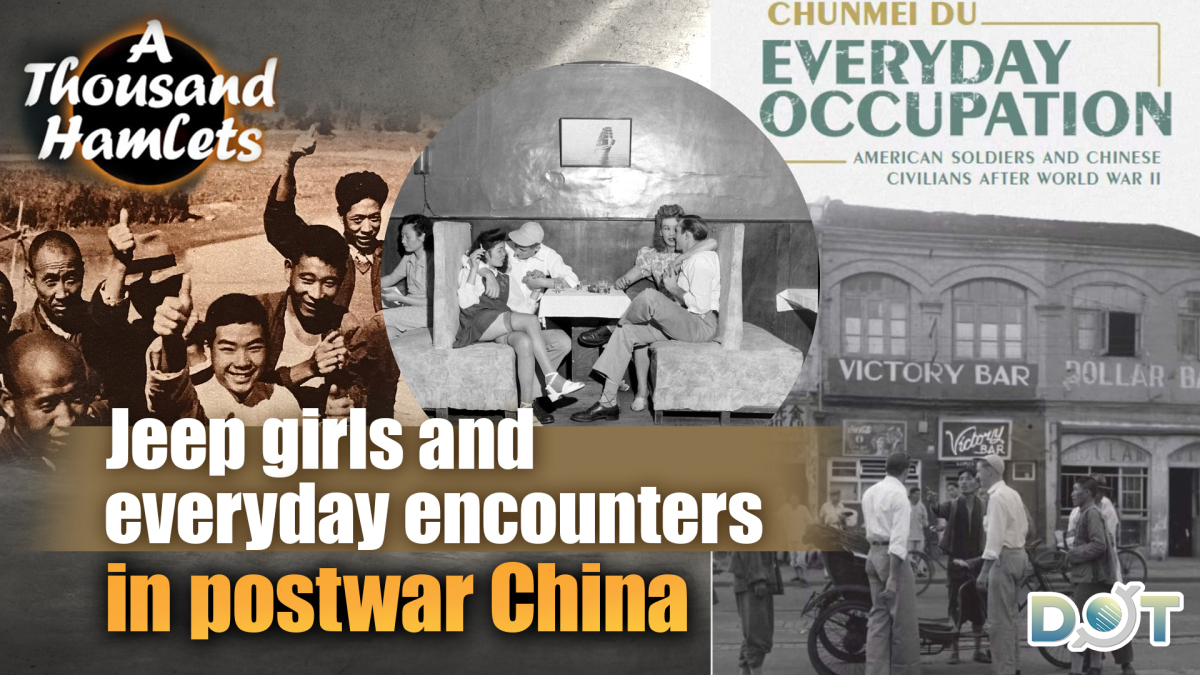
Chunmei Du's Everyday Occupation: American Soldiers and Chinese Civilians After World War II(2026) examines the presence of American GIs in China after the Japanese surrender. Encounters between US soldiers and Chinese civilians were unsurprisingly punctuated by miscommunication and misunderstanding.
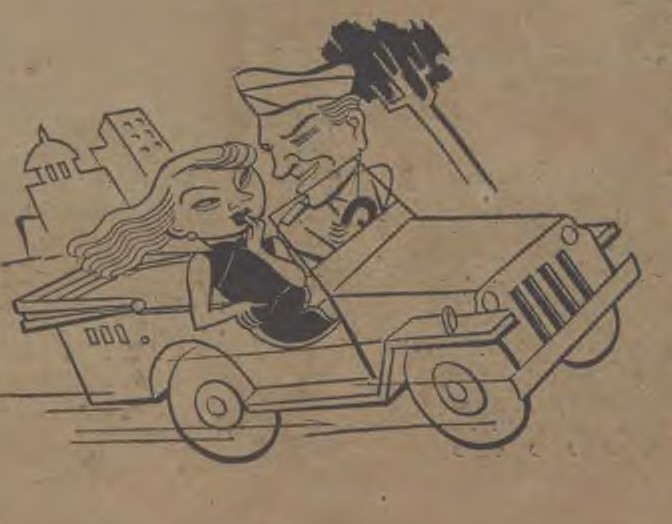
Professor Du highlights the phenomenon of "Jeep girls" (jipu nülang) who were attracted to the status and money of American soldiers. (The sexually predatory behaviour of US GIs was a problem for civilians of other wartime allies, including Britain and France.) Du argues that hostility generated by the spectacle of Jeep girls had political ramifications: "Communist propaganda targeted the Jeep as the ultimate emblem of US imperialism."
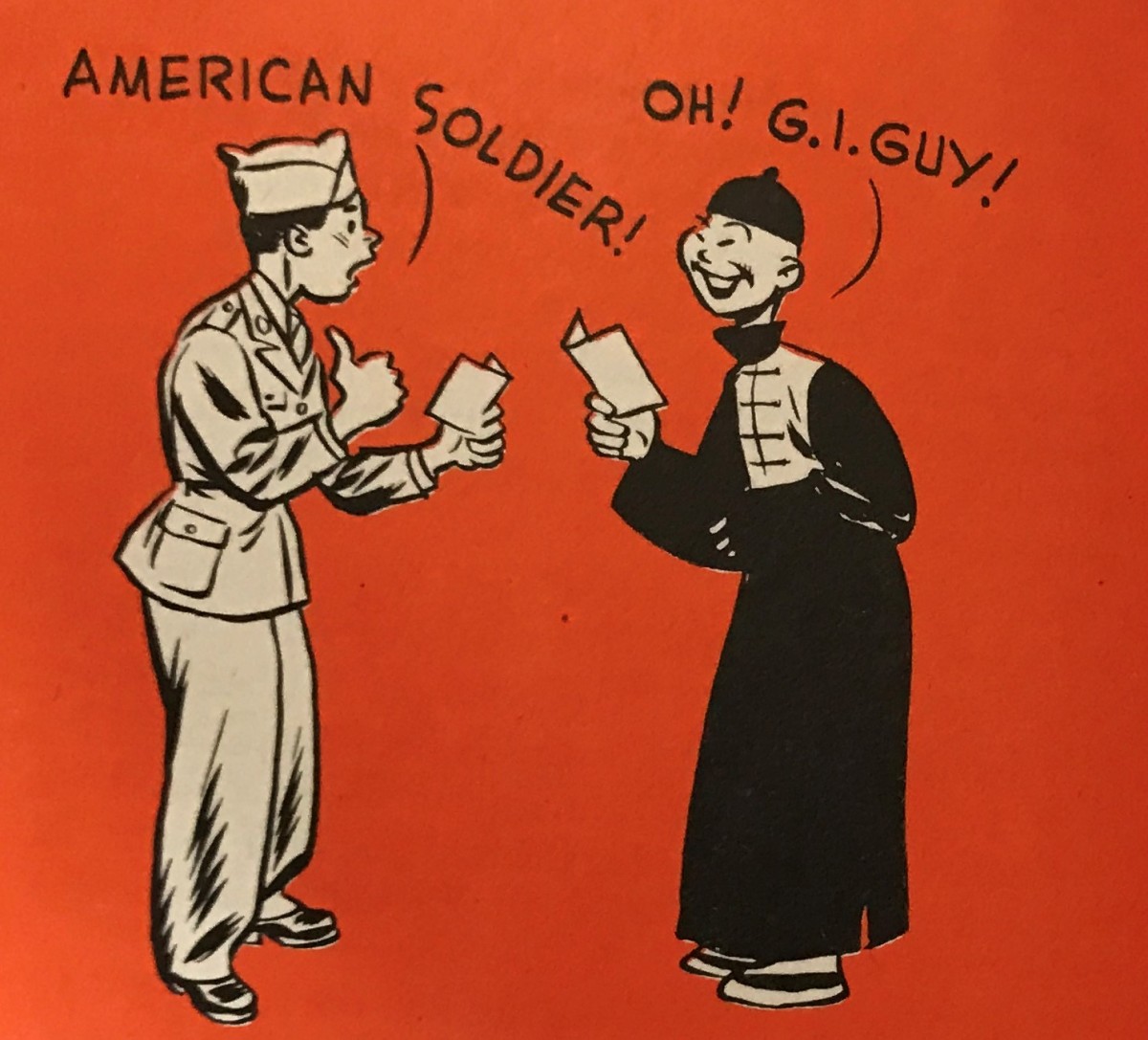
Everyday Occupation's historical judgement takes on a gothic imagery to illustrate the menace of US traffic accidents and sexual relations: "the Jeep/GI became an abhorrent foreign military monster that was part human, part machine, part beast. The GI in the Jeep was more than a 'red-haired foreign devil', a phrase that the Chinese traditionally used to describe Westerners out of racial and cultural fear; the GI in the Jeep was a 'killing tiger' with giant headlights, shining with animal urges and wild intimidation."
"Everyday occupation" is a metaphor for an oppressive environment arising from power asymmetries between the US, from 1945 to 1949 the world's single nuclear superpower, and Chinese civilization, since 1937 plagued by Japanese invasion and occupation, then civil war between US-backed Nationalists and the Chinese Communist Party. American soldiers were sent to China to keep the peace and end a civil war. Du dismisses General Marshall's peace mission to China as "mission impossible". Everyday Occupation views US soldiers as disturbers of the peace and agents of enduring resentment. Welcomed as liberators, US troops were soon demonized as a new wave of capitalist imperialists.
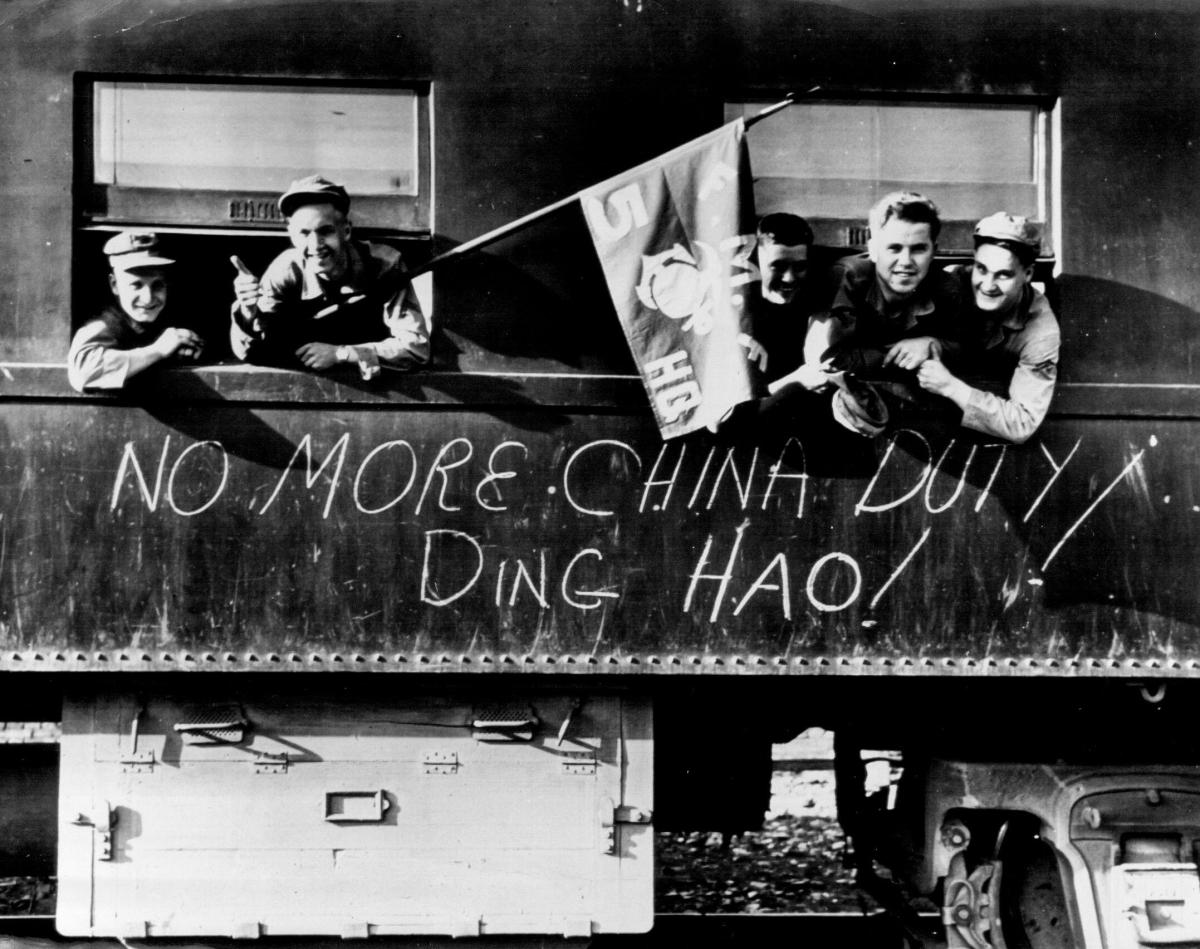
In reality, American servicemen and their families petitioned the Truman administration to withdraw from China. They orchestrated letter-writing campaigns and public protests. Everyday Occupation carries a photograph of US Marines giving "ding hao" thumbs-up gestures to celebrate their departure from Beijing.
Du's book is a "microhistory", rich in sociocultural detail, rather than another top-down interpretation of Cold War geopolitics which, after the Korean War exploded in 1950, deteriorated in American anti-Communism and Communist anti-American propaganda with corrosive longer-term effects. US diplomats left Beijing in 1950 and did not return until the China-US rapprochement in the 1970s.
Everyday Occupation focuses on incidents of the US military's criminal misconduct, racism, and sexism toward Chinese civilians. Du claims that such everyday encounters occurred at a "highly volatile and ultimately defining moment," supporting her causal explanation of the longevity of populist anti-American sentiments in mainland China. This microhistory aims to provide "valuable lessons for today, when the world is once again caught in polarized ideological confrontations and nationalist conflicts."
Professor Du's study of everyday US encounters in postwar China portrays two camps eyeing one another suspiciously from the ideological tips of respective icebergs, while hidden depths of social customs, values and beliefs drift noiselessly underneath.
Graham Greene's novel The Quiet American(1955) contrasted American ideological dogmatism in Asia with European pragmatism, stripped of illusions after generations of colonial experience.
In 1953, Woodrow Wyatt observed: "Today, it is the British who appear to Asians as the Western country most sympathetic to their national aspirations, whereas Americans are feared as potential aggressors and as living symbols of capitalist-imperialism."
British poet and literary critic William Empson saw his job at Peking University, 1947-52, "to try and improve my country's relations with China". His eye-witness account of the national day parade into Tiananmen Square on 1 October 1949 recorded that "there was no anti-foreign feeling shown at all". In 1950, Empson explained to a Cambridge friend: "There is still the beautiful city and the charming good humour and the best food in the world." C. P. Fitzgerald, British Council representative in Beijing from 1946 until 1950, recalled: "It was delightful in those days for foreigners. The most delicious and happiest, pleasantest way of life you could have imagined anywhere"!
Empson angrily banged his fist on a table when informed his British Council subsidy at Peking University had been cancelled. His 1953 inaugural lecture at Sheffield University was passionate testimony to a lasting admiration for Chinese colleagues and students.
Empson was fondly remembered by his students in Beijing – some went on to be leading scholars of foreign studies in China – and he is revered in Chinese universities today. In Tsinghua University Press's collection Cambridge Criticism: China and the World(2022), Jiang Hongxin, Party Secretary and Professor of Hunan Normal University, asserted that Empson's writings "exerted great influence on modern Chinese poetry."
Empson, it should be noted, decried US and Russian foreign policy in 1949 as "lunatic". Cold War realities would define Hong Kong's position in the postwar world.
In Edge of Empires(2005), John M. Carroll of Hong Kong University demonstrated how a strategic Anglo-Chinese co-operation enabled Hong Kong to negotiate life on the edge of empires. The British return to Hong Kong in 1945 provided a colonial framework for economic success in manufacturing and finance that prospered owing to cross-border ties with South China. Pragmatic collaboration, facilitated by a Chinese business elite, was the city's competitive advantage, characterized by Su Fuxiang in 1948 as a "meeting point of East and West". Carroll points out that only "emphasizing binary contrasts and insurmountable cultural differences ignores the possibility of any dialogue between East and West."
Mark Hampton's Hong Kong and British Culture 1945-1997(reissued 2024) argues that a vast majority of Hong Kongers never embraced British identity under colonialism; they remained resolutely Chinese. Hampton's analysis also emphasizes the social reforms by the Hong Kong Government that addressed the needs of mainland immigrants: large public housing projects, advanced education provision, and anti-corruption drives that improved the lives of millions.
In fact, 185 years of grassroots interactions between Chinese and Westerners have given this city a unique flavor, reflected in the HKSAR's 2024 Blueprint for Hong Kong as a hub for East-meets-West cultural exchange. The future of the Greater Bay Area megacity will fulfil its historic destiny as a superconnector between China and overseas markets – a vital commercial role performed by the Pearl River Delta since the Tang Dynasty.
In 1988, Yale historian Paul Kennedy's The Rise and Fall of the Great Powers forecast the rise of China as a great power – "that swiftly changing giant" following Deng Xiaoping's reforms – and the relative decline of the United States due to military overstretch. Thirty years later, bestselling Oxford historian Peter Frankopan devoted a section of The New Silk Roads(2018) to President Xi's "One Belt, One Road" initiative. He contends: "We are living in the Asian century already, a time when the movement of global GDP [from the West to the East] is taking place on an astonishing scale – and at astonishing speed."
World-historical shifts in global power arouse inevitable rivalries. Trump's erratic foreign policy has placed strain on Sino-US relations. Throughout history, China has been more patient in playing a long game to realize goals identified by the Belt and Road Initiative: "Mutual learning will replace clashes; coexistence will replace a sense of superiority." This will "add splendor to human civilization," creating "a new era of harmony and trade".
Ongoing research into the daily textures of China-West encounters can equip leaders and diplomats to re-evaluate and reframe the realpolitik and xenophobia of the past to build this brighter future.
Jason Harding is the Head and Professor of the Department of English at Lingnan University. He holds a PhD from King's College, Cambridge.
The views do not necessarily reflect those of DotDotNews.
Related Readings:
A Thousand Hamlets | Tragedy at the Hong Kong International Shakespeare Festival




Comment