






By Jason Harding
The Hong Kong International Shakespeare Festival – this year featuring performances in Cantonese, English, Korean, Polish, Romanian, and Tibetan – has established itself as a gem in the city's showcase of East-West cultural exchange.
From the few thousand theatregoers who saw the original performances at the Globe Theatre on London's South Bank over 400 years ago, Shakespeare's plays now flourish as a global phenomenon.
Shakespeare was enthusiastically received in East Asia, where iconic film versions of Macbeth and King Lear by Akira Kurosawa transplanted these tragedies to the feudal world of Japanese samurai. Today, a dozen precious copies of the 1623 Folio, the first collected edition of 36 Shakespeare plays, are enshrined in Tokyo.
Professor Alexa A. Joubin has demonstrated how "over a century of cross-fertilization has firmly rooted Shakespeare in Chinese cultural production." She has examined the impact of Shakespeare's legacy in China following the Opium Wars. Late 19th-century Hong Kong witnessed English-language performances of the plays, which were firmly embedded in the British colony's educational curriculum.
Reformist Chinese intellectuals in the early 20th-century explored Shakespeare as a way of comprehending Western thought, such as in Lao She's satiric novella "New Hamlet" (1936). From the 1980s onward, experimental East Asian appropriations of Shakespeare employed acting techniques from Chinese Opera. Controversially, the Contemporary Legend Theatre staged performances of Macbeth and King Lear in Taipei with Beijing Opera actor Wu Hsing-kuo in the title roles. His Julius Caesar, performed in Putonghua alongside Kunqu Operastar Zhang Jun, premiered at the 2024 Hong Kong Arts Festival.
Acclaimed theatre director Tang Shu-wing has pioneered the adaptation of Shakespeare in Hong Kong. His bold, minimalist productions of Hamlet, Titus Andronicus, Macbeth, and King Lear have brought Shakespeare's tragedies alive for Cantonese audiences. His creative practice is a disciplined fusion of Jerzy Grotowski's actor training (emphasising self-discovery through physical and vocal technique) with Tai Chi and meditation. In his reflections on acting and directing, The Three Levels of ABC(2023), Shu-wing explains that his artistic vision is directed toward bodily expression – gestures, facial expressions displaying vivid emotion, breathing, movements on stage, as well as the volume, pitch, and rhythms of vocalised sound – so that the actor's body "thinks".
"Performing artists use their bodies to express what they feel," writes Shu-wing, "The human mind is always a mystery. It is not visible even though it may wander here and there. But the human body is visibly neutral until it expresses something." This creative dramaturgy has profound implications for the staging of Shakespeare's plays, especially the revelation of the complex, mutable interiority of tragic characters.
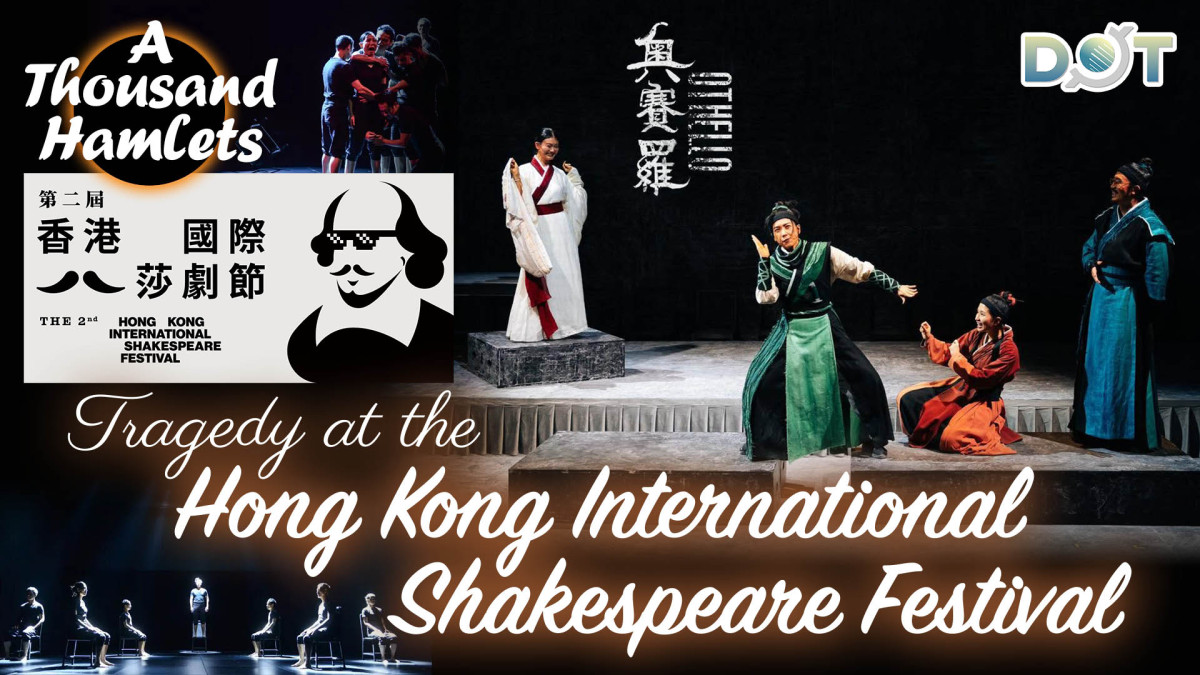
Performances by the Tang Shu-wing Theatre Studio opened and closed the 2026 Hong Kong International Shakespeare Festival this June with Cantonese productions (with Chinese and English surtitles) of Othello and Titus Andronicus.
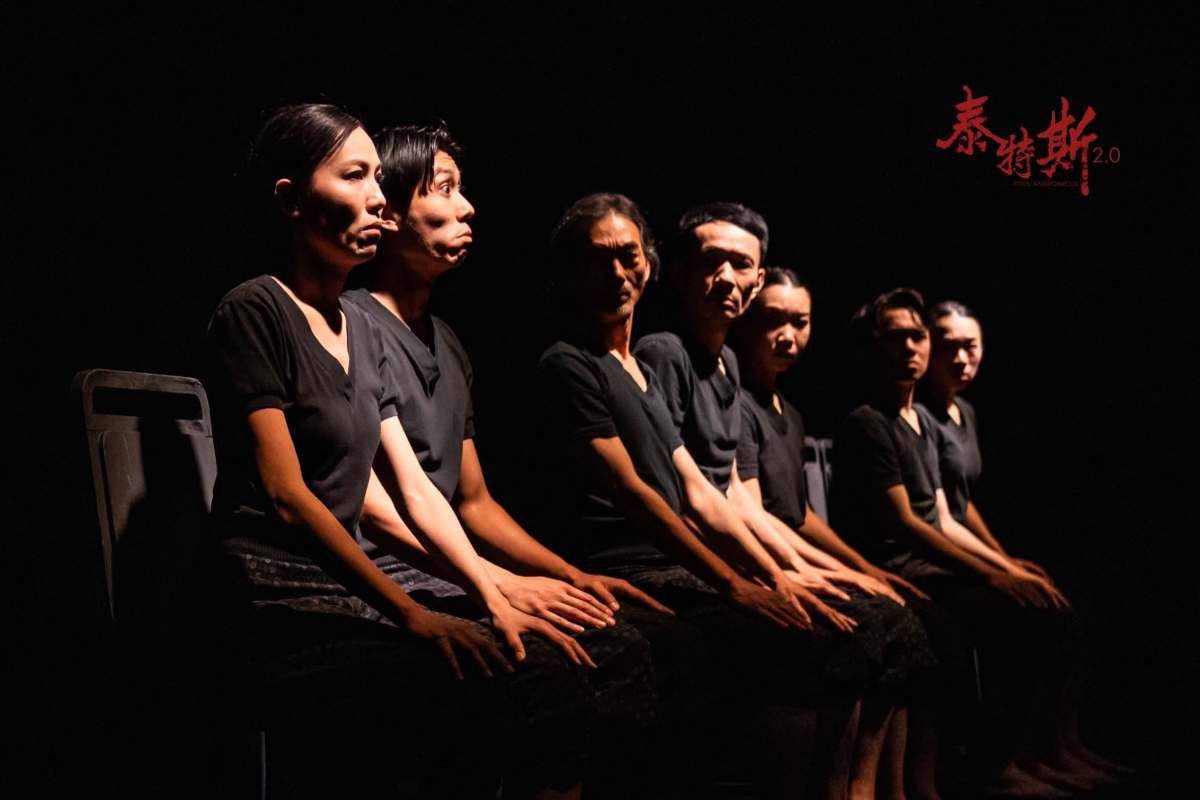
Shu-wing's Titus Andronicus 2.0 reprises an adaptation of the play, which represented Hong Kong-China at the Globe-to-Globe Festival in the reconstructed Globe Theatre, London, in 2012. Shu-wing dials down the melodramatic, gory cruelty of this revenge tragedy plot, which includes rape, amputations, murders, and even cannibalism.
The play was popular with Elizabethans but was considered unplayable for centuries afterwards. In 1927, T. S. Eliot dismissed Titus Andronicus as "one of the stupidest and most uninspired plays ever written." Scholars justified this low valuation by pointing to Peele's co-authorship and the relative immaturity of Shakespeare's earliest tragedy.
Peter Brook's groundbreaking 1955 Royal Shakespeare Company production, starring Laurence Olivier as Titus and Vivien Leigh as Lavinia, took inspiration from the deeply aesthetic violence of Japanese Kabuki drama, using red ribbons to symbolize blood.
Jan Kott saw Peter Brook's production in Poland, counting it "among the five greatest theatrical experiences of my life." He viewed its spectacular, stylized choreography as thrilling: "The Elizabethan theatre was – like the Chinese opera – a theatre for the eyes" (a performance of Chinese Opera in Beijing was another of Kott's five greatest theatrical experiences). Kott praised mute mutilated Vivien Leigh's stumps streaming with scarlet: "How much suffering she is able to convey just by bending her body, by hiding her face!"
Herein lies the essence of Titus Andronicus 2.0.
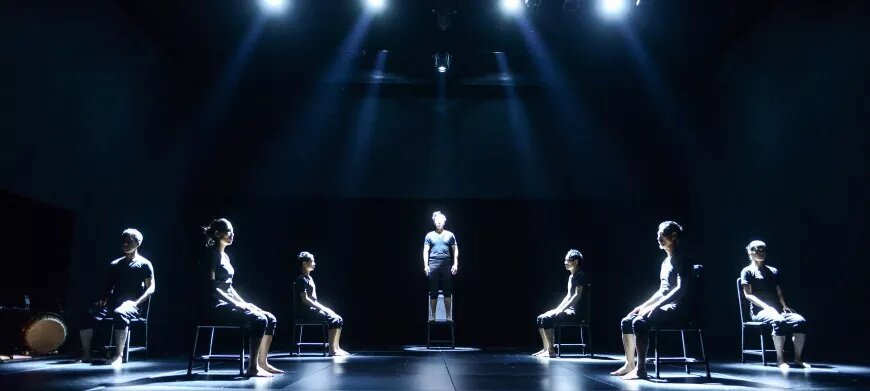
Shu-wing radically reorientates the play away from bombastic rhetoric to an embodied trauma performed by a stripped-down cast of seven on an empty stage except for seven spotlit chairs. Ng Wai-shek, Ivy Pang, and Masu Wong return from the original 2009 cast, supported by young recruits. Each actor conveys powerful, expressive physical language and Cantonese oral storytelling, switching between a manic protagonist or narrating the plot underlying the group's dynamic interactions.
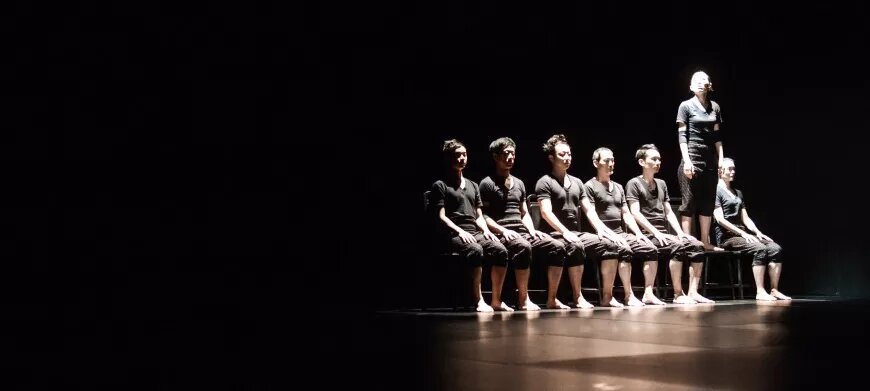
Chan Ting-cheung's live music drums an intense rhythm to stunning, sculptural body contortions and the bloodcurdling cries of the actors. A communal heavy breathing heightens confrontation with barbaric incidents of violence. Unsettling long silences transfix awed contemplation of visceral on-stage suffering.
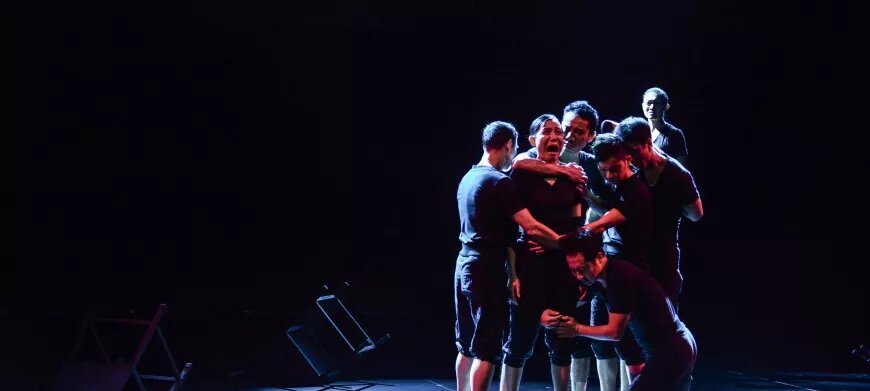
Two of the most disturbing episodes of Titus Andronicus 2.0 feature an outbreak of what critic Nicholas Brooke termed the "horrid laughter" of Elizabethan revenge tragedy, as bodies rush pell-mell about the stage. Brooke argued that Shakespeare triggers horrific laughter in Titus Andronicus because the extreme emotions are "liable to turn over into laughter." This is evidence of the "complex shifts from psychological shock to grim joke, to physical horror".
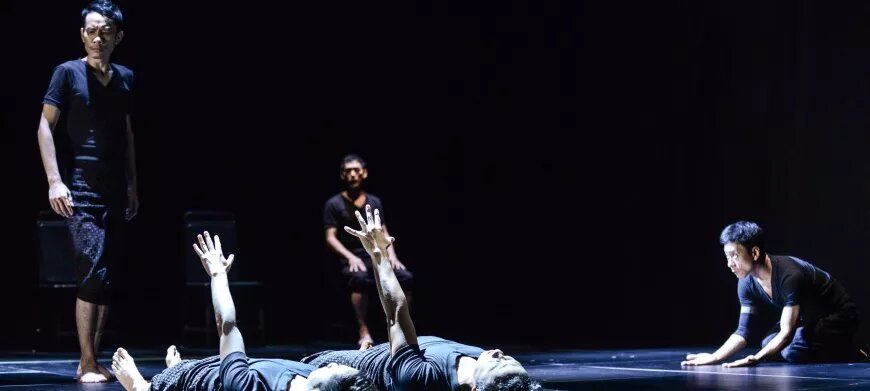
At the end of the play, the actors step forward to present front-row audience members a funereal black cloth – a daring move that creates community in sorrow from the ritual of a live performance. Shared humanity cleanses in the intimacy of Xiqu Centre's Studio 1.
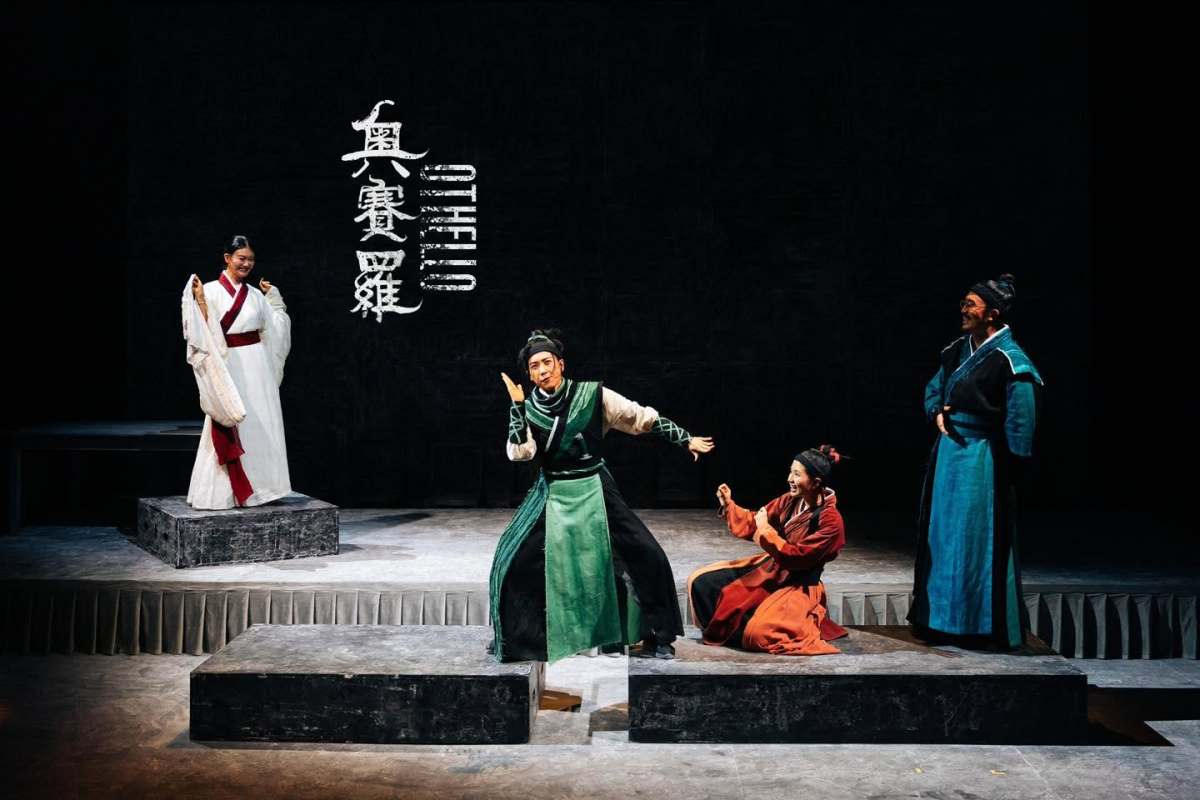
Tang Shu-wing's Othello is set in the Southern Ming/Qing dynasties with period Chinese costumes and Chinese actors. The heroic Moor is transposed from a Venetian general safeguarding the colony of Cyprus to one of Koxinga's captains stationed at the Yangtze River to resist Manchu invaders. This relocation works well in its interrogation of themes of militarism and loyalty. The drama is concentrated in a cast of four actors voicing nine roles, ensuring the action at the Hong Kong Cultural Centre was tightly knit.
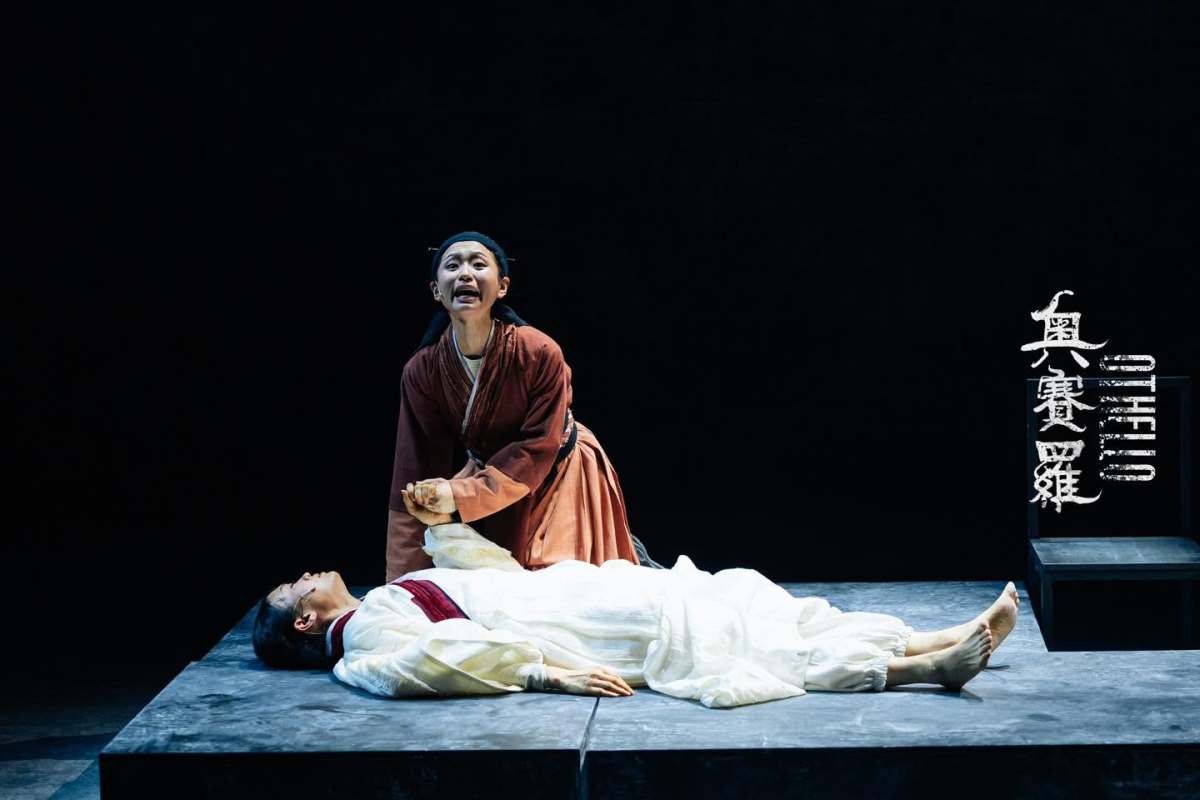
Innovation in this production takes several forms: Pak Yiu-charn's salty, vernacular Cantonese translation (with dialogue where Othello speaks an elevated Putonghua); Jan Wong's dusty, bare stage design; Lo Wing's video projections on a grey backdrop; and an ominous, rumbling piano soundscape by Fung Lam. Above all, Tang Shu-wing's artistic vision of a "body-centric minimalist aesthetics" shines through every scene.
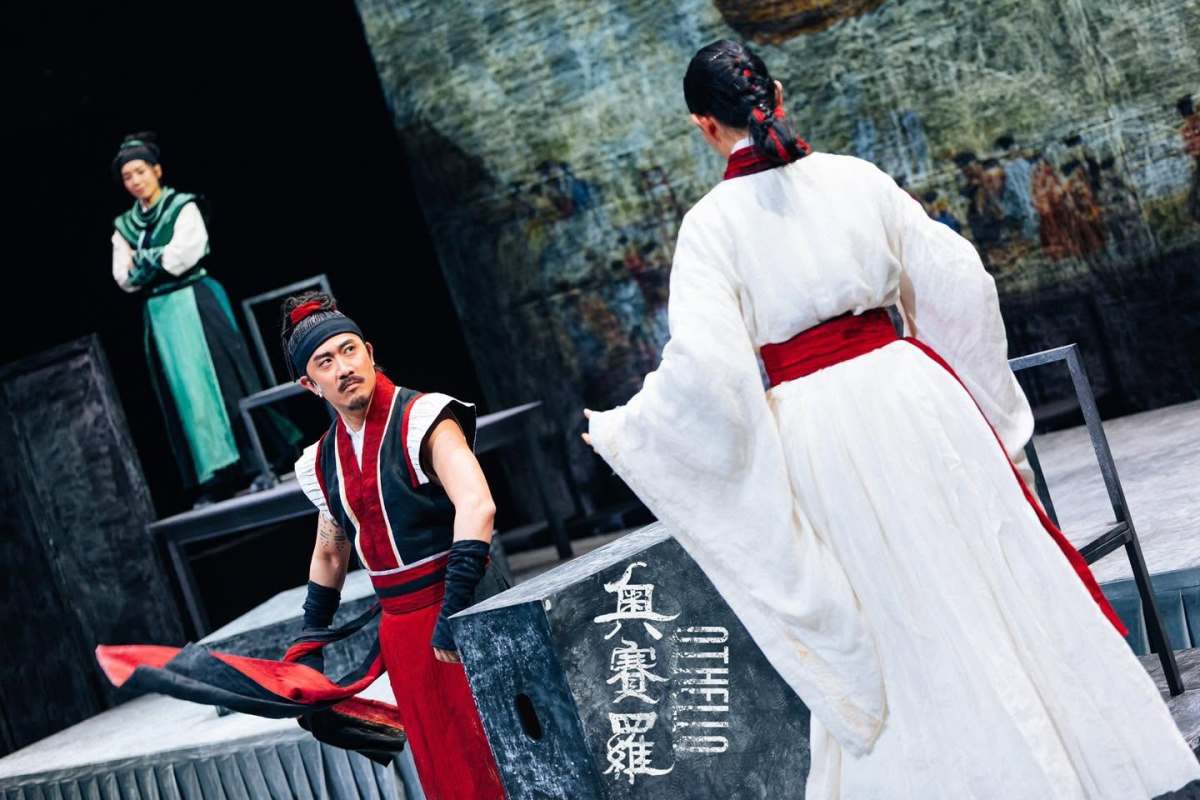
Casting a Chinese ensemble reframes Othello from emotive racial issues that dominate contemporary productions in the West (artist Gisèle Tchitchiama's closing monologue after the cast departs speaks to the challenges for a black woman living in Hong Kong). This radical approach to Othello allows other important elements to come to the fore. Pak Yiu-charn's programme "Guided Introduction" highlights jealousy, love, sexuality, violence, anger, faith, and delusion.
A.C. Bradley's lectures on Shakespeare's tragedies lamented the "overwhelming weight of calamity that oppresses us" in Othello, due in part to the lack of the subplots found in Hamlet, Macbeth, and King Lear, which contain moments of "comic relief". The sardonic laughter elicited by Shu-wing's Othello draws out a comedy found in medieval morality plays, whereby the Vice figure's diabolical evil provokes listeners with an ironic macabre humour. Mandy Wong's Iago stands in this theatrical tradition. Cantonese translation of Iago's vulgar, pornographic language, proof of a polluted imagination, is the source of a "horrid laughter" which erupts, uncontrollably yet intermittently, amongst the audience throughout this performance.
Iago's character is intelligible and clear in this production with insistent repetition of the motives for hating Othello – ambition, egotism, envy, sexual jealousy – rejecting a strand of Shakespeare criticism deriving from Samuel Taylor Coleridge's famous diagnosis of Iago's "motiveless malignity" in his soliloquies. A loss of subtle psychological intrigue in the pivotal temptation scene, where Iago poisons Othello's trust in Desdemona with sly insinuations and wicked lies, is redeemed by the acceleration towards the catastrophe. This Othello is always superb entertainment.
Rachel Leung's Roderigo, Brabantio, and Emilia neatly interweave the unfolding tragedy. Lai Yuk-ching's Desdemona is more submissive than feminist, at one point tracing the graceful, stylized gestures of a female Dan (旦) role in Chinese Opera. She flirts with a rather shabbily dressed Cassio shuffling onto and off stage. This is not Shakespeare's courteous, attractive Florentine. In Leung Tin-chak's representation of both parts, Cassio is no match, nor a credible love rival, for domineering Othello's commanding presence.
Physicality, the foundation of Tang Shu-wing's creative aesthetics, makes some striking contributions to the visual imagery of this production. At the bitter end, this muscular, masculine Othello pins feline, feminine Iago underfoot – an unexpected tableau of the battle-hardened ensign's struggle with his general, albeit one replaying a 19th-century Othello by Tommaso Salvini, who in an explosive performance lifted a foot to stamp on the head of a prostrate Iago.
The abundance of Shakespeare's plays stimulates a continual effort of reinterpretation across different times and cultures. Tang Shu-wing's richly intercultural productions of Shakespeare refresh a 400-year-old tragic art for generations of Hong Kong audiences.
Jason Harding is the Head and Professor of the Department of English at Lingnan University. He holds a PhD from King's College, Cambridge.
The views do not necessarily reflect those of DotDotNews.
Related Readings:
A Thousand Hamlets | Reflections on Antigone in Hong Kong
A Thousand Hamlets | Mapping Hong Kong: City of impermanence




Comment