






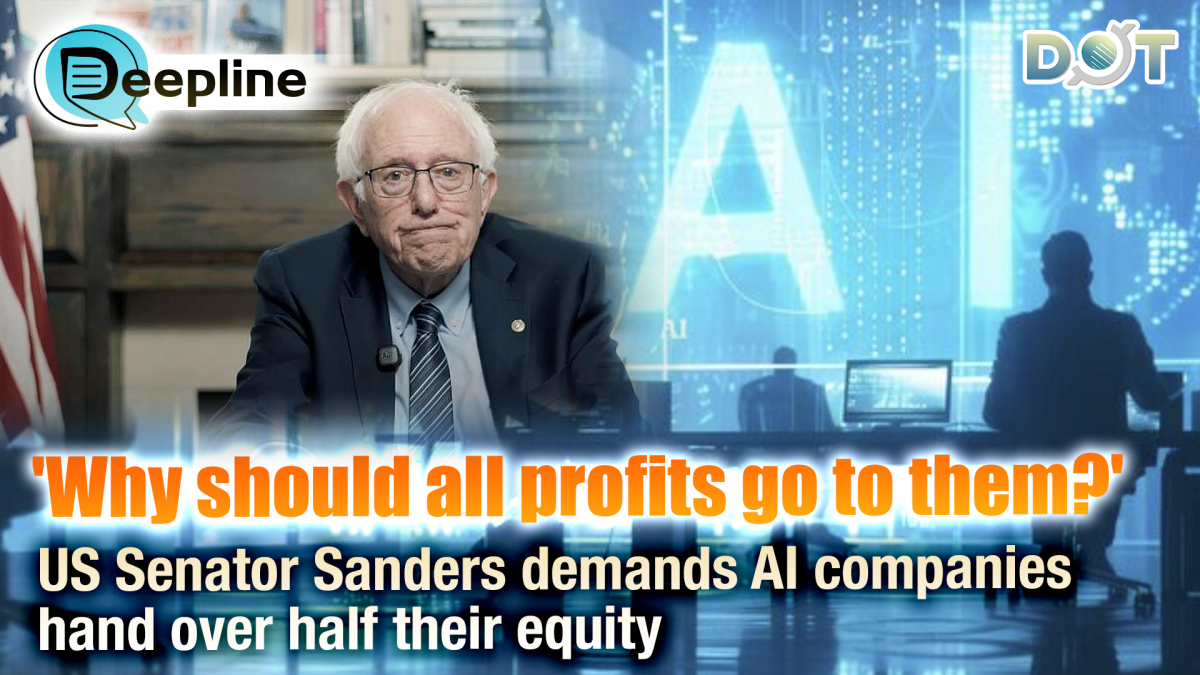
84-year-old US Senator Bernie Sanders published an op-ed in The New York Times and simultaneously dropped a video address on his YouTube channel. The gist? Companies like OpenAI, Anthropic, and xAI should fork over half of their shares to create an "American AI Sovereign Wealth Fund" owned by every American.
Before Sanders' words even faded, US Vice President JD Vance appeared on a podcast and flat-out said President Donald Trump backs the idea of the US government holding equity in these giant AI firms.
Vance added, for a Republican, that's pretty "unconventional."
That was June 18, 2026. The Trump administration isn't touching Sanders' radical 50% number; they're open to a milder version. But the shift in tone alone changes the game entirely.
Then Elon Musk jumped in. On X, he pushed back against government ownership, advocating for a simpler fix: the Treasury just cuts checks directly to citizens.
By now, the debate had already moved past whether the public deserves a piece of AI's pie. The fight is over how: government equity stakes or direct cash handouts.
Sanders' core argument, meanwhile, boils down to one line: AI was trained on all of humanity's collective knowledge without permission, credit, or a single dime of compensation. So why should all the spoils go to a few private players?
He even dug up OpenAI's own words, Anthropic's own proposals, and Musk's own stated plans to make his case.
"You guys all said this should happen, so let's just pass a law right now."
Sanders, 84, is the independent US Senator from Vermont, a democratic socialist, and widely seen as one of the leading figures of modern American progressivism.
He ran for the Democratic presidential nomination in 2016 and 2020. Though he never clinched the nod, his small-donor fundraising model and fierce anti-inequality platform made him an icon of the American left.
The AI world knows him because he's become Congress's most radical voice on the industry.
This year alone, he's been on a tear: in February, he warned the Senate that AI could put nearly 100 million US jobs at risk; in March, alongside Rep. AOC, he introduced the AI Data Center Moratorium Act to freeze new data center construction; and just yesterday, he announced he's rolling out the American AI Sovereign Wealth Fund Act, which would impose a one-time 50% equity tax on the biggest AI companies, name-checking OpenAI, Anthropic, and xAI, and use the proceeds to seed a sovereign fund for all Americans.
None of these bills stands a chance of becoming law under the current political landscape.
But Sanders has never been about "passing legislation." He's about "moving the Overton window" — by tossing out extreme proposals, he drags AI's job-disruption and wealth-concentration problems squarely into the mainstream political conversation.
The great Chinese writer and thinker Lu Xun once said, "The Chinese always love to compromise. Everyone will object if you say the room is too dark and need to open a skylight. But if you threaten to tear the whole roof off, they'll rush to meet you halfway and gladly agree to that skylight."
Seems Sanders has picked up a bit of Eastern wisdom. Barely days after his maximalist call, the Republican administration, the very crowd that worships free markets and would never voluntarily crack open a skylight, is now earnestly debating whether to open one after all.
AI has already rocketed to the center of the 2026 midterm elections, and Sanders, without question, is one of the loudest voices in that conversation.
Related News:
Deepline | Why Jensen Huang bypasses Japan, and what it means for the nation's AI future




Comment