






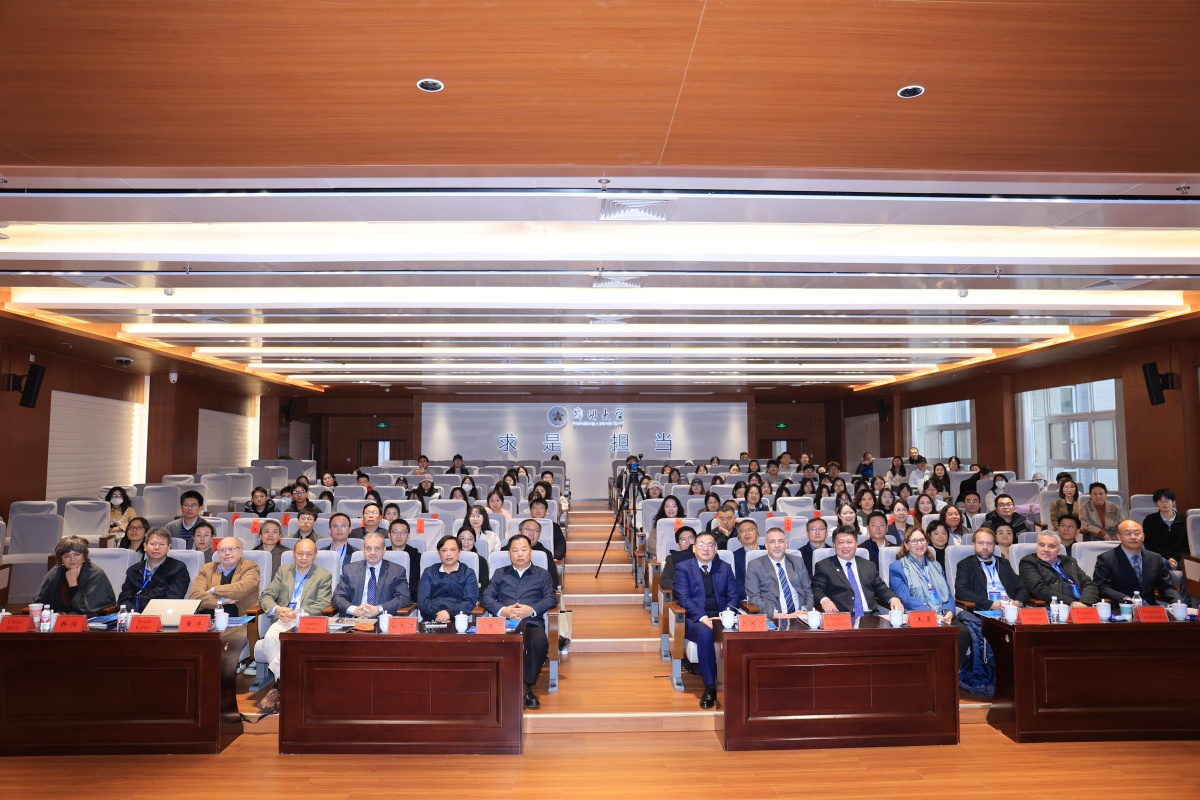
On Nov. 6, Zhengzhou University hosted the opening ceremony of the International Symposium on Mutual Learning between Chinese and Greek Civilizations and the Global Communication of Central Plains Culture. Chloe Balla, Chair of the Board of Directors of the Center of Greek and Chinese Ancient Civilizations (KELKIP) and Professor of Ancient Philosophy at the University of Crete, and Han Guohe, Dean of the Songyang Institute for Advanced Study at Zhengzhou University, both placed "human virtue" at the centre of their remarks. As artificial intelligence sweeps through education, the two scholars reminded their audience that education's fundamental purpose remains "illuminating virtue" and "self-cultivation"—the cultivation of human virtue.
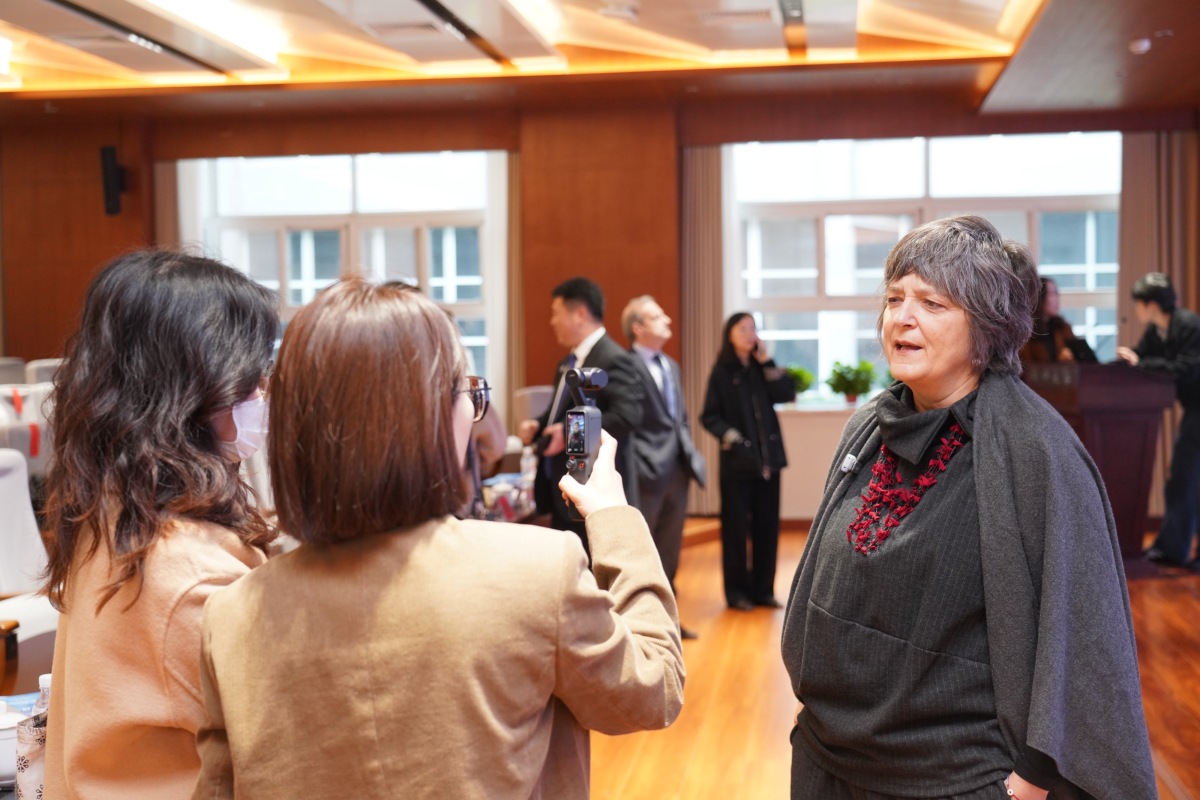
In an interview, Balla said plainly: "AI is a very important tool, but it is only a tool." Drawing on Plato's discussion of writing in the Phaedrus, she noted that writing is a tool and cannot be realised independently of specific human beings; if people wish to become truly human, they must also cultivate their own virtue and soul. She argued that those "mesmerised" by AI are likely to overlook the connection among the body, the soul and writing, and how that connection shapes a person. She singled out calligraphy as a tradition central to Chinese civilisation that is absent on the Greek side, and observed that "how writing shapes a person" carries a more self-conscious sense of craft and of physical and spiritual cultivation in Chinese tradition.
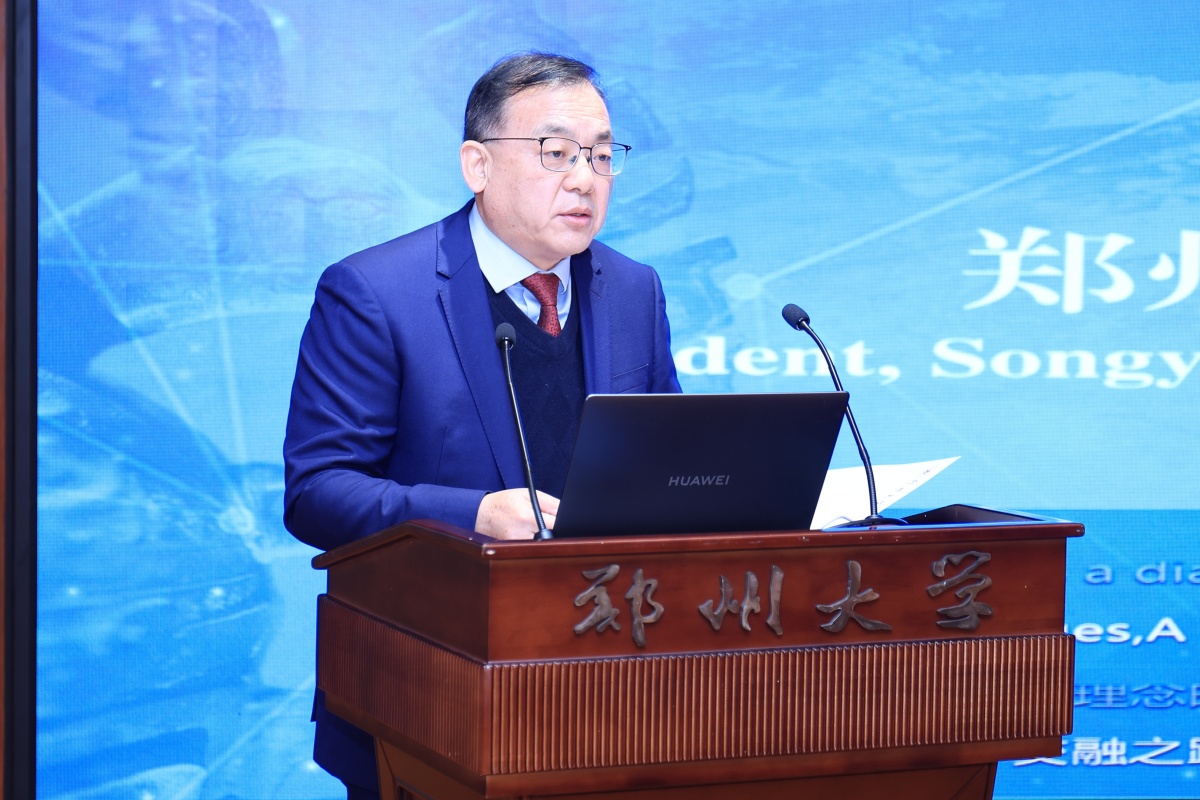
Han Guohe began his opening address from the perspective of the "Axial Age." He said that around 500 BCE, China and Greece almost simultaneously experienced breakthroughs of the human spirit; the lives of Confucius and Socrates almost dovetailed, and China's "Hundred Schools of Thought" completely overlapped with the Golden Age of Athens. Both civilisations completed an "awakening of humanity," but took different paths: China moved toward "inner transcendence," emphasising human relations, responsibility and ren (benevolence); Greece moved toward "outward transcendence," emphasising reason, excellence and eudaimonia. Yet on the fundamental question of "how one should live," both paths converged on the word "virtue." He quoted the opening of The Great Learning—"The Way of the Great Learning lies in illuminating the bright virtue, renewing the people, and resting in the highest good"—and observed that "the root of education is not instilling knowledge, but polishing the innate bright virtue of human beings, extending oneself to others, and ultimately reaching the highest good." Aristotle's arete and Confucius's teaching that "the benevolent love others" and "a person of virtue seeks to establish himself and also helps others to establish themselves" form an echo across time and space under the contemporary university task of "fostering virtue through education."
The two scholars' judgments converged at "mutual learning among civilizations." Balla said KELKIP should continue to serve as a "bridge" and "facilitator," promoting exchanges between younger generations in Greece and China. She called Henan a "hidden gem," and said that in future China–Greece exchange programmes she will incorporate the Henan case and what she learned during this visit, "encouraging more Greeks to come and see what Henan means to Chinese civilisation." Han Guohe stressed that communication is not export, not preaching, and certainly not cultural monopoly; rather, it means contributing the inclusiveness of "great virtue carries all things," the ethics of "do not impose on others what you yourself do not desire," and the wisdom of "harmony without uniformity," and placing them alongside the arete of the Greek sages, Plato's justice and Aristotle's happiness, to jointly answer the question of humanity's development in the 21st century.
Today, when AI can rapidly generate text, images and knowledge, the reminder from the two scholars—from the Aegean Sea and the Yellow River—is especially clear: beyond material means, spiritual strength is still needed to make the will sincere and rectify the mind; beyond tools, "education in virtue" is still needed.
The symposium was hosted by KELKIP and Zhengzhou University, and organised by the Office of International Exchange and Cooperation, the Songyang Institute for Advanced Study, and the School of Archaeology and Cultural Heritage at Zhengzhou University. Seven Greek scholars and representatives from more than 20 Chinese universities and research institutions attended. The programme included keynote speeches, three parallel sessions—"Archaeology, Art and Urban Civilization," "Intellectual Texts and Mutual Learning among Civilizations," and "Cultural Heritage and International Communication"—and a field trip to cultural heritage sites in the Central Plains.
(Reported by Liu Rui from Henan)
Related News:
Global university leaders see opportunities in HK's Northern Metropolis university town




Comment