






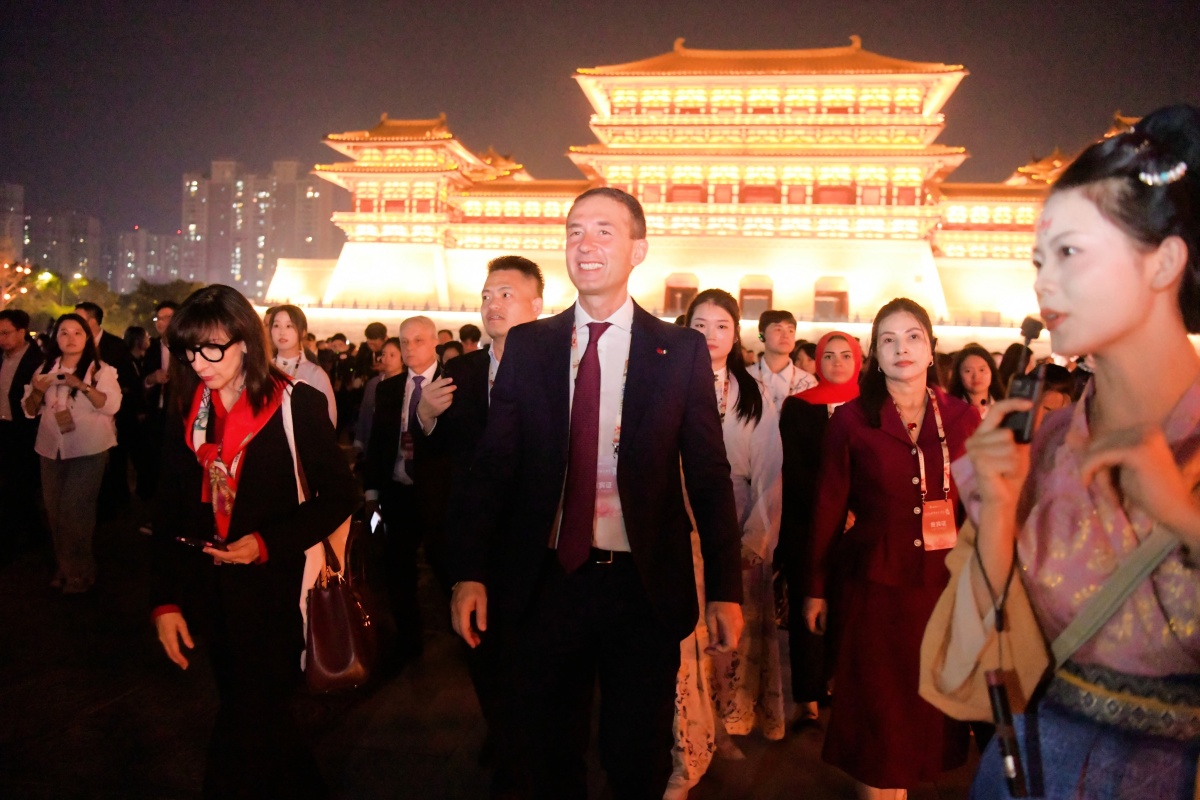
Food, traditional dress and folk customs can serve as bridges between cultures, while residents should have a say in how historic areas are preserved and renewed, Roberto Di Stefano, mayor of Sesto San Giovanni, Italy, said in an exclusive interview during the 2026 Global Mayors Dialogue in Luoyang, Henan province.
During his visit to Luoyang, Di Stefano toured Lijing Gate and took part in a ceremony at Yingtian Gate, immersing himself in the city's rich history and cultural traditions. He frequently stopped to take photos, showing keen interest in the ancient capital's heritage and its efforts to bring history to life through immersive cultural experiences.
Drawing on his experience in urban governance in Europe, Di Stefano shared his views on how cultural exchanges can bring cities closer together and how historic cities can strike a balance between preserving their heritage and meeting the needs of modern development.
Di Stefano said cultural exchanges need not be limited to traditional crafts. Nature-based activities, cultural programs, tea festivals and events showcasing traditional dress can also help people from different backgrounds connect. Such initiatives have attracted interest from cultural and tourism organizations, he said, adding that food, with its close ties to everyday life, is particularly effective in bringing cultures together.
Italy's culinary traditions have developed over centuries, with regional cuisines and local ingredients reflecting the country's diverse cultural heritage, he noted. Sharing food, folk customs and traditional dress can help people overcome geographical and cultural differences, creating opportunities for closer ties between cities around the world.
Turning to the challenge of balancing heritage conservation with economic development, Di Stefano said each city has landmarks and historic districts that embody its origins, collective memory and cultural identity.
Passed down through generations, old streets and historic neighborhoods form an important part of a city's character and should be protected through appropriate restoration and maintenance, he said. Preserving these places helps ensure that a city's distinctive cultural heritage is not lost amid rapid urban development.
However, he stressed that urban renewal should not mean freezing a city in the past. Areas that have fallen into disrepair and lack significant historical or cultural value can be redeveloped to meet contemporary needs and support economic growth.
The decision over what should be preserved and what can be redeveloped, he said, should not rest solely with government officials. Residents' views must also be taken into account.
Urban authorities should listen to local communities and carefully distinguish between historic streets that warrant preservation and run-down areas that could benefit from regeneration, Di Stefano said. Such an approach can protect a city's cultural roots while allowing it to adapt to changing needs and sustain its long-term development.
(Reporter: Liu Rui; English Editor: Zoey SUN)
Related News:
Watch This | Beyond civilizations: Official promotional film for the 2026 Global Mayors Dialogue
OMG | Unique China haul: Saudi student savors sweet autumn life in Henan




Comment