






By Lau Chi-pang
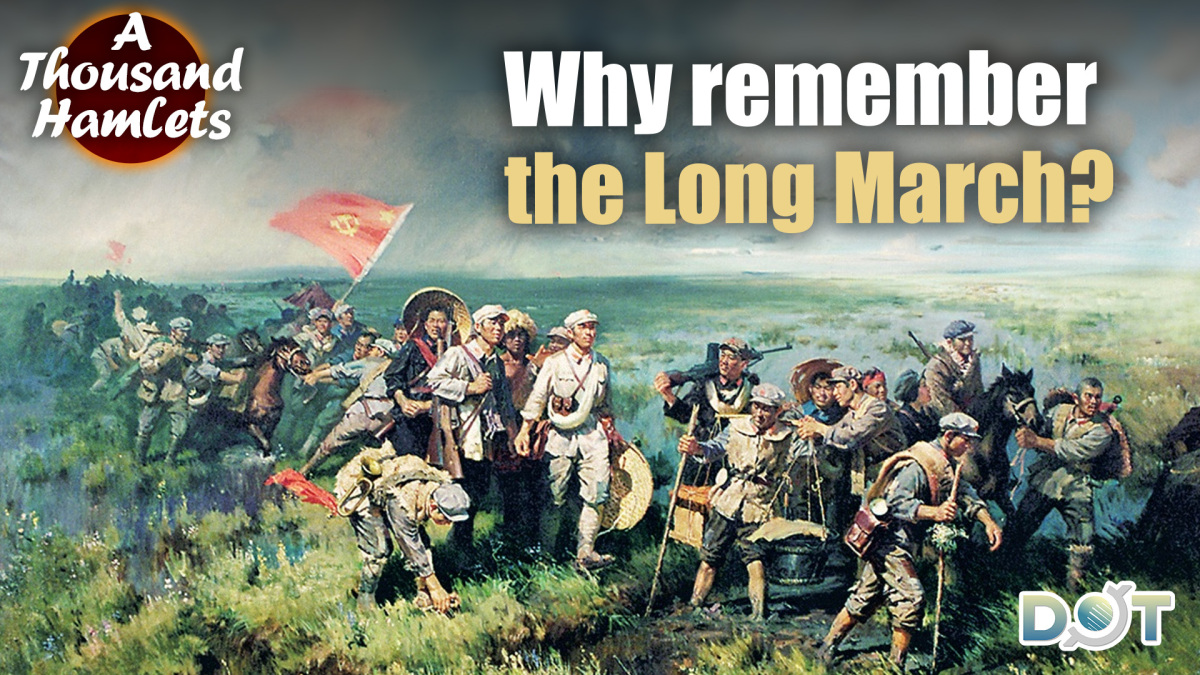
In modern Chinese history, the Long March is a chapter that cannot be overlooked. It was not only a military strategic movement spanning 14 provinces, lasting two years and covering more than 12,500 kilometres, but also a political choice and a test of resilience made under extreme circumstances.
The Long March of the Central Red Army began with its breakthrough from the Central Revolutionary Base Area in October 1934 and ended with the successful reunification of several Red Army forces in Gansu in October 1936. Looking back on this period of history is not simply about revisiting years of hardship. More importantly, it prompts reflection on how a political force responded to failure, adjusted its direction and reshaped itself at a critical moment of survival. Even more importantly, although this history may appear distant from Hong Kong SAR, situated on the southern coast, the two are not entirely unrelated.
Remembering the Long March means facing the historical facts
The Long March originated in the defeat of the Central Revolutionary Base Area during the Fifth Encirclement Campaign. From the second half of 1933, the Kuomintang (中國國民黨), under the command of Chiang Kai-shek, deployed hundreds of thousands to as many as one million troops and adopted a strategy of protracted warfare combining a system of fortified positions with economic blockade.
The Red Army, however, under misguided military leadership, abandoned its previous approach of flexible manoeuvring and concentrating superior forces. Instead, it engaged Kuomintang forces, which had superior equipment and manpower, in positional warfare and attritional battles, eventually becoming trapped in an increasingly untenable situation.
Against this backdrop, in October 1934, the Central Committee of the Communist Party of China and the Central Red Army were forced to withdraw from the Central Revolutionary Base Area and embark on the Long March. It was not a grand expedition planned in advance, but a strategic retreat undertaken for the sake of survival.
Remembering the Long March, therefore, does not mean avoiding its mistakes and sacrifices. On the contrary, it reminds us that historical events later regarded as great turning points are often accompanied by heavy costs. The Battle of the Xiang River (湘江) from November to December 1934 was one of the bloodiest battles in the early stages of the Long March. The Central Red Army was reduced from 86,000 troops at the outset to just over 30,000. The heavy loss of life among officers and soldiers on battlefields such as Guangchang and Jueshanpu (廣昌、覺山鋪) reveals that the Long March was a struggle marked by bloodshed and warfare. Facing these historical realities is the most basic form of respect for history.
The significance of the Long March lies in changing direction
If the Long March is understood simply as a journey of 12,500 kilometres, its true historical significance is easily overlooked. Throughout the Long March, the key issue was never the distance travelled, but the direction taken. Following the devastating Battle of the Xiang River, the Red Army faced an uncertain future and a severe weakening of its forces. How to avoid total defeat and how to reassess the situation became the central questions that would determine its fate.
The Zunyi Conference, held in January 1935, was a major turning point during the Long March. The conference reviewed the lessons of the military setbacks, rejected a dogmatic line of military command, and established a form of leadership and decision-making that was more suited to China's actual circumstances. Thereafter, the Red Army successfully crossed the Chishui River (赤水) four times and made a surprise crossing of the Jinsha River (金沙江), breaking free from the pursuit and encirclement of enemy forces several times its size. After crossing snow-covered mountains and grasslands, it eventually reached Wuqi Town (吳起鎮) in northern Shaanxi in October 1935, marking the end of the Long March of the main Red Army forces.
History shows that the reassessment of China's actual circumstances and the correction of an erroneous line during the later stages of the Long March were important reasons why the Red Army was able to preserve its strength and establish itself once again. The Long March was therefore not simply a gruelling march, but a process of self-correction under extreme pressure.
The spirit of the Long March is often summarised as a willingness to make sacrifices and fight bravely. Yet understanding it only at this level remains incomplete. Historical facts also reveal an awareness of the dangers of rash action, reflection on adventurism, and the rational judgement to fight when possible and withdraw when fighting was not feasible in a situation where the enemy was stronger and one's own forces were weaker.
At its core, this spirit represented a pragmatic choice that placed survival first and the long term ahead of immediate considerations. It was not an emotional impulse, but a rational attitude that sought to preserve possibilities for the future amid harsh realities. The Long March was therefore described as a "declaration, propaganda team and seed sower", because what it preserved was not merely a force, but also a set of ideas and a course of action capable of further development.
The spirit of the Long March and the growth of Hong Kong's young people
In public discourse, the "spirit of the Long March" is sometimes reduced simply to perseverance and the ability to endure hardship. This can create a sense of distance from the lived experiences of young people in the Hong Kong SAR. In fact, the emphasis that the spirit of the Long March places on rationality, responsibility and a sense of reality is not at odds with the circumstances faced by young people in Hong Kong.
First, it is about rational restraint rather than blindly pressing ahead. The essence of the Long March was to preserve strength in an unfavourable situation, rather than allowing emotion to replace judgement. This offers practical lessons for Hong Kong society, where competition is intense and opportunities exist alongside pressure.
Second, it is about collective responsibility and discipline. During the Long March, the Red Army's ability to maintain basic operational effectiveness under extremely difficult conditions depended on discipline, mutual support and consideration of the wider interests of the group. This is highly consistent with Hong Kong's longstanding emphasis on a sense of responsibility, teamwork and care for others in education.
Third, it is about confronting difficulties and facing reality rather than avoiding them. The Long March did not gloss over failure. Instead, it sought a way forward on the basis of acknowledging difficult realities. This attitude is particularly relevant and inspiring for young people in Hong Kong as they navigate a period of transition.
Remembering the Long March and looking to the future
As a key event in the history of the Chinese revolution, the Long March has been incorporated into relevant areas of learning. This is not simply a matter of political necessity, but also reflects its clear historical context and rich educational value.
At the same time, the widespread telling of the story of the Long March is closely linked to historical records. The Red Army's Long March, written and compiled by Red Army soldiers in 1936 provided substantial first-hand material for Edgar Snow's Red Star Over China (《紅星照耀中國》), making the Long March an important window through which the world came to understand the Chinese revolution. This process itself offers an important lesson for history education in Hong Kong: understanding history comes from historical sources, their organisation and analysis, rather than from slogan-based narratives.
This year marks the 90th anniversary of the victory of the Long March, yet the questions it raises remain relevant today. For Hong Kong, remembering the Long March is not about turning history into a myth, but about drawing on it as a resource for reflecting on present realities.
For young people in Hong Kong, the Long March reminds us that difficulties in themselves do not amount to failure. What truly matters is whether one can remain rational in difficult circumstances, adjust one's direction and preserve one's strength. For educators, the Long March is not merely a piece of historical knowledge, but also an educational resource that connects historical facts, values, and civic reflection.
Prof. Lau Chi-pang is the Special Advisor to President on Publicity cum Director of Communications and Public Affairs of Lingnan University, and Chairman of the Legislative Council Panel on Education. Prof. Lau is also the Chief Editor of the Hong Kong Chronicles Institute.
The views do not necessarily reflect those of DotDotNews.
Related News:
A Thousand Hamlets | Jeep girls and everyday encounters in postwar China




Comment