






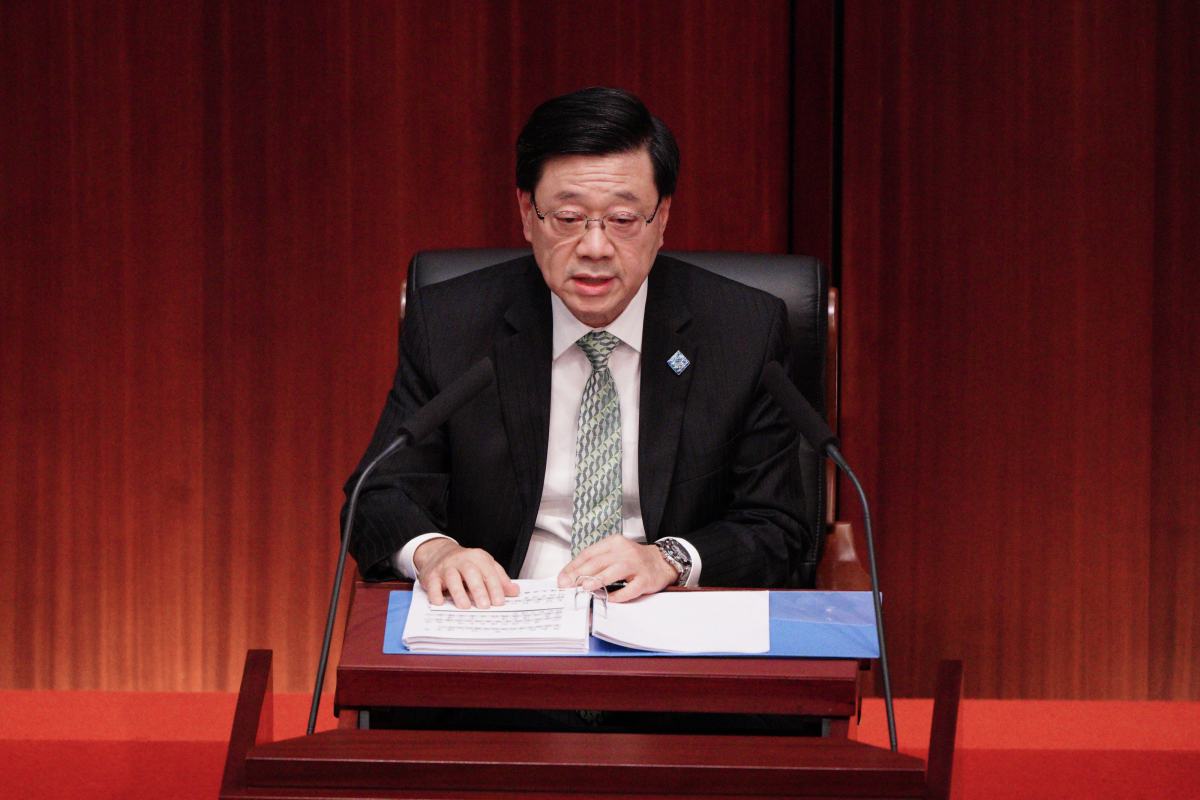
Chief Executive John Lee announced Hong Kong's first five-year plan today (Sept. 16). According to the plan, HK will strengthen its role as a hub for Chinese and international cultural and arts exchange, with a focus on expanding the international reach of its creative industries.
It is expected that, by 2030, the value added of the arts, culture, and creative industries will reach HK$170 billion, while the number of employed persons will increase to 228,000.
HK will organize more performances by non-local artists at the Kai Tak Sports Park to enhance its international status. By 2030, the proportion of concerts or performances at Kai Tak Sports Park featuring primarily non-local artists will rise to 60%, with the aim of enhancing HK's international status.
The plan also calls for the continued expansion of Hong Kong Disneyland, including a new Marvel-themed area and an all-new Pixar entertainment experience, as well as the development of Ocean Park into a conservation, research and education base, with more activities centred on the conservation of giant pandas and other animals.
HK will also seek to host more diverse and higher-tier major international sports competitions and events, including international mega football events, while pursuing the hosting of single-sport competitions at the national, Asian and international levels.
To expand HK's sports industry, resources allocated to sports development will cumulatively increase by 20% in the next five years, the number of full-time elite athletes will cumulatively increase by 20% in the next five years, and the value added of sports and related activities at basic prices will cumulatively increase by 10% in the next five years.
The city will deepen collaboration with Art Basel, attract internationally renowned artists and cultural organizations to HK, and support local arts and creative sectors in staging performances and exhibitions overseas.
The five-year plan also aims to develop HK into the "Events Capital of Asia" and strengthen the city's position as an international platform for arts trading and cultural exchange.
For the tourism industry, HK will develop a core demonstration zone for multi‑destination tourism. It will strive to become the southern gateway for overseas visitors entering the Mainland, making good use of cross‑boundary infrastructure to facilitate visitors' further extension of itineraries to the Guangdong‑Hong Kong‑Macao Greater Bay Area and other provinces and municipalities.
By 2030, the proportion of non-Mainland visitors among overnight visitors will increase to 40%.
Related News:




Comment