






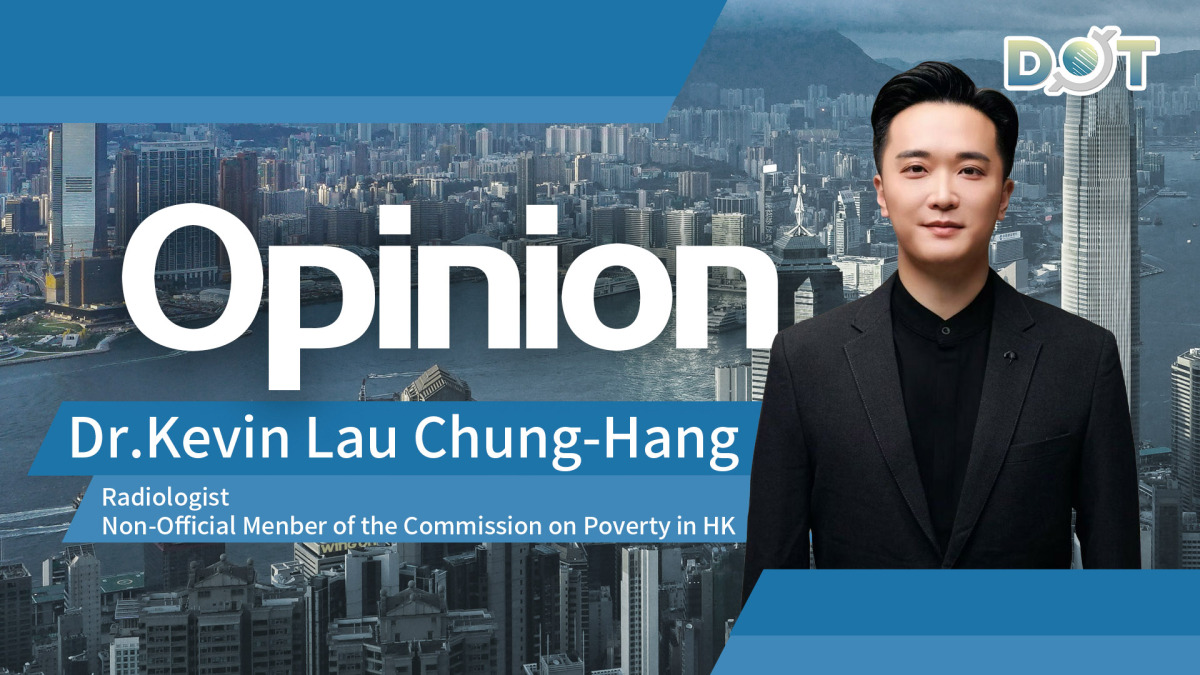
By Dr. Kevin Lau
Hong Kong's healthcare system enjoys an international reputation. According to the Times Higher Education Rankings 2026, the medical programmes of the University of Hong Kong and the Chinese University of Hong Kong are ranked 18th and 26th globally respectively, placing both among the world's top 50. Behind this distinction lies the Medical Council of Hong Kong (MCHK), which bears core responsibilities including curriculum accreditation, doctor registration, and disciplinary proceedings, serving as the final gatekeeper of professional standards. Yet any system that fails to evolve with the times will ultimately become an obstacle to progress. The Medical Registration (Amendment) Bill 2026 recently gazetted by the Health Bureau represents a precisely targeted institutional reform—one that upholds the cornerstone of professional autonomy whilst addressing society's earnest expectations for improved governance.
As a medical specialist with years of clinical experience, I have witnessed first-hand the profession's concerns about the MCHK's operational deficiencies. The proactive investigation report published by the Office of the Ombudsman in February 2026 revealed that, as of December 2025, the MCHK still had 895 complaint cases awaiting resolution, with 11 of them taking between 10 and 15 years to reach a conclusion. Data also shows that although over 8,700 complaints were processed between 2020 and 2024, the average handling time remained at 27 months. Such backlogs not only erode patients' trust in the system but also leave complained-of doctors in prolonged uncertainty about their professional prospects—a predicament that harms both parties.
The new Bill demonstrates decisive reform momentum in optimising the complaints mechanism. The Medical Investigation Committee and Medical Tribunal Panel will be set up, with independent assessors presiding over proceedings—their numbers doubling from approximately 140 to 280. Meanwhile, the Bill establishes statutory timeframes for complaint handling: the screening stage will be reduced from an average of 12 months to 6 months, whilst the overall timeline from complaint to inquiry will be compressed from 42 months to 29 months—a reduction of over one-third. These targets carry legal force, enhancing transparency and accountability at the institutional level.
Regarding the MCHK's composition, the Bill achieves a precise balance between professional autonomy and public participation. The number of doctor members remains unchanged at 24, ensuring professional views are adequately represented; meanwhile, three additional lay members will be appointed, raising the lay proportion from 25% to approximately 31%. This aligns with international standards — the General Medical Council of the United Kingdom has 50% lay members, whilst the Medical Board of Australia also maintains 33.3%. Moderately broadening lay participation helps incorporate diverse perspectives into disciplinary proceedings, strengthening public confidence in the fairness of adjudication.
Furthermore, the Bill merits attention in patient safety protection and workforce strategy. For doctors convicted of serious criminal offences, the Bill empowers immediate removal or suspension from the register—a necessary safeguard for patient safety. On the other hand, extending mandatory continuing medical education to non-Hong Kong specialist doctors and widening the special registration pathway by removing additional requirements for non-permanent residents reflects a dual-track approach of elevating professional standards whilst attracting overseas talent. According to government data, 2,224 non-locally trained doctors were registered in Hong Kong between 1991 and 2000, representing 45% of all new registrations during that period; however, this proportion fell sharply to approximately 10% between 2001 and 2020. At a time of intensifying global competition for healthcare talent, streamlining channels is a pragmatic step towards alleviating workforce pressure in the public healthcare system.
As a medical practitioner, I deeply appreciate that professional autonomy and public accountability require careful calibration. Reforming the MCHK is not about undermining professional standing, but rather ensuring that the regulatory system retains its independence whilst becoming more transparent, efficient, and credible. As Founding Convenor of the Hong Kong Global Youth Professional Advocacy Action, I am further encouraged that this reform will create clearer development pathways for young medical professionals and demonstrate to the international community Hong Kong's determination to develop into a hub for medical talent and innovation. The Bill will receive its First Reading in the Legislative Council on 8 July. I hope that all sectors will scrutinise it with a rational and pragmatic attitude, enabling this reform—which concerns the well-being of all Hong Kong citizens—to be implemented smoothly, so that the MCHK may truly fulfil its mission of "ensuring justice, maintaining professionalism, and protecting the public".
The author is the Founding Convenor of the Hong Kong Global Youth Professional Advocacy Action, a specialist in radiology, Master of Public Administration, Master of Public Health of the University of Hong Kong, and an adviser of the Our Hong Kong Foundation.
The views do not necessarily reflect those of DotDotNews.
Read more articles by Kevin Lau:
Opinion | Targeted poverty alleviation: From assistance to social mobility




Comment