






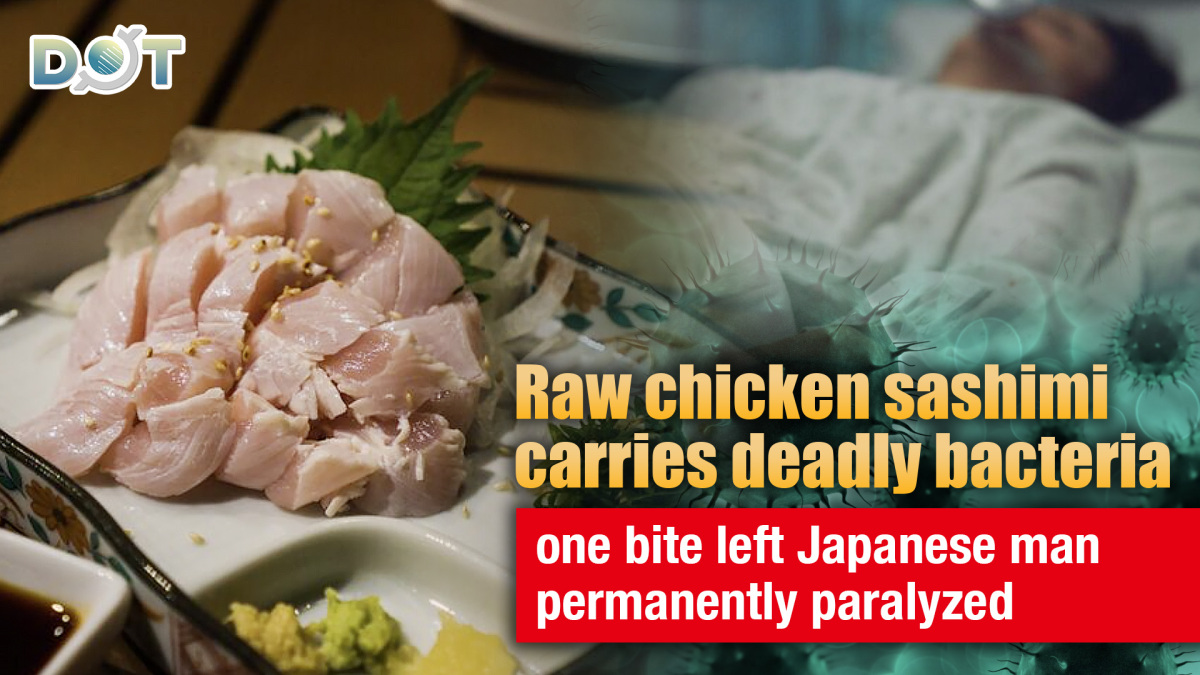
Although raw chicken consumption is a cultural practice in some parts of Japan, particularly in the southern Kyushu region, this dietary habit carries a serious health risk that should not be overlooked. Statistics show that over 1,000 people in Japan suffer from food poisoning each year after eating raw chicken sashimi. In response, local authorities are working on the first set of national hygiene guidelines for handling raw chicken. In one case, a man who ate just one piece of raw chicken was infected with a severe bacteria that left him completely paralyzed – and such conditions often have no cure.
One of the main culprits behind these food poisoning cases is Campylobacter, a bacterium commonly found in the intestines of poultry and other warm-blooded animals. Consuming contaminated raw chicken can lead to symptoms like diarrhoea and abdominal pain, and in severe cases, trigger Guillain-Barré Syndrome – a rare but devastating condition in which the immune system mistakenly attacks the body's own nerves. Patients may experience muscle weakness and even paralysis in all four limbs, severely affecting their daily lives and often requiring long-term care.
A 50-year-old Japanese man is a stark example. The day after eating raw chicken sashimi, he developed severe diarrhoea. His condition deteriorated rapidly, and he was diagnosed with Guillain-Barré Syndrome, ultimately leaving him paralysed from the neck down and unable to care for himself. He has since said that doctors told him the condition cannot be cured. He describes his experience as a heavy price paid for a single moment of indulgence, and now urges everyone to think twice before trying raw chicken.
Although local governments in Kagoshima and Miyazaki prefectures have previously introduced hygiene standards – such as requiring dedicated utensils, cold storage, and surface searing – Japan's national laws currently only regulate raw beef and raw pork, leaving raw chicken in a legal grey area. To address this, the Ministry of Health, Labour and Welfare has decided to fill the gap by introducing national hygiene standards for raw chicken, regulating processing procedures and emphasising that children and the elderly should not consume it – as even compliance with standards cannot fully eliminate the risk.
Experts note that while most people recover from Campylobacter infection on their own, vulnerable groups such as young children, the elderly, and pregnant women may face serious complications. In addition to Campylobacter, Salmonella is also a common pathogen found in raw chicken, causing severe gastrointestinal distress. Thorough cooking remains the most effective way to prevent foodborne illness. While the government strengthens regulations, consumers should also remain vigilant and not compromise safety for the sake of taste.
Related News:
Freezer food giant's system fault disrupts KFC in Japan: No chicken sold as stores shorten hours
Norovirus outbreak infects 125 aboard Princess cruise ship during 20-day voyage




Comment