






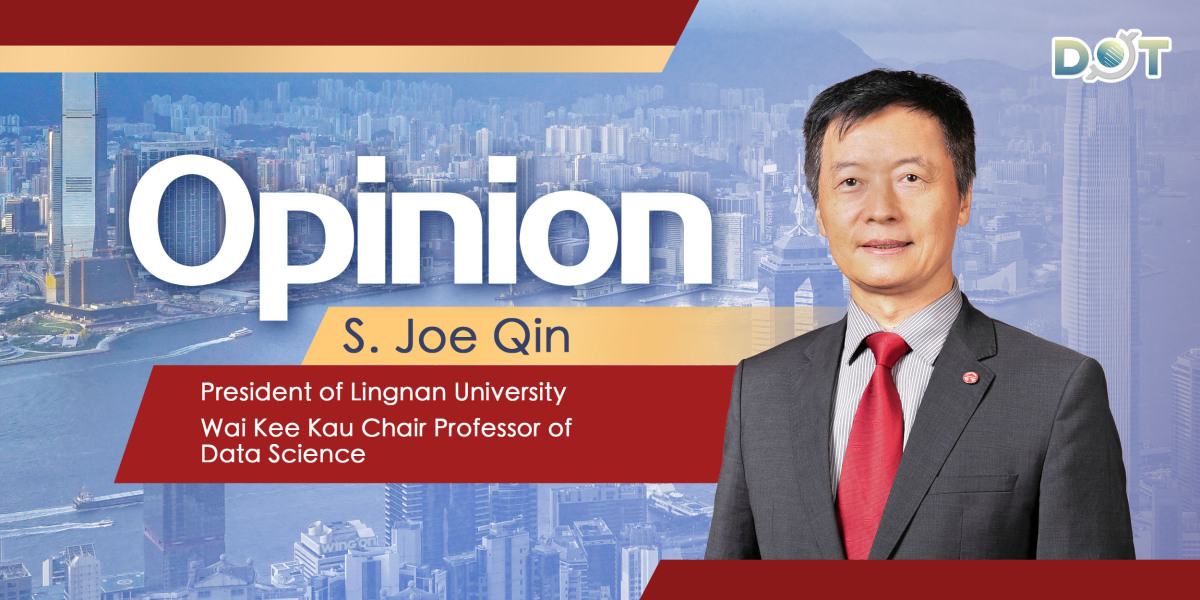
By S. Joe Qin
The Director of the Hong Kong and Macao Work Office of the CPC Central Committee and the Hong Kong and Macao Affairs Office of the State Council, Mr Xia Baolong, recently visited the Hong Kong SAR on an inspection tour, during which he expressed concern about Hong Kong's first Five-Year Plan, a blueprint intended to help chart the city's future. Among its priorities, the Northern Metropolis is expected to become a major new driver of growth for Hong Kong, with four key objectives: industry, innovation and technology, a university town, and the creation of a liveable, business-friendly, and welcoming environment.
At the same time, the AI + Education Action Plan, jointly issued by five central government departments led by the Ministry of Education, sets out four main priorities: strengthening AI talent and literacy, promoting the seamless integration of AI and education, enhancing the foundational environment for AI + Education, and improving the overall ecosystem. Together, these initiatives reflect a common theme as technological innovation and talent cultivation become critical drivers in the growth of new quality, productive forces.
As a member of Hong Kong's higher education sector and of the Board of Directors of the Hong Kong Artificial Intelligence Research and Development Institute, I wish to draw upon the experience of Lingnan University to offer several suggestions for the framework of the Northern Metropolis University Town, in the hope of inviting a wider discourse across society.
My recent paper, "AI for Education: The Digital Transformation of a Liberal Arts Institution – Implementation at Lingnan University", was published in Computers and Education: Artificial Intelligence, a renowned journal in educational technology, and examines the practical application and impact of AI in education. It illustrates how Lingnan University, building upon a 138-year liberal arts tradition, has carved out a unique trajectory driven by our "Liberal Arts + Technology" and "AI+" initiatives, which echoes the direction outlined in the National 15th Five-Year Plan, calling for the integration of science and technology with humanities education, thus balancing technological competence with humanistic values in support of long-term innovation.
The results of our efforts are steadily being recognised worldwide. Lingnan recently climbed more than 120 places in the QS World University Rankings, reaching 581st globally, and in the Times Higher Education Sustainability Impact Ratings2026, we were in the top 100 for the first time, ranking 63rd globally, while retaining the top position in SDG 4: Quality Education for the second consecutive year. These achievements not only challenge traditional perceptions of liberal arts education but also demonstrate that innovation, critical thinking, and sound judgement are an increasingly important elements in shaping the future.
In this digital era, education has evolved from being the foundation of social progress into a key source of innovation with more and stronger links to industry. Hong Kong's higher education sector is likewise moving beyond a sole focus on talent towards a cycle in which talent, technology, and industry reinforce one another. The Northern Metropolis is well positioned to support this transformation, and the National 15th Five-Year Plan explicitly supports Hong Kong in accelerating the development of the Northern Metropolis and building an international hub for high-calibre talent. The objective of the Northern Metropolis University Town should therefore extend beyond providing additional land and facilities for higher education. More importantly, it should align with the national strategy of integrating education, technology, and talent evolution, while nurturing the innovative brilliance required in this digital age.
Hong Kong's higher education sector already has a number of noteworthy advantages, including a robust legal system, a universalised academic environment, valuable ties with the Chinese Mainland and international research networks, and a relatively open environment for academic exchange. These advantages support the "Study in Hong Kong" brand and Hong Kong's aim of becoming an education hub able to attract key talent from all over the world.
At the same time, Hong Kong has long faced constraints arising from limited land resources, so that many industries' long-term expansion has been affected by land shortages. Higher education is no exception. While the city's eight University Grants Committee-funded universities each possess their own specialities and characteristics, they are geographically dispersed across different districts, limiting opportunities for active teamwork and synergy. As the National 15th Five-Year Plan begins, the Northern Metropolis University Town has the potential to become a higher education and innovation hub that brings together principal universities, distinguished scholars, research resources, and frontier knowledge, able to connect Hong Kong more closely with the Chinese Mainland and the broader national strategy.
Lingnan University provides a useful example. Benefiting from its proximity to the education sites planned for Hung Shui Kiu, the University is well placed to foster stronger synergies between its Tuen Mun campus, the Northern Metropolis University Town, and innovation and technology enterprises across the boundary. This could help establish a "one-hour research collaboration circle", facilitating the cross-boundary flow of knowledge and research sharing.
More importantly, the attraction of the Northern Metropolis University Town lies in its ability to provide comprehensive supporting infrastructure and unparalleled opportunities, creating favourable conditions for engaging global talent. Universities should seize this opportunity to build on their respective strengths and encourage collaboration, academic exchange, and cooperation on the Chinese Mainland and overseas. By doing so, Hong Kong will maintain its international advantages while responding more effectively to national needs for highly skilled individuals and industrialisation.
Although all eight of Hong Kong's publicly funded universities are now ranked among Asia's top 100 universities, the city must continue to reinforce its capabilities, enhance its outlook, and expand its academic networks. At Lingnan, we are actively capitalising on the movement of talent through the launch of the "Lingnan-60 Global Talent Recruitment" initiative, which will employ more than 60 outstanding scholars from around the world by 2027, marking the 60th anniversary of the University's re-establishment in Hong Kong. To date, we have taken on 38 leading scholars, injecting a strong momentum into the University's research and engineering development.
The Lingnan University Institute for Advanced Study, with Nobel Laureate in Physics Prof Samuel C.C. Ting as Honorary Director, has appointed 25 distinguished scholars from nine countries and regions in just over two years. They represent disciplines such as AI, chemical engineering, mathematics, accounting, and public administration. The Institute has established a substantial interdisciplinary research platform that further confirms Lingnan's research capabilities, providing marvellous opportunities for students and staff to engage with pre-eminent scholars while fostering innovation and encouraging younger academics to approach research from an international "Liberal Arts + Technology" perspective, ensuring that outcomes will address societal needs in this digital era.
Hong Kong may be geographically small, but it has dynamic overall relations and a high concentration of multinational professionals, enabling it to nurture a number of excellent universities with distinctive assets. I hope that, through its first Five-Year Plan, we will be able to use the Northern Metropolis as a new platform for growth, creating academic and economic merit that transcends geographical limitations and captures the vast opportunities generated by innovation and new technologies.
The author is the President and Wai Kee Kau Chair Professor of Data Science of Lingnan University, and member of the Board of Directors of the Hong Kong Artificial Intelligence Research and Development Institute.
The views do not necessarily reflect those of DotDotNews.
Related News:
Opinion | 1 July and the value of continuity in the Lingnan story




Comment