






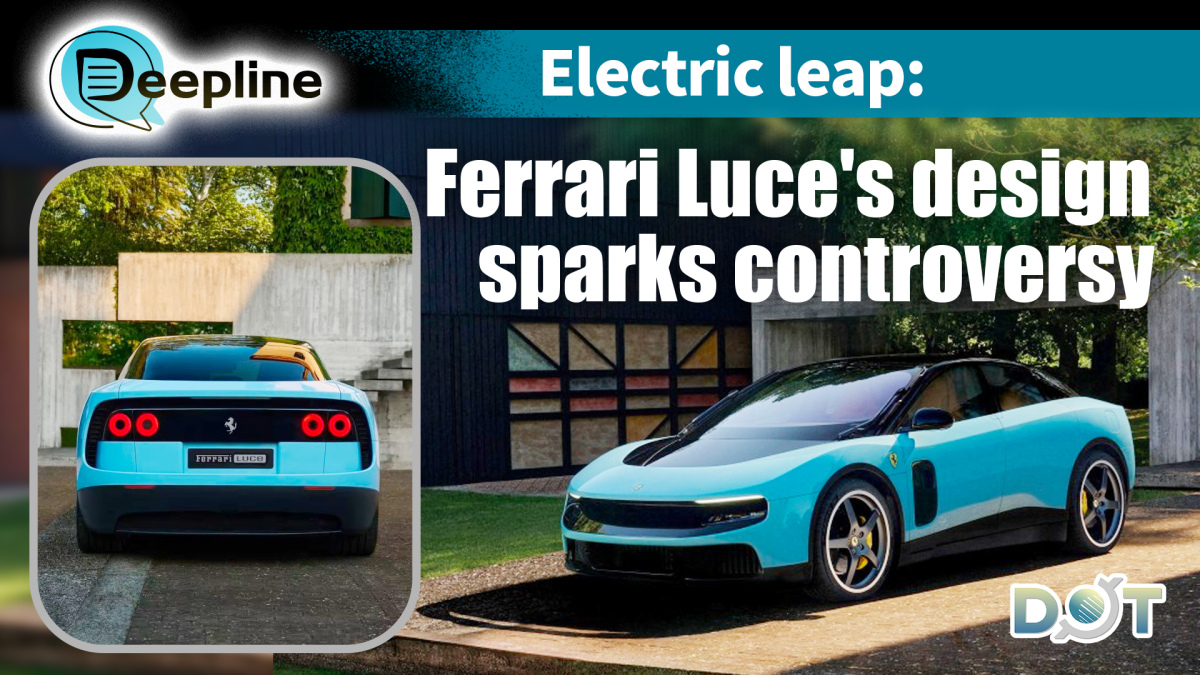
On May 26, Ferrari officially unveiled its first all-electric vehicle, the Ferrari Luce (Italian for "light"). However, rather than being met with widespread acclaim and market enthusiasm, the launch was accompanied by intense controversy and a sharp drop in stock price. That same day, Ferrari's shares plunged more than 8%, as investors and critics reacted coldly to the Italian luxury sports car maker's electric vehicle—some even questioning whether Ferrari remains true to its brand identity.
This dealt an especially heavy blow to Ferrari, whose stock had already been on a sustained decline over the past year.
Fabio Caldato, a portfolio manager at AcomeA SGR, which holds Ferrari shares, told Reuters that the drop in Ferrari's stock price reflected broader market concerns.
"Ferrari is currently being penalized for an aesthetic disappointment, which follows the significant concerns over the expansion of its range to include electric models," he said.
The reasons for the stock decline are varied, but market sentiment is clear.

Former Ferrari Chairman Luca Cordero di Montezemolo publicly said in a recent interview that speaking his true feelings might "hurt Ferrari," adding that "this could destroy a myth." He expressed hope that the company would "at least remove the prancing horse logo from this car."
When a journalist pressed him on how Ferrari would respond to competition from Chinese electric vehicle manufacturers, he sarcastically remarked, "This is absolutely a car that NO Chinese company would take design cues from—they don't need to." Throughout the interview, the visibly emotional man's eyes were red, and he scratched his head—whether from anger or deep disappointment. As a representative figure of the fuel-powered era, he has clearly not adapted to Ferrari's latest move toward innovation.
Looking back, Ferrari did not leap straight into all-electric vehicles; it first used hybrids as a transitional step and technical validation. In 2010, Ferrari unveiled the 599 HY-KERS concept car (an experimental hybrid), demonstrating that the company had begun exploring the combination of electric motors and high-performance engines very early on.
In 2013, Ferrari launched the LaFerrari, its first production hybrid supercar. However, the LaFerrari could not be plugged in to charge; its electric motor primarily assisted in cornering and filling torque gaps.
Between 2019 and 2025, Ferrari truly ramped up its electrification efforts on a large scale, introducing plug-in hybrid versions across its entire production range. In 2019, the SF90 Stradale was launched as Ferrari's first plug-in hybrid vehicle (PHEV), capable of driving approximately 25 kilometers on pure electricity. In 2021, Ferrari CEO Benedetto Vigna formally announced that Ferrari would launch its first all-electric vehicle in 2025, then known by the codename "F244."
However, the development process saw delays and industry-wide hesitation. According to Reuters and other media reports, due to softening demand for high-end electric vehicles and some competitors scaling back their EV plans, Ferrari also postponed some of its all-electric model plans until after 2028. Nevertheless, the company ultimately decided to launch the Luce in May 2026.
The Ferrari Luce carries a price tag of €550,000 (approximately HK$5,000,000), with deliveries expected to begin in the fourth quarter of 2026. According to reports, the exterior and interior design of the Ferrari Luce was developed with the involvement of LoveFrom, a design firm founded by former Apple chief designer Jony Ive and renowned industrial designer Marc Newson.
By comparison, Porsche's electric Taycan is far more accessible in price, reflecting a different market positioning. Still, customer praise for the Taycan far exceeds that for the current Luce. As a mid‑range electric performance model, the Taycan has achieved a solid reputation despite the dominance of Tesla and Chinese EVs—no small feat. But a "luxury electric car" with premium appointments failing to win favor because of its body design was clearly not something Ferrari had anticipated.
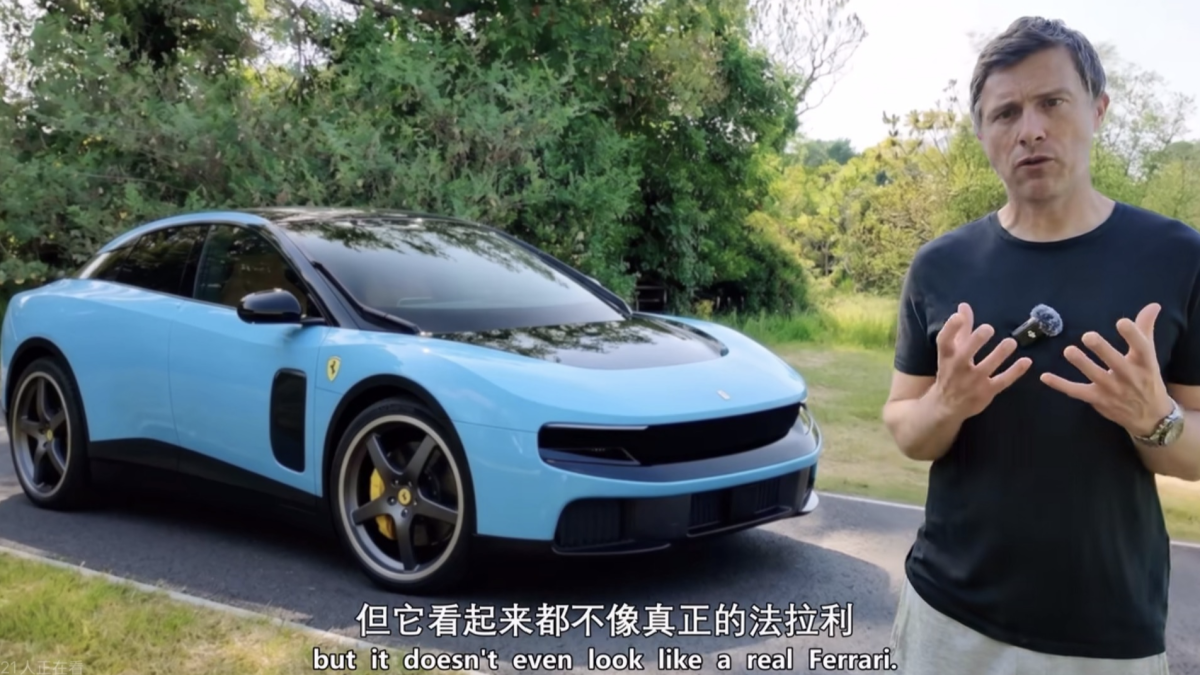
Chinese internet users, accustomed to mid‑range and entry‑level EVs, have been even harsher in their assessment of the Luce than media and professionals.
Netizens commented, "If it had a Honda badge and cost 500,000 yuan (HK$580,000), that might make sense!" "Who said you can't drive a Ferrari and feel insecure at the same time?" One went so far as to say, "Ride‑hailing cars in China look just like this. If I parked this on the street, someone would open the door and give me a destination code!"
Even Ferrari loyalists are divided in opinion. "I don't think the design's ugly, but... it just doesn't look like a Ferrari," one sports car enthusiast said. However, when told that a former Apple designer was involved in the design, he immediately showed an expression of sudden realization.
Back to the brand itself: Flavio Manzoni, Ferrari's chief design officer, told YouTuber Cleo Abram that critics are part of the innovation process. He acknowledged that the concept of an all‑new, all‑electric Ferrari is "polarizing," but he believes people will come to appreciate it in the coming months. Ferrari has also stated that alongside all‑electric vehicles, it will continue to offer gasoline and hybrid models.
The question is, under the constraints of Donald Trump's tightening policies on EVs, the impact and transformation driven by other brands, and the slump in stock performance, how much creative freedom does Ferrari's electric car really have left?
Related News:
Deepline | Geely built, Ford badged: New chapter in auto cooperation
Deepline | Oil prices soar, Chinese EVs roar: Unintended consequences of US-Iran conflict




Comment