






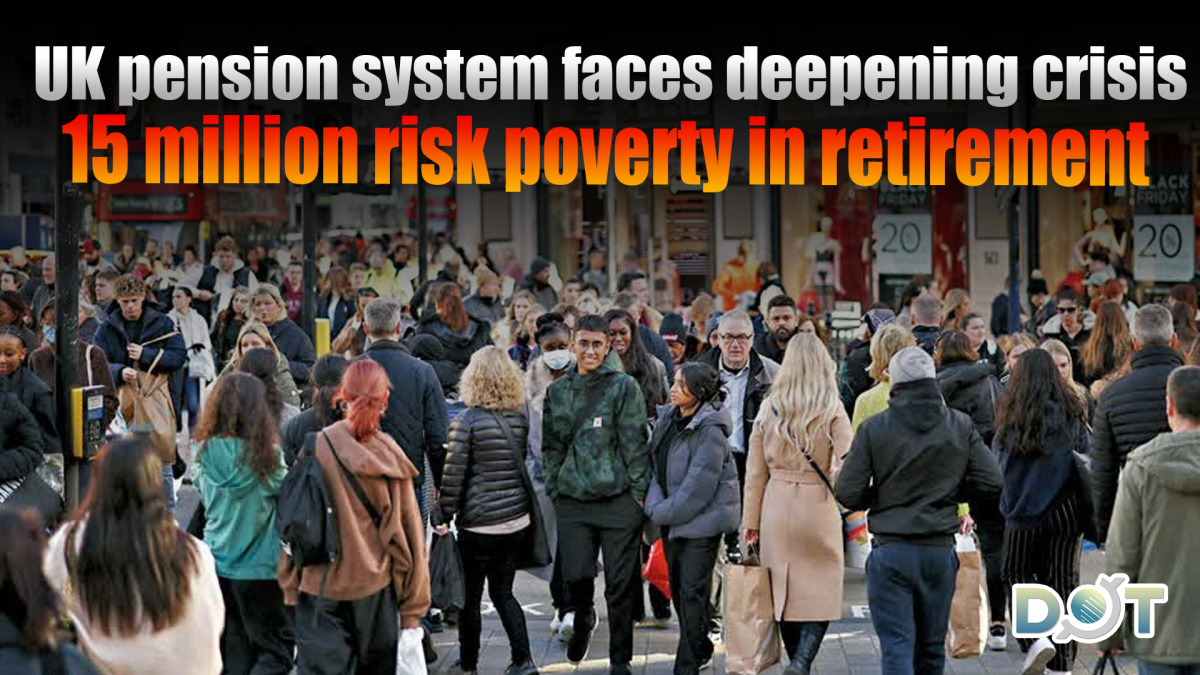
The UK's pensions system is facing a growing retirement savings crisis, with at least 15 million people lacking sufficient funds for retirement, according to a warning issued on May 19 by the government's pensions commission.
The commission warned that unless the government carries out comprehensive reforms in time, the number of people facing inadequate retirement savings could rise to 19 million in the future, potentially developing into a structural crisis affecting Britain's economy and social stability.
The report, released by the commission relaunched last year by Prime Minister Keir Starmer, said large numbers of Britons could face severe financial hardship after retirement and may even need to rely entirely on state support for survival.
It stressed that future retirees could experience worse living conditions than current pensioners, highlighting the urgency of pension system reform.
According to the report, as many as 45% of working-age adults are not participating in any pension savings scheme, despite nearly half of them being employed rather than long-term unemployed.
Middle- and lower-income earners were identified as facing the greatest risk. About half contribute only at the minimum level required under the UK's auto-enrolment pension system and are expected to have few additional financial resources upon retirement.
Under the current system, employers are required to open pension accounts for employees, with minimum total contributions set at 8% of salary — 5% paid by employees and 3% by employers.
The commission stated that current contribution levels are already insufficient to meet future retirement living costs.
The report also warned that the expansion of the gig economy and flexible employment could leave more people without stable retirement protection in the years ahead.
Data showed that only 4% of full-time self-employed workers regularly save for retirement, while participation rates among younger freelancers are even lower.
In addition, the report highlighted the widespread early withdrawal of pension funds. Around 30% of private pension accounts are activated as soon as holders reach the earliest legal withdrawal age, with half of those funds fully withdrawn.
According to the findings, much of the money is spent on major purchases such as cars, holidays and home renovations rather than long-term retirement planning.
The report also raised concerns about the gender pension gap.
Data showed that women approaching retirement have a median private pension savings balance of just £81,000 (approximately HK$815,000), nearly half that of men, whose median pension savings stand at £156,000 (approximately HK$1.57 million).
The report said the disparity reflects the long-term disadvantages women face in pension accumulation due to pay inequality, caregiving responsibilities and career interruptions.
Torsten Bell, the UK pensions minister, said Britons have gradually resumed saving habits in recent years, but warned that current progress remains far from sufficient.
He cautioned that without sustained structural reforms, future retirees could become poorer than today's pensioners.
Related News:
UK's HS2 rail project costs could exceed £100 billion, completion delayed further




Comment