






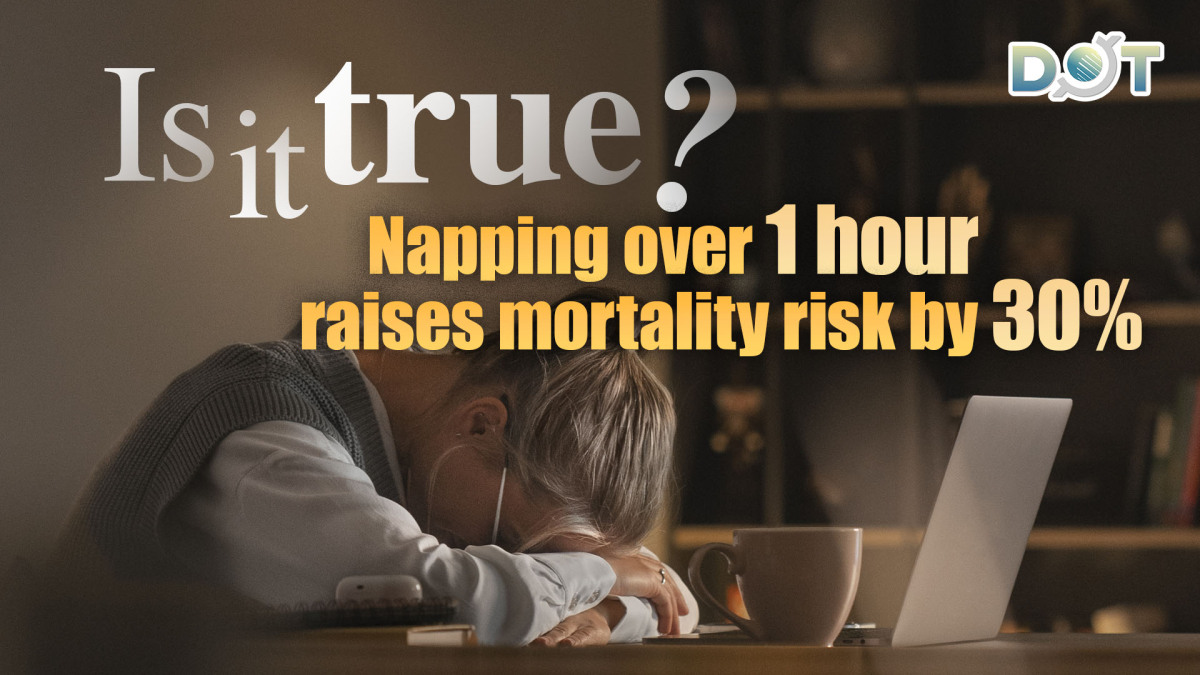
Spring sleepiness and autumn fatigue—a nap can really perk you up, but there are some guidelines to follow regarding how long you should nap. Recently, the topic "Napping for more than an hour increases the risk of death by 30%" has been trending online. Is there any truth to this claim?
Experts caution: Do not quote out of context
The conclusion circulating online is based on an observational epidemiological study published in 2019. By tracking and analyzing the long-term sleep habits and health data of a large population, the study concluded that there is a link between the duration of afternoon naps and health risks. However, after reviewing the original paper, many netizens have pointed out that this conclusion is subject to strict preconditions and does not apply to everyone.
However, in online circulation, the relevant statements omitted key qualifying conditions and focused solely on the conclusion that "napping for more than an hour increases the risk of death by 30%," leading to a one-sided and absolute interpretation of the information and causing unnecessary health anxiety among many residents.
Experts emphasize that these findings are not absolute; the "30% increase in all-cause mortality risk" is a statistical result based on groups that habitually take excessively long naps over the long term. There is no need to panic over the occasional long nap. The key to a healthy nap lies in "moderation, regularity, and adapting to individual circumstances"; there is no need to be alarmed by a single piece of data.
Why does napping for more than an hour increase health risks?
Experts say that the link between long afternoon naps and increased health risks is not a simple "causation," but rather a complex phenomenon characterized by mutual associations.
Excessive napping affects the cardiovascular system the most; for example, if you nap for more than an hour and wake up from deep sleep, your blood pressure and heart rate may spike.
People who take long naps are using them to compensate for a lack of sleep at night, which can increase health risks.
Long afternoon naps can also have an impact on one's circadian rhythm.
How long should different groups of people nap?
The duration and method of napping should vary depending on an individual's sleep patterns and physical condition. Experts advise that people who get enough sleep at night (7–9 hours) only need to take a 15–20-minute nap each day.
For people who get less than 6 hours of sleep at night: Take a nap of 30 minutes each day, but no longer than 45 minutes.
For people with insomnia who sleep less than 15 minutes at night: To improve your ability to fall asleep at night, limit your afternoon nap to 15 minutes and finish it before 3:00 pm, or simply rest your eyes instead.
For people with hypertension or diabetes: Keep afternoon naps strictly limited to 20 minutes or less to reduce blood pressure fluctuations and metabolic risks.
Experts advise: Avoid napping with your head on the desk, and don't go to sleep immediately after eating. When you wake up from your nap, get up slowly—this is better for your health.
Related News:
Heads up! Chayan Yuese returns to Shenzhen, fans queue at 4:30 am
700 high-speed trains added daily during peak travel periods at beginning and end of May Day holiday




Comment