






By Xu Xi
This year marks the fiftieth anniversary of the death of the renowned British author Agatha Christie (1890–1976). Her novels are still read in over 103 languages, her plays continue to tour stages around the world, and this best-selling 'Queen of Detective Fiction' in literary history continues to attract legions of readers and audiences. Over her lifetime, Christie wrote more than eighty detective novels and nineteen plays, and also penned six romantic novels under the pseudonym 'Mary Westmacott.' The characters she created, notably Hercule Poirot and Jane Marple, are as unforgettable in the history of detective fiction as Sherlock Holmes. Her masterworks, such as Murder on the Orient Express, Death on the Nile, and And Then There Were None, have been continuously adapted into films, television series, audiobooks, and radio dramas, ensuring that her reputation remains undimmed even today, when new media dominates the cultural industry.
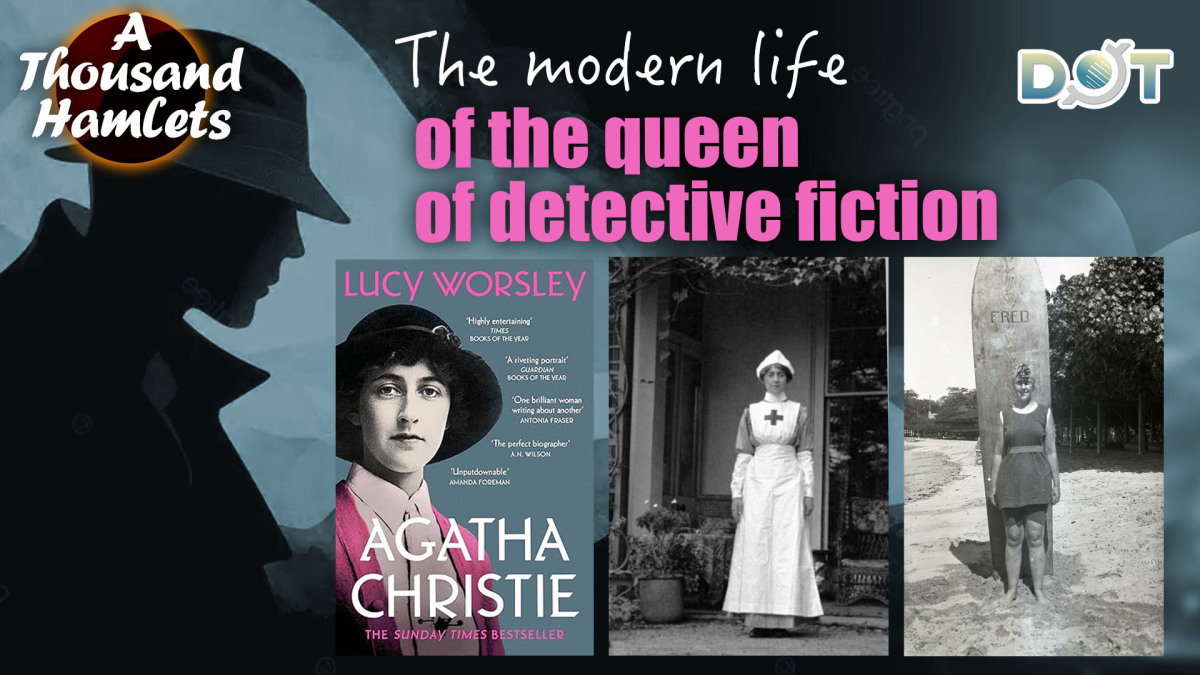
In China, Agatha is affectionately nicknamed 'A-Po' (Grandma) by her fans. This nickname reflects the image most readers hold of her: much like Miss Marple from her own pages, a kindly, humorous, and shrewdly perceptive Victorian-style English old lady — never married, conservative in outlook, free from the burdens of family and work, spending her days tending her garden and chatting with friends over afternoon tea. Yet this portrait falls far short of capturing who Agatha really was. Although she was born in the late nineteenth century, she lived until 1976, dying at the age of eighty-six. Across her long life, she witnessed two World Wars, the women's liberation movement, the dissolution of the British Empire, and the Cold War. These sweeping historical upheavals profoundly altered society's attitudes toward class, gender, marriage, and work, all of which left their mark on her life and writings. The real-life Agatha was no conventional grandmother; on the contrary, she was a rule-breaking modern woman. In 2022, British contemporary historian and BBC documentary presenter Lucy Worsley published a biography that, through rich personal detail, presents Agatha's remarkable life as a pioneering, independent modern woman.
A Victorian Child
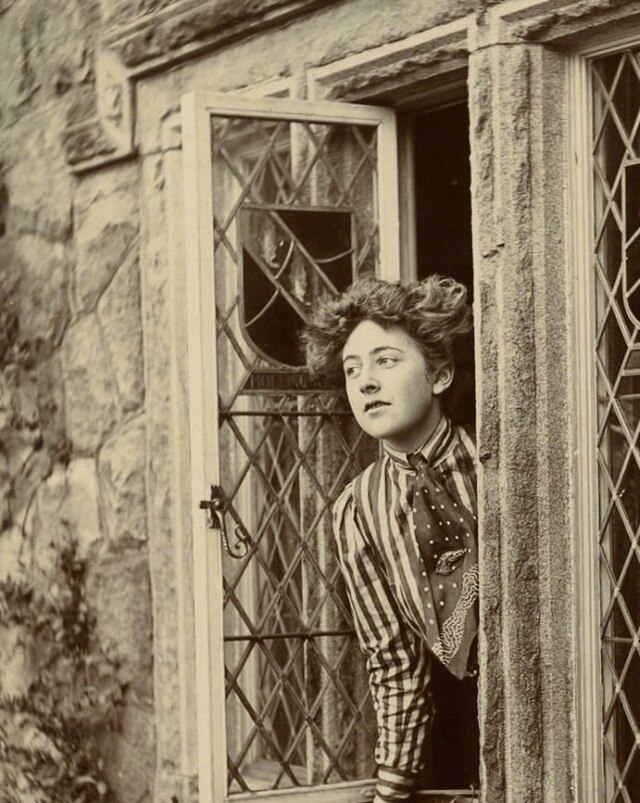
On 15 September 1890, Agatha was born into a prosperous middle-class merchant family in Devon, England. The youngest of three children, she grew up in a grand Victorian villa called 'Ashfield' in the seaside resort town of Torquay. The villa had a large garden filled with flowers and trees, a paradise for Agatha's childhood play. Like other wealthy families of the era, the Christies employed a full household staff, including gardeners, maids, a cook, and a nanny. Agatha enjoyed a happy, carefree childhood, and Ashfield later became the model for the many grand manor houses that appear in her fiction.
Though her parents adored her, her mother held an unconventional educational philosophy: she believed children under eight should not be taught to read, as it was better for their eyesight and developing brains. In practice, however, Agatha had already begun reading on her own from the age of five, devouring the mythology of Andrew Lang, the fairy tales of Lewis Carroll, the novels of Dickens and Austen, and the Old Testament. Nurtured by these wonderful stories, she became a bookworm, requesting only books as gifts every Christmas and birthday. While her brother and sister were sent to boarding school, her mother insisted on keeping Agatha at home, where her education centered on music, French, and social skills. Like the celebrated novelist Virginia Woolf, she never received a formal university education; her path to becoming a writer was paved by natural talent and wide reading.
In 1901, when Agatha was eleven, her father died of illness, which marked the end of her childhood. Four years later, her mother sent her to a boarding school in Paris to study singing and piano, preparation for a future marriage, since an accomplished, musically gifted young lady was considered highly attractive to men of good society. At seventeen, under her mother's guidance, Agatha made her formal entry into social circles, attending gatherings and meeting eligible suitors in hopes of finding the right match. Though she had no shortage of admirers, it was not until October 1912, when she met the tall and handsome Royal Artillery officer and aviator Archibald Christie, that she truly fell in love. Just three months after their first meeting, Agatha accepted his proposal. On Christmas Eve 1914, the two were married at a church in Bristol.
Although Agatha had always been a devoted reader, she had no ambition to become a professional writer. In the early twentieth century, women faced formidable obstacles to pursuing a literary career. When women did produce work, getting it published was no easy feat. For a married middle-class woman to earn money through writing was considered downright scandalous. Had it not been for the First World War, Agatha might well have accepted the fate society had laid out for her — bearing children, managing a household, and living the ordinary life of a middle-class housewife. But the outbreak of war changed the course of her life.
A Detective Writer
After Britain entered the war, Agatha's husband joined the Royal Flying Corps and was sent to the front. She stayed behind and volunteered for the Red Cross. From October 1914 to December 1916, she gave 3,400 unpaid hours of service at a hospital treating wounded soldiers, beginning as a nurse and later training to work in the dispensary. This period of voluntary service brought about many unexpected transformations.
First, her work as a dispenser gave her a systematic understanding of the properties and effects of various poisons, knowledge that would prove invaluable when she came to devise the murder plots in her crime fiction. Poisoning is the most frequently used method of killing in her novels. According to Worsley, forty-one of her sixty-six detective novels involve poison as the murder weapon, with cyanide the most commonly used, claiming the lives of at least eighteen characters. British chemist Kathryn Harkup, a toxicology specialist and devoted Christie fan, wrote the popular science book A is for Arsenic: The Poisons of Agatha Christie(2015; Chinese translation 2017), which analyses Christie's fictional poisoning scenarios alongside real-life cases in a manner both informative and thoroughly entertaining.
Second, caring for the wounded gave Agatha deep insight into the masks people wear beneath the surface of everyday life. As a nurse, she was required to clean soldiers' festering wounds, witnessed naked male corpses, and was even sent to dispose of an amputated leg in a furnace. These grim scenes shocked her profoundly; at first, she nearly fainted. Yet when she returned home, she had to remain composed, hiding the brutal details of her work from her family. This experience taught Agatha the art of concealment and sharpened her perception of human complexity. Characters who appear outwardly calm while harbouring hidden secrets appear time and again in her later fiction.
The war also brought some 250,000 Belgian refugees to Britain, many of whom settled in Torquay, and they too left an unexpected imprint on her creative imagination. It was during her work at the dispensary that Agatha first conceived the idea of writing a detective novel, eventually producing her debut, The Mysterious Affair at Styles(1920). The protagonist, Hercule Poirot, was not English but a retired Belgian police inspector with a neat moustache and a French-accented manner of speech. Poirot went on to appear in thirty-seven of Agatha's novels and short story collections, becoming one of the most iconic figures in the history of detective fiction. In 1975, Agatha brought his story to a close in her final novel, Curtain: Poirot's Last Case. On 6 August of that year, The New York Times ran an obituary headlined 'Hercule Poirot Is Dead; Famed Belgian Detective' — the first time the paper had ever devoted a front-page report to a fictional character. In 2012, the Asahi Shimbun polled readers on their most memorable fictional detectives; Poirot ranked fifth, behind Kogoro Akechi but ahead of Conan Edogawa. This beloved character had his origins in Agatha's observations of and encounters with Belgian war refugees.
A Modern Woman
Though Agatha's other famous detective, Miss Marple, never married, Agatha herself was wed twice. From childhood, she had been taught that women need not worry about earning a living; they simply needed to cultivate good 'character' and social skills, wait for the right man to appear, and enter a successful marriage. Yet when it came to choosing a partner, she refused to bow to family pressure or social expectation, making choices on both occasions that flew in the face of convention.
She was twenty-four when she first married. Although she had been brought into the marriage market at seventeen and had already become engaged to another man, the moment she met Archibald at a dance, she resolved to follow her heart, broke off the engagement, and chose him instead. In December 1914, during one of Archibald's home leaves, the two quietly registered their marriage without informing their parents. War was full of uncertainty; people died every day, and marrying a soldier about to return to the front required not only love but courage. Young Agatha made a brave choice. In 1928, Archibald fell in love with another woman, and the couple divorced.
In 1930, forty-year-old Agatha embarked on her second marriage: this time to a younger man. While travelling in Iraq, she met Max Mallowan, a young archaeologist recently graduated from Oxford. Max was thirteen years her junior, a university contemporary of her nephew Jack; he had just graduated and was working as an archaeological assistant, earning far less than she did. Friends around them had little faith in the match, and her sister Madge strenuously tried to talk her out of it. But after careful reflection, Agatha stood firm under the pressure and married Max. Unlike her first marriage, which had revolved entirely around her husband, she sought this time a more equal companionship — empathetic, mutually supportive. In an excited letter to Max at the time, she wrote: 'Being with you is a kind of freedom… there is no feeling of restraint or captivity or being "tied down" – I would never have believed anything could be like it.' Years later, in her autobiography, she wrote: 'Loyalty and courage are two of the finest things there are. Any kind of courage, physical or moral, arouses my utmost admiration. It is one of the most important virtues to bring to life. If you can bear to live at all, you can bear to live with courage. It is a must.' Though she had once been wounded by marriage, Agatha again chose courage, and this time, courage earned her loyalty. The couple remained together until her death.
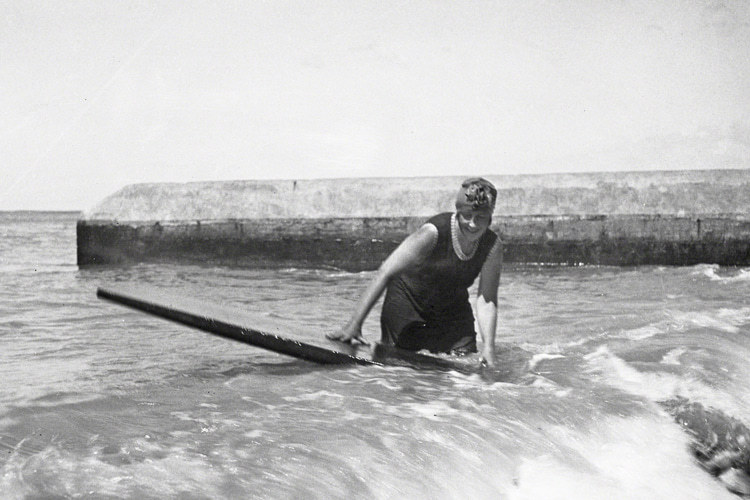
Agatha's courage was also reflected in her refusal of traditional motherhood and her embrace of new experiences. Unlike her mother, Clara, she did not feel that children should consume the whole of her existence. When a musician friend gave up her performing career for the sake of her children, Agatha found it unimaginable. In 1922, when Archibald secured a position with an Imperial Exhibition touring party, Agatha entrusted her two-year-old daughter Rosalind to her sister's care and joined her husband on a round-the-world journey. They accompanied the touring party to South Africa, Australia, New Zealand, Hawaii, and Canada, returning to England ten months later. Along the way, they took in exotic scenery and tried out many new sports. In South Africa, they learned to surf prone; at Waikiki Beach in Hawaii, they became among the first Britons to master stand-up surfing. The British Surfing Museum records Agatha's exuberant exclamation: 'Oh, it was heaven! Nothing like rushing through the water at what seems to you a speed of about two hundred miles an hour. It was one of the most perfect physical pleasures I have known.'
The pursuit of speed is one of the defining characteristics of modern life, and in this respect, Agatha was a quintessential representative. Trains were among her greatest passions; she travelled on the Orient Express on multiple occasions, accompanying Max to archaeological sites in the Middle East, and these journeys served her well when she wrote Murder on the Orient Express. Devoted readers have boarded the Orient Express with the novel in hand, checking the train's routes, carriage layout, and dining car service against the text and they find every detail to match. Her writing was so meticulous and accurate that scholars researching the history of the Orient Express have been known to cite the novel as a reference source.
Agatha also loved to drive. In 1924, the Evening News serialised her novel The Man in the Brown Suit and paid her five hundred pounds. She used the fee to buy a grey Morris Cowley motorcar. She later recalled that two things had thrilled her most in life: owning her own car and lunching with the Queen at Buckingham Palace. At the time, automobiles were still a luxury for the wealthy; none of her friends owned a car, and women drivers were a rarity. Once she had learned to drive, she regularly took her mother out for rides, visiting friends they had not seen for years due to the difficulties of travel. The car brought her tremendous freedom: 'Oh, the joy that car was to me! I don't suppose anyone nowadays could believe the difference it made to one's life. To be able to go anywhere, to places beyond the reach of your legs – it widened your whole horizon.' The vehicle she affectionately nicknamed 'Bottlenose' brought Agatha not only convenience but emotional comfort and freedom of movement. In 1926, when her mother's death and her husband's infidelity weighed heavily upon her, she frequently took to the road to clear her mind, and on 3 December of that year, when she briefly disappeared from home, it was in this very car that she drove away.
Automobile travel later played a part in bringing about her second marriage. During Max's first journey with her through Iraq, they went swimming in a lake and left the car parked too long, with the result that it sank into the sand. Max and the driver tried everything but could not pull it free. The heat was fierce, and their water supply was running low, yet Agatha waited calmly and actually fell asleep in the shade on one side of the car. Max later told her that it was at that precise moment that he knew Agatha would be his incomparable wife, because she faced danger without a trace of panic or a single word of complaint.
Like trains, cars appear frequently in Agatha's work. In Why Didn't They Ask Evans?(1934), the automobile serves not merely as a mode of transport for the two amateur detectives, Bobby Jones and Frankie Derwent, enabling them to travel swiftly from place to place in pursuit of their investigation; it is also a vital element in advancing the plot and expressing social symbolism. In order to gain access to a suspect, the pair stage a 'car accident,' with Frankie deliberately driving into the wall of the Bassington-ffrench estate and feigning a concussion, using her supposed recovery as a pretext to enter Merroway Court and search for clues. The female detective Frankie carries something of Agatha herself: as the daughter of an earl, she is perfectly capable of travelling alone in a Bentley, and when the investigation hits a wall, she devises a scheme involving a car to infiltrate the enemy, embodying all the wit and independence of the modern woman.
Write Her Own Story
In 1929, Virginia Woolf wrote in A Room of One's Own: 'A woman must have money and a room of her own if she is to write fiction.' In the decade that followed, Agatha entered the golden age of her creative output, transforming Woolf's ideal into reality through relentless productivity. She published twenty-three works in all: seventeen detective novels, two romantic novels, and four short story collections, including such perennial classics as Murder on the Orient Express, Death on the Nile, and And Then There Were None. Not only did she have a room of her own, she amassed property on a grand scale. At her peak, she simultaneously owned eight properties in London, Torquay, Oxfordshire, and Devon. The English title of Worsley's biography is Agatha Christie: A Very Elusive Woman — a subtitle hinting at the many mysteries of Agatha's life. The Chinese translation renders this as 'The Woman Who Wrote Her Own Story,' and the phrase is no less apt. She not only wrote her own story; through writing, she won a life of independence and freedom: a thoroughly modern life.
Xu Xi is a literary scholar teaching at Beijing Normal-Hong Kong Baptist University, Zhuhai. Xu holds a PhD from HKU.
The views do not necessarily reflect those of DotDotNews.
Related Readings:
A Thousand Hamlets | Reflections on Antigone in Hong Kong
A Thousand Hamlets | Youth lost in 'three worlds' — Are you also Sanshirō?




Comment