






The production of silk originated in China, dating back as far as the Neolithic period. For thousands of years thereafter, silk production remained a Chinese monopoly. It was only over 200 years ago that two "spies" from Europe, disguised as monks, came to China to steal silkworm cocoons, hiding them inside hollow walking sticks and returning to Europe along the Silk Road—an act that planted the seeds for the development of Europe's silk industry.
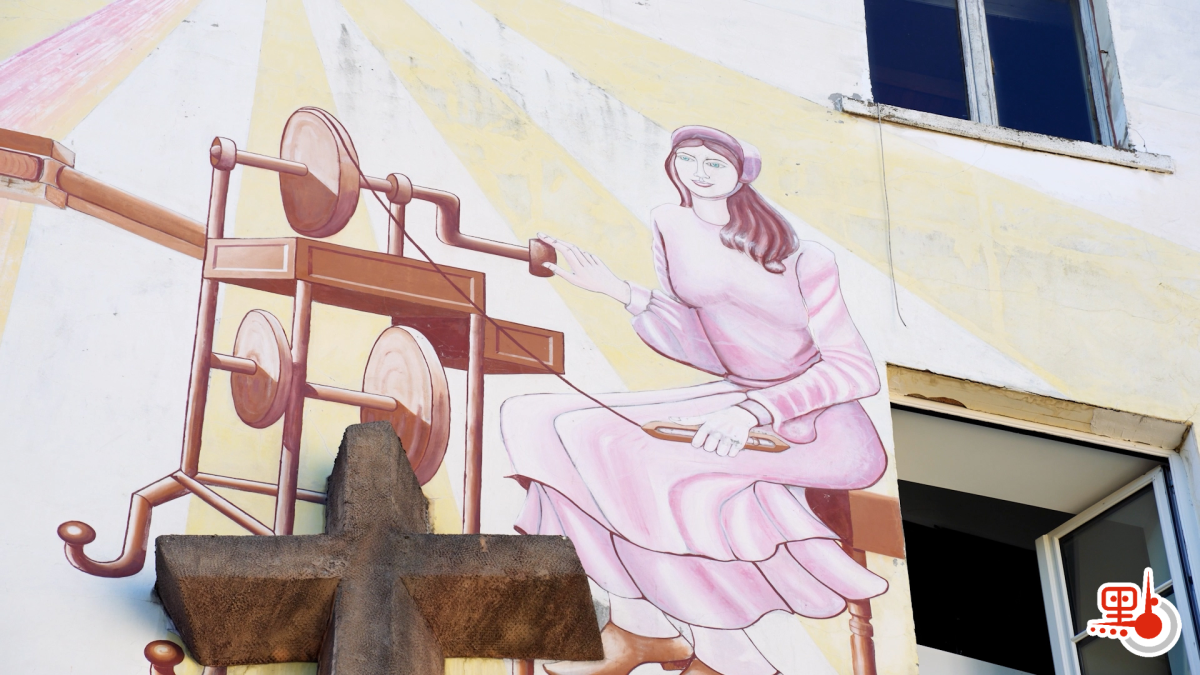
Lyon, known as the "Silk Capital of the West," was one of the endpoints of the ancient Silk Road in Europe and served as a key hub for silk processing and trade on the continent. Hélène, a staff member at the Soierie Vivante, remarked, "Although Lyon has never produced large quantities of raw silk, our artisans have devoted themselves to the study of weaving techniques, honing their skills day after day, allowing the gifts of the Silk Road to flourish on this land."
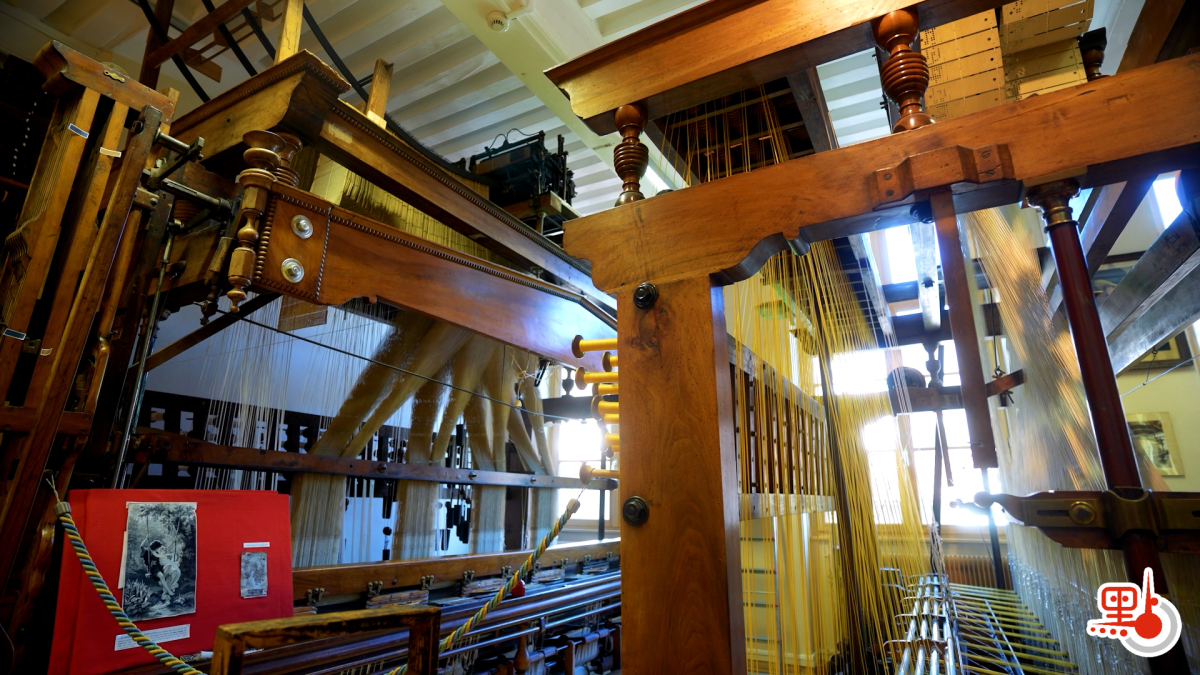
In fact, after traveling a great distance to reach Lyon, China's silk production techniques had evolved into a distinct system of their own. Hélène explained that in terms of weaving technology, before the invention of the Jacquard loom in Europe, Lyon employed a system in which a "person standing beside would lift the threads," whereas in China, the method involved a "person standing above the loom." Interestingly, although the two approaches were completely different in execution, they could produce equally exquisite patterns. In a sense, the wisdom of East and West had arrived at the same destination by different paths.
The similarities and differences in silk weaving techniques, pattern design, and developmental trajectories between the two regions have become an important source of inspiration for artistic creation among Lyon's designers, giving rise to many works centered on sericulture. Hélène noted that a few years ago, Lyon hosted an illustration exhibition showcasing the connections between the city and China in the 19th century. Many of the exhibited works focused on documenting sericulture and silk production in China, demonstrating the profound influence of Chinese sericulture culture on Lyon.
Today, the thousand-year-old craft of silk is being revitalized by a new generation of designers in Lyon. One such representative is designer Sarah Amsellem, a graduate of the École des Beaux-Arts in Lyon. In 2015, she founded the brand Maison Sams, which now boasts 150 points of sale across France and internationally. Through its presence throughout the country, the brand is dedicated to showcasing Lyon's expertise in silk and its traditional craftsmanship.
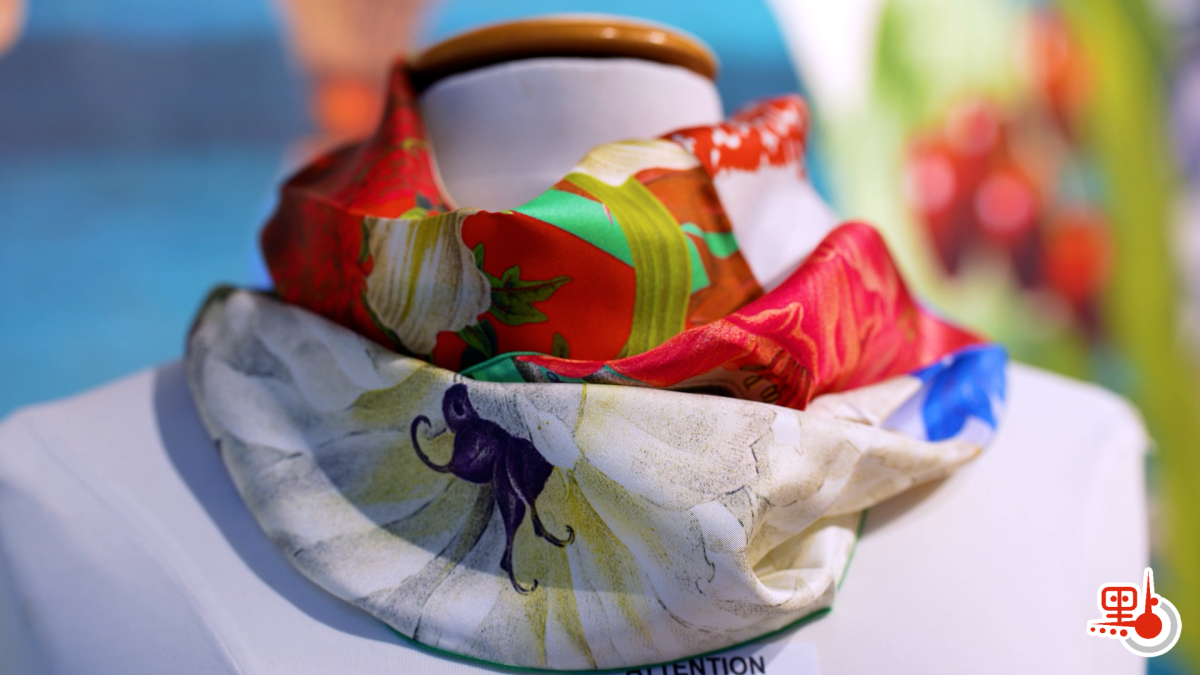
When speaking of her connection to silk, Sarah spoke with great enthusiasm, "Silk is an amazing material with unique physical properties. It can adapt to body temperature and reflect light, color, and details. Even the same dye can present a different aesthetic under varying light. That is what fascinates me most."
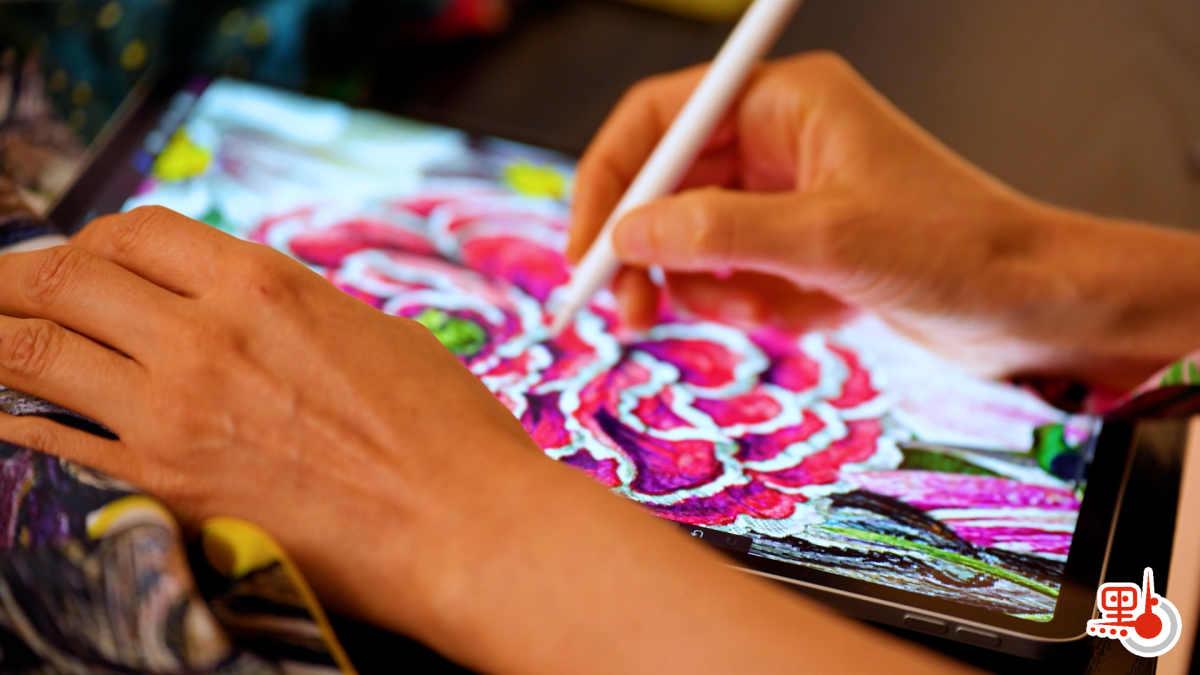
As a textile designer, Sarah explained that she must not only possess solid drawing skills like any other designer, but also learn to work within a dynamic, three-dimensional space. Silk flows, so as a designer, she has to anticipate how it drapes and how it reflects light, and on that basis, layer different elements together to best translate color and creativity onto the textile.
Remarkably, across the street from Sarah's studio lies the former site of Lyon's historic silk trading center, where hidden passageways were built to protect silk during transport. Sarah mentioned that she had been unaware of this when she first chose the location. Leading the film crew through the passageways, she explained the original functions of the architectural features—creating a moment of dialogue between history and the present.
Having weathered centuries of change, Lyon today—as the "Crossroads of France"—still sees a steady flow of trade in silk and other goods. Lyon's silk can be found as far away as Saint Petersburg in Russia. Locally, the Croix-Rousse district, with its buildings originally designed for the silk industry, retains its historic character, now serving as workshops where visitors from around the world can experience how silk workers once lived and worked in the same space. "We longed to find a place where we could share our cultural heritage," Hélène said, "It is like a place to share the heritage, so it is called a workshop, not properly a museum. We would like to keep the knowledge alive, and also, the looms alive."
Related News:




Comment