






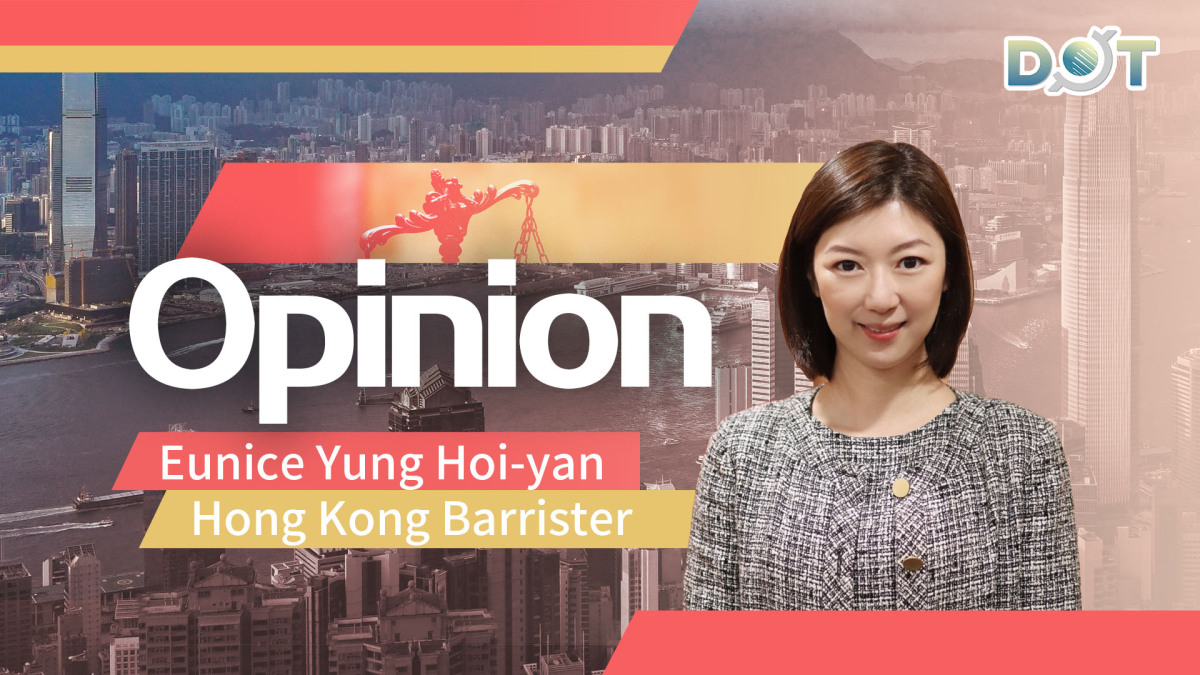
By Eunice Yung
As China's annual "Two Sessions" drew to a close in Beijing this March, the reverberations of national strategy were felt across every province and region, not least in Hong Kong. Every year, the concurrent meetings of the National People's Congress (NPC) and Chinese People's Political Consultative Conference (CPPCC) provide a vital window into China's priorities for the coming period. But this year's sessions, culminating in the approval of the 15th Five-Year Plan (2026-2030), carried particular weight, mapping out China's development at a critical juncture—and setting a course that offers Hong Kong both new opportunities and a fresh sense of urgency.
The Two Sessions are not only a grand stage of national unity but also a remarkable demonstration of deliberative governance, drawing on voices from every part of Chinese society. At the closing, Chinese Premier Li Qiang delivered the government work report, reflecting both on the achievements of the past year and outlining the path forward. The year 2025 was marked by a resilient economic performance, with China's GDP reaching 140.19 trillion yuan and an annual growth rate of 5 percent—figures that underscore both the energy and solidity of the Chinese economy. A stable job market, successful poverty alleviation consolidation, robust innovation, and significant breakthroughs in advanced technologies such as artificial intelligence and quantum science showed, once again, the deepening foundation of Chinese modernization.
Yet, perhaps the most important outcome of this year's Two Sessions was the formal adoption of the 15th Five-Year Plan. Five-year planning remains one of China's greatest institutional strengths, lending predictability and direction at a time when much of the world is marked by uncertainty and short-termism. The newly approved blueprint sets out not just economic targets but a holistic vision for innovation, green growth, governance capacity, and public well-being. The 15th Five-Year Plan is forward-looking and people-centered, with a clear mandate: China is to realize high-quality growth, accelerate technological self-sufficiency, promote green and low-carbon transformation, and ensure that the fruits of development bring greater benefit to all.
What stands out for many observers is the shift from a narrow GDP focus toward a more balanced, quality-first governance outlook. Key indicators in this new plan measure not just economic output but also environmental performance, societal well-being, innovation capacity, and public services provision. This signals China's determination to pursue progress with sustainability, responsibility, and inclusiveness.
For Hong Kong, the significance of these priorities cannot be overstated. The Two Sessions and the 15th Five-Year Plan provide both a guiding framework and a great opportunity. At the center of this opportunity lies the acceleration of the Northern Metropolis development, a project explicitly supported in the new national plan as pivotal to Hong Kong's role in the nation's modernization.
The Northern Metropolis—a vast, strategic corridor spanning Yuen Long and North districts and bordering Shenzhen—embodies both the vision and the challenges of Hong Kong's future. Planned as a vital node in the Guangdong-Hong Kong-Macao Greater Bay Area, its ambition is to transform the region into an innovation and technology engine, integrating advanced manufacturing, new economy industries, cross-border business, and modern living environments. It represents the most extensive attempt since the return to build a new growth pole for Hong Kong.
The recent legislative and policy changes in Hong Kong signal that the city is responding dynamically to this national context. The Hong Kong SAR government, under Chief Executive John Lee, has already announced the drafting of the city's first five-year plan—an unprecedented move that will anchor Hong Kong's development firmly within the national framework. The government is also putting forward dedicated legislation to expedite Northern Metropolis development, tackling long-standing bottlenecks that have historically slowed Hong Kong's large-scale projects.
Drawing from the lessons of the mainland's own reforms, the new legislative proposals aim to break the "old and slow system" through practical, targeted measures. Streamlined urban planning processes, accelerated land resumption and compensation, and a commitment to allow innovative construction techniques will make it possible to deliver both faster and higher-quality results. Meanwhile, by actively facilitating cross-boundary flows—of talent, technology, funds, and goods—via hubs like the Lok Ma Chau Loop and the Hong Kong-Shenzhen Innovation and Technology Park, Hong Kong will better leverage its unique position as the bridge between China and the world.
The focus on flexibility and adaptability is crucial. The planned statutory framework for the Northern Metropolis will empower the Chief Executive-in-Council to make dynamic adjustments as needs evolve, while keeping transparency and accountability via regular Legislative Council review. Such mechanisms are essential to ensure Hong Kong can respond swiftly to market shifts, innovation trends, and the evolving national requirements.
What's more, the central government's backing for the Northern Metropolis is not just a matter of policy consensus, but is now anchored in the formal language of national planning. This gives international investors and local businesses rare certainty and confidence to make long-term commitments. With over 120 hectares of land already leveled and major infrastructure works underway, the next five years will see the release of some 900 hectares of new land for housing, industries, and services—addressing both residential demand and the need for economic diversification.
Beyond its economic impact, the Northern Metropolis also stands to enrich Hong Kong's social landscape. The plan incorporates a people-oriented vision of modern urban living, green spaces, and a dynamic mix of industry and innovation. As the national blueprint stresses, development must benefit the people—in employment, income, public services, and quality of life. This is a chance for Hong Kong to renew its social contract and deliver genuine improvement to daily life, bridging the needs of today and the promise of tomorrow.
The closing of the Two Sessions thus opens a new chapter for Hong Kong. The city is no longer a passive beneficiary of national policies; it is called to be an active participant, an innovator, an engine of high-quality growth in synchrony with the nation's modernization. By clearing away outdated procedures and embracing new governance modes, Hong Kong is showing its readiness for bold action. As China advances steadily toward its 2035 modernization goal, Hong Kong's contribution—anchored in the rapid build-up of the Northern Metropolis—will be central to both national and local rejuvenation.
With strategic resolve, creative policy, and alignment with the national blueprint set at this year's Two Sessions, Hong Kong has every reason for renewed confidence. The path has been charted, the engines are running, and the story of shared progress is ready for a new chapter.
The views do not necessarily reflect those of DotDotNews.
Related News:
Opinion | Two Sessions: Hong Kong's unique mission in China's new era of modernization
Opinion | A bolder step for HK: The 2026–27 Budget and the next era of innovation




Comment