






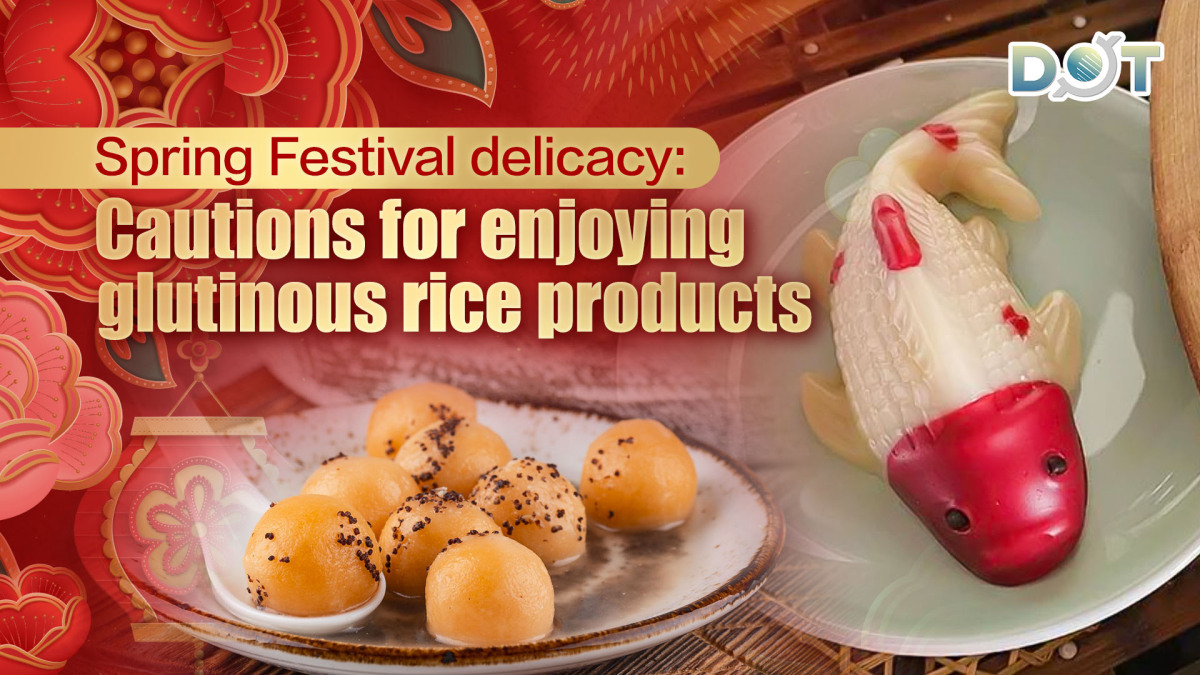
During Spring Festival, many places have traditions of eating soft, sticky glutinous rice foods. However, these treats can be surprisingly dangerous — especially for the elderly and children.
The difference in stickiness between glutinous rice and regular rice comes down to the types of starchthey contain. Starch is mainly divided into two types: amylose (like a long rope with few branches) and amylopectin (highly branched). The higher the amylopectin ratio, the softer and stickier the texture.
Glutinous rice starch contains over 80% branched starch and has relatively little amylose, which makes glutinous rice stickier than other types of rice. Foods made from glutinous rice, such as "lv da gun" (sticky rice rolls), zongzi (sticky rice dumplings), ci ba (rice cakes), and qingtuan (green rice balls), have a softer and stickier texture.
Things to Note When Eating Glutinous Rice Products
Eat glutinous ricewith full attention — no laughing, joking, or talking while chewing — to avoid choking or suffocation.
When cooled, amylopectin molecules of glutinous rice form a dense structure, increasing stickiness and toughness, which burdens digestion. So enjoy it hot, or reheat thoroughly if cooled.
Many glutinous rice dishes contain meat, egg yolks or sweet fillings, etc. Though small in size, they pack calories. Delicious as they are, be mindful not to overeat.
If eating glutinous rice foods, reduce intake of other staples to avoid excess calories, which can lead to obesity or high blood sugar.
Glutinous rice has a high glycemic index. For diabetics, daily intake should not exceed 50 grams. The elderly, children, those with cardiovascular disease, or those with weak digestion should also eat sparingly.
(Source: China Daily)
Related News:
Fifth day of Chinese New Year: 6 key customs to ensure prosperity & banish bad luck




Comment