






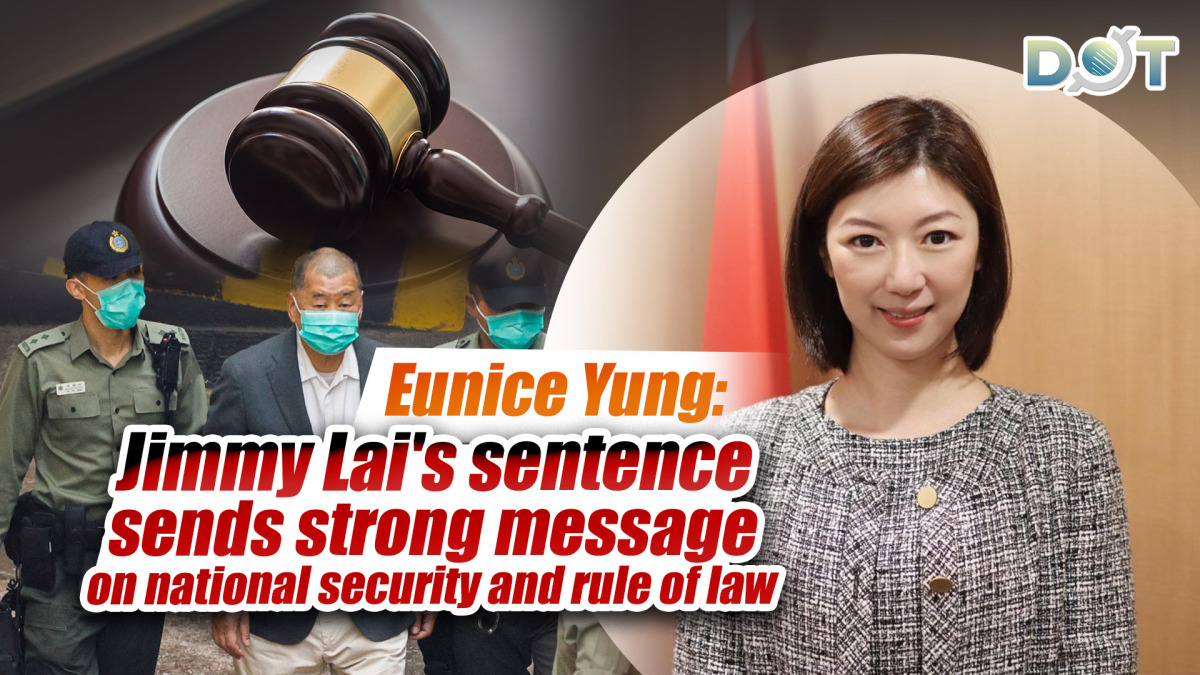
In response to the 20-year prison sentence given to media figure Jimmy Lai, Hong Kong barrister Eunice Yung, in a recent review with DotDotNews reporters, underscores that the judgment reflects the severe and persistent nature of the criminal conduct established during trial. According to the court's findings, Lai was identified as the "mastermind and driving force" behind prolonged, premeditated conspiracies aimed at colluding with foreign forces to undermine Hong Kong's security, social stability, and constitutional order. The ruling emphasized that his actions constituted not isolated incidents or protected speech, but an organized campaign that continued both before and after the National Security Law came into effect. The court noted that these were deliberate acts intended to solicit foreign intervention, with real-world consequences—including the imposition of sanctions—cited as evidence of tangible harm.
Yung stated that the sentence followed an open and transparent legal process in which all arguments, including those concerning Lai's age, health, and detention conditions, were heard. While mitigating factors were considered, the court concluded they could not outweigh the seriousness of the offences or the public interest in deterrence. The outcome sends a clear message locally and internationally that Hong Kong's judiciary remains committed to upholding the rule of law, judicial independence, and societal security.
As the first sentencing for "collusion with foreign forces" under the National Security Law, the case sets a meaningful precedent for future enforcement. The judgment illustrates that such cases will be handled with legal rigor, transparency, and adherence to due process. The court provided a detailed analysis on sentencing principles and the distinction between grave and ordinary offences, clarifying that future rulings will assess the substantive impact of conduct—focusing on outcomes rather than rhetoric. It reaffirmed that while rights such as freedom of expression remain protected, they are not absolute when used to endanger national security.
Regarding international concerns that the case undermines press freedom, she expressed the ruling clarifies that the convictions were based on specific criminal conspiracies to destabilize Hong Kong's constitutional order—not on journalism, political views, or reporting. The court underscored that freedom of the press is protected under Hong Kong's Basic Law, but, as in other open societies, does not extend to illegal activities threatening national security. The trial adhered to strict procedural safeguards, with all claims of bias or suppression examined and dismissed by the court.
On the question of further regulating misinformation and foreign influence, she said the case highlights vulnerabilities related to the misuse of media platforms to orchestrate campaigns inviting foreign intervention. There is a recognized need for precise, proportionate legislation that distinguishes between legitimate expression and organized activities aimed at subverting constitutional order through disinformation. Any future legal measures should include judicial oversight, transparent definitions, and safeguards to protect lawful journalism and public discourse.
To citizens and members of the press concerned about the implications of the verdict, she emphasizes that Hong Kong's courts remain committed to due process, detailed reasoning, and fairness. The judgment clearly separates legitimate reporting and speech from orchestrated campaigns designed to harm public order or invite foreign interference. For those acting in good faith within the law, the ruling does not threaten their rights or freedoms. Instead, it reaffirms that the legal system exists to protect both individual liberty and the broader public interest, ensuring Hong Kong's continued stability and prosperity under the rule of law.
Related News:
Wilson Shum: No one allowed to use human rights and freedoms to endanger national security




Comment