






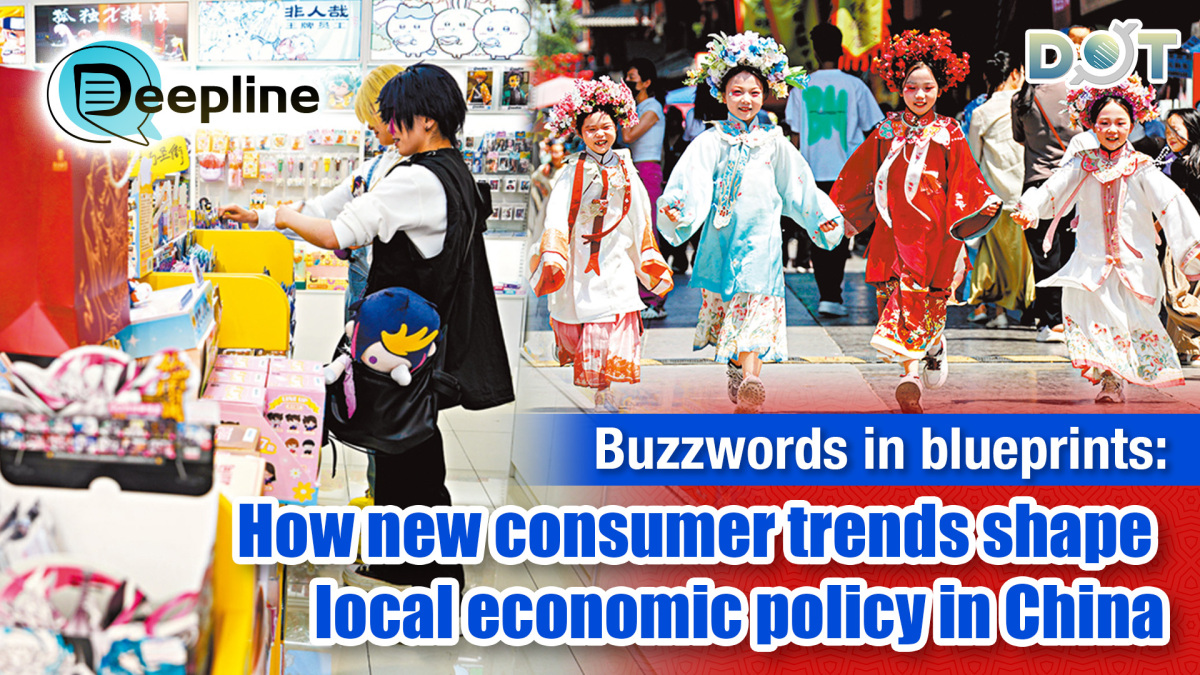
At the 2026 provincial two sessions, internet buzzwords such as "emotional economy," "China-chic economy," "self-indulgence economy," and "night markets" appeared in government work reports. Behind these grounded and vivid expressions lie reflections of local governments' efforts to respond to the trend of consumption upgrading, aiming to transform popular, trending consumer phenomena into drivers of domestic demand and economic momentum, while also demonstrating the policymakers' governance that prioritizes the deep-seated needs of the people.
The year 2026 marks the beginning of the 15th Five-Year Plan. The Central Economic Work Conference held at the end of last year placed "prioritizing domestic demand and building a strong domestic market" as the top task for this year's economic work. At the ongoing provincial two sessions, local governments are deploying measures to stimulate consumption and exploring new spaces for domestic demand growth.
"Cultivating new forms of consumption, developing the 'silver-haired economy,' 'debut economy,' 'emotional economy'… optimizing convenience measures for inbound consumption, and enhancing the reputation of 'the city that treats tourists best.'" For the first time, Chongqing's two sessions included "emotional economy" in the government work report. Provinces like Jiangxi and Hubei have also listed emotional economy as part of their new business models and formats for 2026.
In line with their respective resource endowments, many provinces have tailored their approaches to anchor new growth areas: Hubei, a major central province known for innovation, is responding to new demands for practical and knowledge value. Jiangxi Province proposed "creating new growth points in the 'China-chic economy,' boosting consumption of historically renowned products such as porcelain, traditional Chinese medicine (TCM), and tea." Guizhou Province, leveraging its multi-ethnic cultural resources, is promoting the deep integration of the "China-chic economy" with cultural tourism to form consumer brands with regional characteristics. Jiangsu Province highlighted the breakout success of "Su-chao" (Jiangsu Football City League) as a top trend and resolved to continue leveraging this popular IP to promote integrated development of culture, tourism, sports, and commerce.
Additionally, new consumer scenarios such as "intangible cultural heritage night markets" and "outdoor vending economy" (referring to the practice of allowing commercial establishments to set up tables, chairs, and other facilities in reasonable spaces in front of their stores to conduct outdoor business activities) have emerged in numerous reports. Shanghai stated it would support the development of market fairs and night markets, optimize outdoor vending setups, and further enhance the city's bustling atmosphere. Guizhou Province proposed creating "intangible cultural heritage night markets" and "TCM culture night markets" to activate nighttime consumption through innovative scenarios. Jiangxi Province, meanwhile, aims to expand consumer spaces through "outdoor vending" to meet the diverse needs of the public.
Traditionally, cost-effectiveness and practicality define a product's value. However, for today's younger consumers, shopping is no longer just a transaction. Some products offer little practical functionality yet evoke deep emotional resonance. These items are not about utility; they are about identity, emotional connection, and spiritual solace. At its core, "emotional economy" marks a shift in consumption patterns from possession to experience. Young people are building their personal emotional vocabularies through their consumption behaviors.
Wang Shuixiong, a researcher from the National Academy of Development and Strategy of Renmin University of China, told Wen Wei Po that behind buzzwords like "emotional economy" and "self-indulgence economy" lies a profound shift in the demand structure of consumers nowadays. Amid rapid urbanization and lifestyle transformations, society is becoming increasingly individualized, with relatively diminished interpersonal emotional exchanges. People now seek emotional compensation through consumption, driving a transition in consumption from "utility-oriented" to "emotionally satisfying."
He also noted that since 2013, the emotional economy has grown at an annual rate of approximately 12% and is expected to reach a market exceeding 2 trillion yuan by 2025, primarily concentrated in sectors such as cultural tourism, trendy toys, pets, and culinary. Local governments' vigorous development of these emerging consumer formats reflects their adaptability to the trends of the times and their efforts to activate new growth drivers.
At the same time, policymakers' emphasis on nurturing new business models that cater to emotional needs and supporting vibrant scenarios like night markets and outdoor vending addresses the fundamental question of "for whom economic development is intended." It is not merely for GDP growth or corporate profits, but to enable people to find emotional fulfillment, achieve freedom in labor, enrich relationships, express individuality, and elevate their needs.
(Source: Wen Wei Po; Journalist: Wang Jue)
Related News:
Deepline | Vote of confidence: UBS moves into new Asia-Pacific HQ in West Kowloon
Deepline | APEC's meeting kicks off in Guangzhou, spotlighting GBA's tech innovation




Comment