






The crewed spacecraft Shenzhou-23 landed successfully today at the Dongfeng landing site, bringing Hong Kong's first payload specialist, Lai Ka-ying, back to Earth together with crewmate Zhang Zhiyuan and Pakistani astronaut Muhammad Zeeshan Ali, who took part in a short-term joint mission.
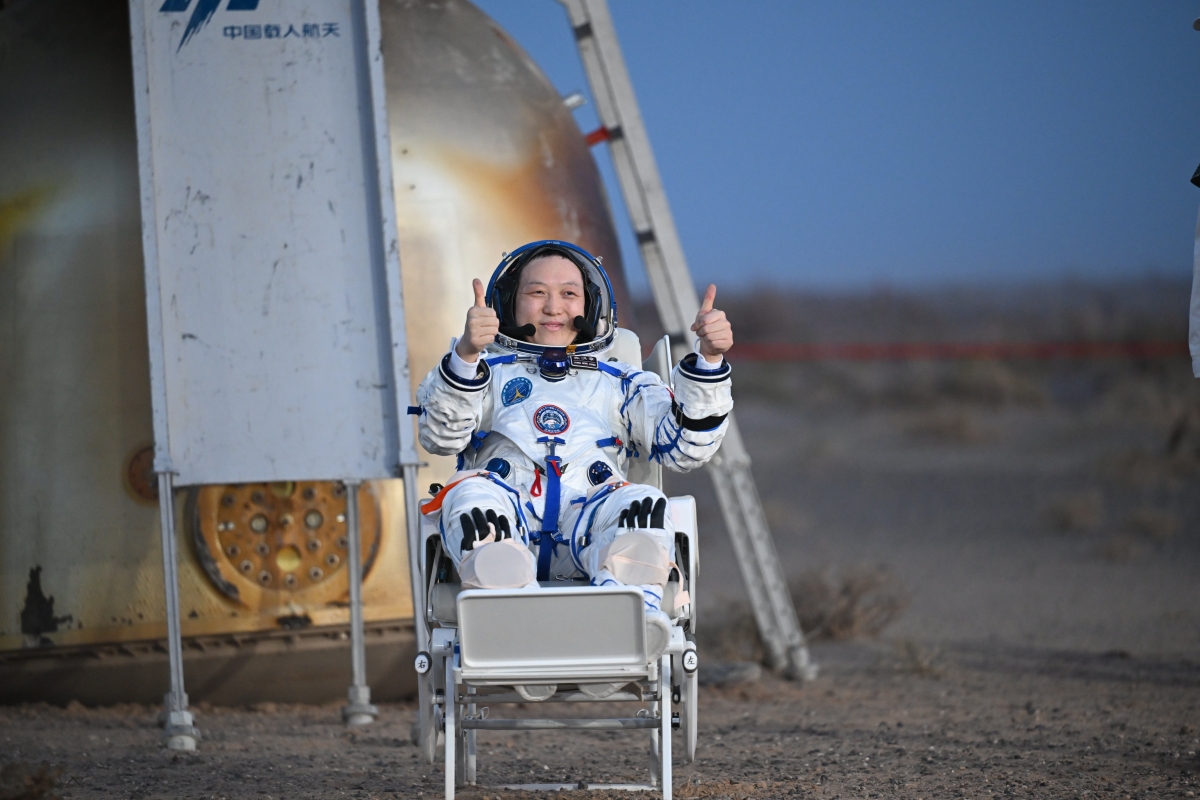
Like many astronauts before them, Lai was carried after leaving the capsule while seated in a specially designed chair. The scene often raises a common question: why would highly fit astronauts be unable to take a few steps immediately after returning?
The challenge is gravity. After spending months in orbit about 400 kilometers above Earth, astronauts live and work in microgravity, floating for long periods with little weight bearing on muscles and bones. Once back on the ground, the body must go through a process of readapting to Earth's gravity. Extended exposure to weightlessness can lead to varying degrees of muscle atrophy and bone mineral loss, and it can also strain systems responsible for cardiovascular function and balance.
Trying to walk too soon can trigger disorientation and balance problems. Forcing a stand-up attempt right after landing increases the risk of falls and, in severe cases, fractures. The longer the mission, the harder the readaptation tends to be. Lai spent more than half a year aboard Tiangong, making her the Chinese female astronaut with the longest single in-orbit duration to date. This protective measure, therefore, keeps returning crew members safe during the most vulnerable period.
Astronaut recovery does not end at landing. Past mission experience shows that returning crew members typically need five to six months of rehabilitation. Since the Shenzhou-13 mission, the landing site has used a second-generation medical monitoring and support vehicle equipped with temperature control, allowing astronauts to move directly from the chair into the vehicle via a lifting platform for checks and rest, which reduces their exposure time outdoors. After returning to Beijing and completing medical quarantine, Lai and her crewmates will undergo around six months of physical recovery training and psychological adjustment, gradually restoring their bodies to normal gravity conditions.
The "Escort Chair"—and Hong Kong's role in its design
The chair used to support astronauts during extraction is formally known as the Chinese Shenzhou Spacecraft Escort Chair. Less widely known is that Hong Kong professionals have played a role in its development from the earliest design stage through multiple generations of upgrades.
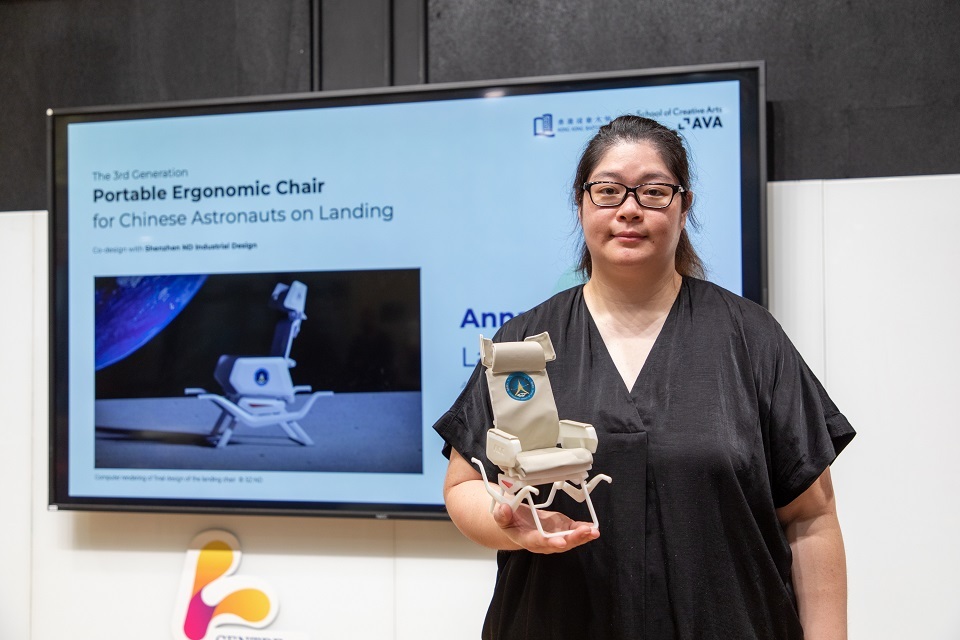
In 2012, Anna Qin—an assistant professor at the Academy of Visual Arts at Hong Kong Baptist University—began working with the China Astronaut Research and Training Center and served as the chief designer for the first-generation escort chair. She later took part in R&D for successive versions used across missions from Shenzhou-11 to Shenzhou-13, contributing to three generations of the chair.
Although it appears simple, the chair's materials and structure are carefully engineered. The third-generation model mainly uses aluminum alloy and carbon fiber, weighing about 46 kilograms and improving portability. It also uses a high-tech leather-like upholstery designed to feel similar to an aircraft seat, enhancing comfort.
Because astronauts remain seated in the chair through transfers from the landing site to vehicles and onward to aircraft, the backrest was designed with four recline settings, allowing it to tilt back up to about 135 degrees so crew members can shift between sitting upright and semi-reclining. The chair's width is also controlled to under 60 centimeters, making it easier to move through tight spaces during transfers.
Continuous upgrades for longer missions
The escort chair has been refined over time as China's crewed missions have extended in duration. Early versions met basic requirements such as foldability, ease of carrying, and quick deployment, but transfers still had limitations, including the need to move astronauts with straps in a more cumbersome way. Later designs improved the hand-carry points by adding fixed handles to make lifting safer and less tiring for ground staff.
As mission lengths increased and the risk of bone loss became a more serious concern, protection details were also strengthened—including improved neck support to help carry the combined weight of the head and helmet, and adjustments to the headrest shape to avoid snagging the helmet. For longer-duration missions such as Shenzhou-14, further refinements made transitions between sitting, lying flat, and being carried smoother.
The design team continues to iterate based on astronaut feedback, and future versions may incorporate sensors to automatically collect data related to comfort and performance, further aligning the chair with real operational needs.
The crewed spacecraft Shenzhou-23 landed successfully today at the Dongfeng landing site, bringing Hong Kong's first payload specialist, Lai Ka-ying, back to Earth together with crewmate Zhang Zhiyuan and Pakistani astronaut Muhammad Zeeshan Ali, who took part in a short-term joint mission.
Like many astronauts before them, Lai was carried after leaving the capsule while seated in a specially designed chair. The scene often raises a common question: why would highly fit astronauts be unable to take a few steps immediately after returning?
The challenge is gravity. After spending months in orbit about 400 kilometers above Earth, astronauts live and work in microgravity, floating for long periods with little weight bearing on muscles and bones. Once back on the ground, the body must go through a process of readapting to Earth's gravity. Extended exposure to weightlessness can lead to varying degrees of muscle atrophy and bone mineral loss, and it can also strain systems responsible for cardiovascular function and balance.
Trying to walk too soon can trigger disorientation and balance problems. Forcing a stand-up attempt right after landing increases the risk of falls and, in severe cases, fractures. The longer the mission, the harder the readaptation tends to be. Lai spent more than half a year aboard Tiangong, making her the Chinese female astronaut with the longest single in-orbit duration to date. This protective measure, therefore, keeps returning crew members safe during the most vulnerable period.
Astronaut recovery does not end at landing. Past mission experience shows that returning crew members typically need five to six months of rehabilitation. Since the Shenzhou-13 mission, the landing site has used a second-generation medical monitoring and support vehicle equipped with temperature control, allowing astronauts to move directly from the chair into the vehicle via a lifting platform for checks and rest, which reduces their exposure time outdoors. After returning to Beijing and completing medical quarantine, Lai and her crewmates will undergo around six months of physical recovery training and psychological adjustment, gradually restoring their bodies to normal gravity conditions.
The "Escort Chair"—and Hong Kong's role in its design
The chair used to support astronauts during extraction is formally known as the Chinese Shenzhou Spacecraft Escort Chair. Less widely known is that Hong Kong professionals have played a role in its development from the earliest design stage through multiple generations of upgrades.
In 2012, Anna Qin—an assistant professor at the Academy of Visual Arts at Hong Kong Baptist University—began working with the China Astronaut Research and Training Center and served as the chief designer for the first-generation escort chair. She later took part in R&D for successive versions used across missions from Shenzhou-11 to Shenzhou-13, contributing to three generations of the chair.
Although it appears simple, the chair's materials and structure are carefully engineered. The third-generation model mainly uses aluminum alloy and carbon fiber, weighing about 46 kilograms and improving portability. It also uses a high-tech leather-like upholstery designed to feel similar to an aircraft seat, enhancing comfort.
Because astronauts remain seated in the chair through transfers from the landing site to vehicles and onward to aircraft, the backrest was designed with four recline settings, allowing it to tilt back up to about 135 degrees so crew members can shift between sitting upright and semi-reclining. The chair's width is also controlled to under 60 centimeters, making it easier to move through tight spaces during transfers.
Continuous upgrades for longer missions
The escort chair has been refined over time as China's crewed missions have extended in duration. Early versions met basic requirements such as foldability, ease of carrying, and quick deployment, but transfers still had limitations, including the need to move astronauts with straps in a more cumbersome way. Later designs improved the hand-carry points by adding fixed handles to make lifting safer and less tiring for ground staff.
As mission lengths increased and the risk of bone loss became a more serious concern, protection details were also strengthened—including improved neck support to help carry the combined weight of the head and helmet, and adjustments to the headrest shape to avoid snagging the helmet. For longer-duration missions such as Shenzhou-14, further refinements made transitions between sitting, lying flat, and being carried smoother.
The design team continues to iterate based on astronaut feedback, and future versions may incorporate sensors to automatically collect data related to comfort and performance, further aligning the chair with real operational needs.



Comment