






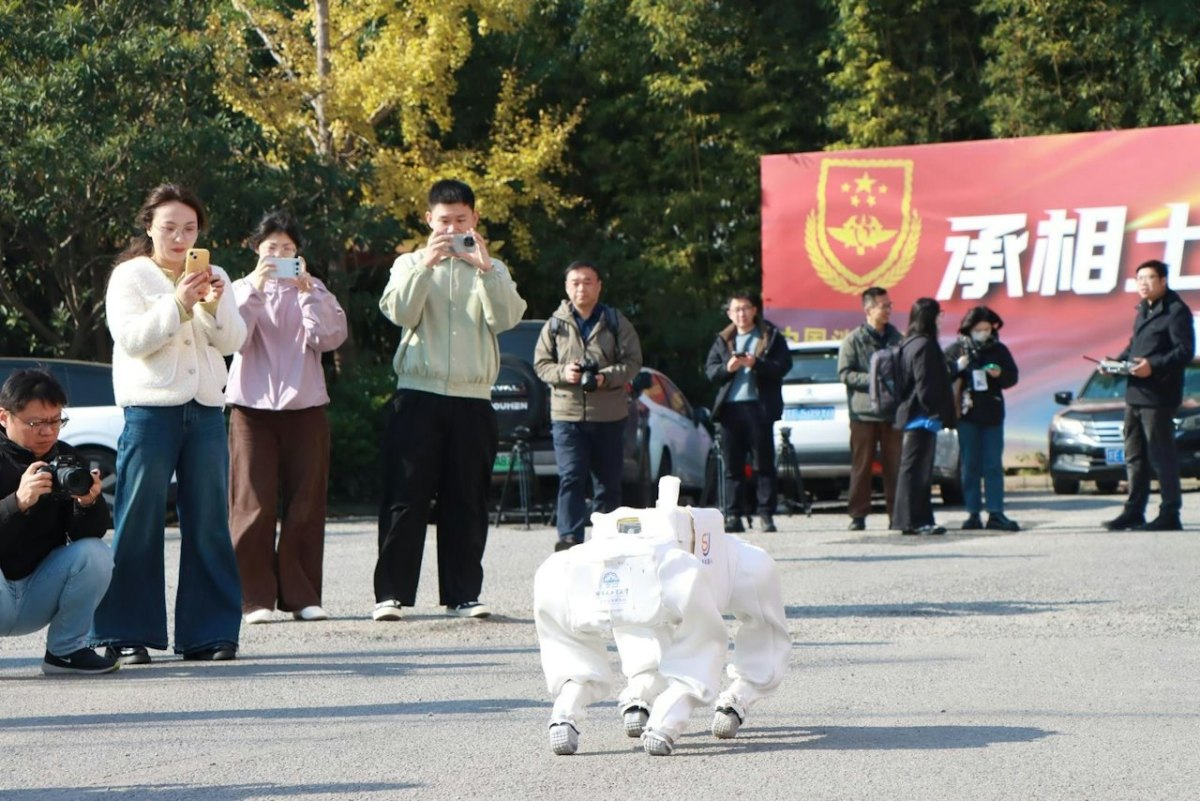
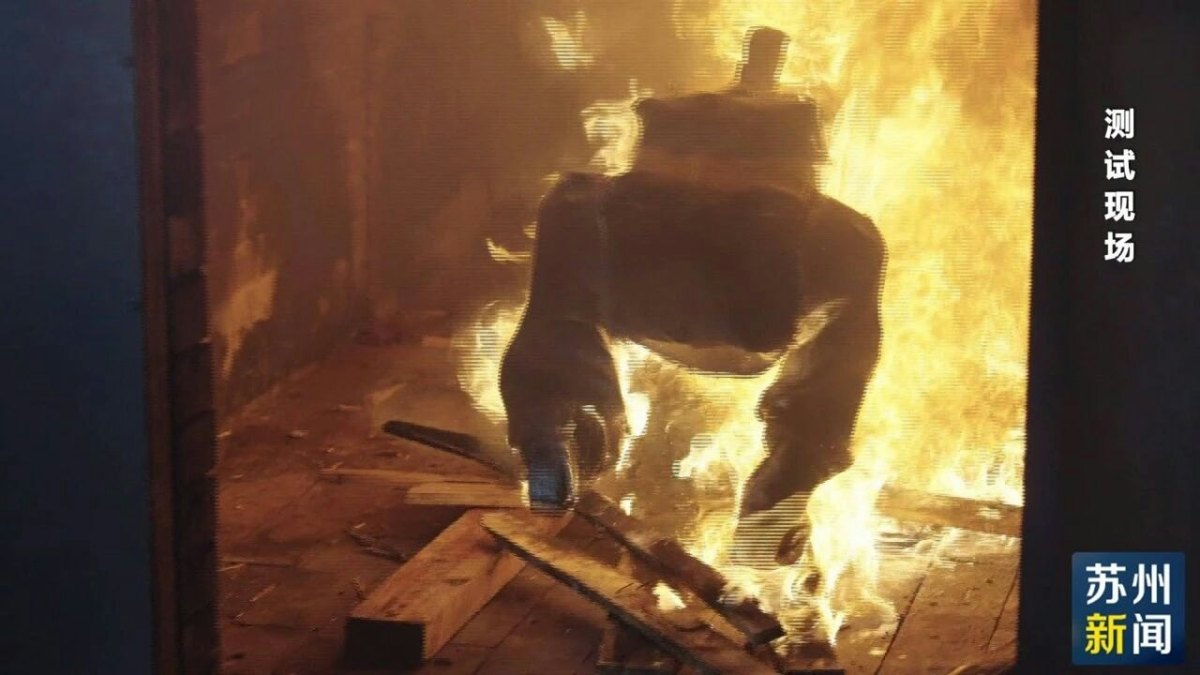
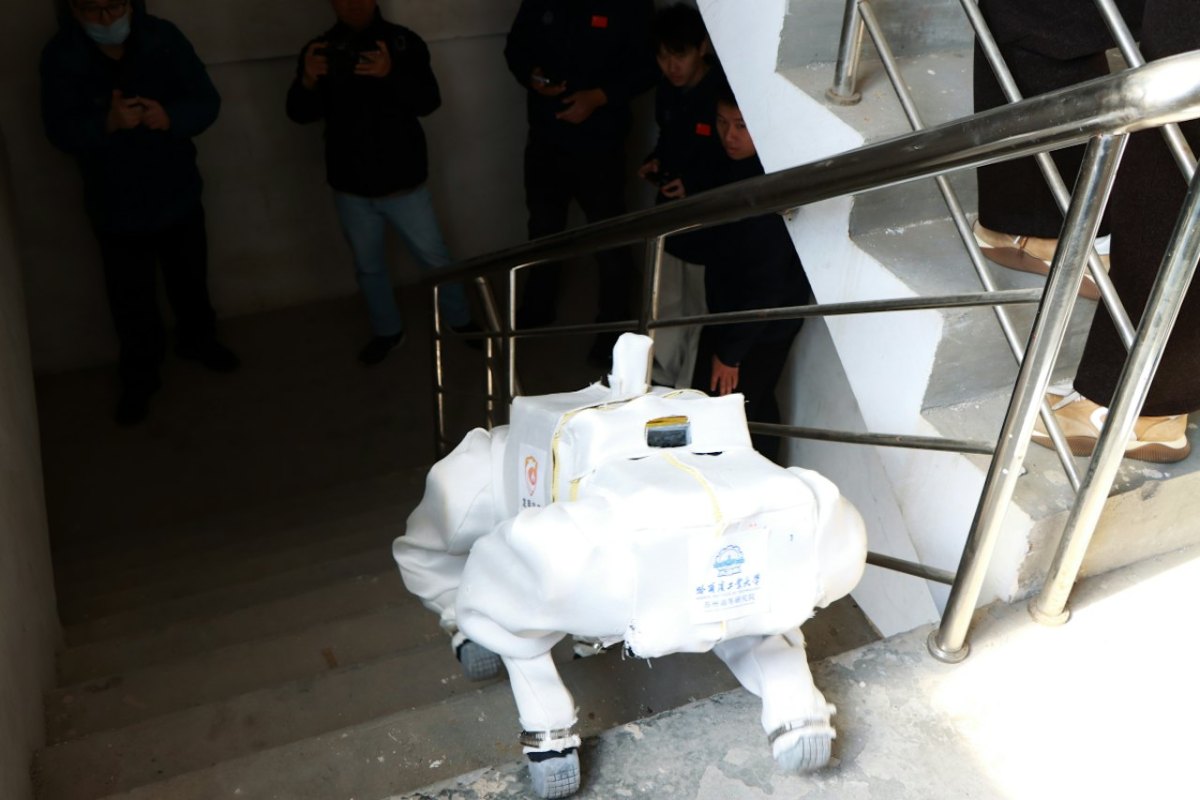
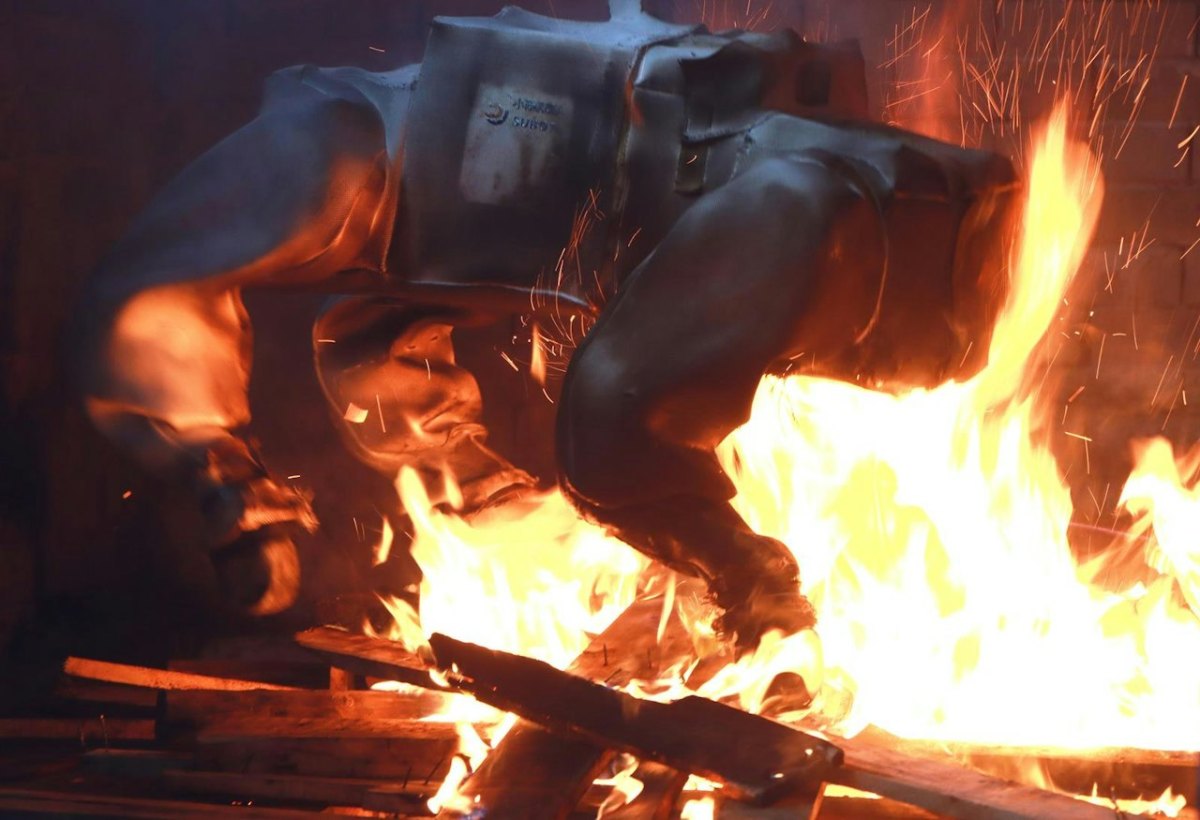
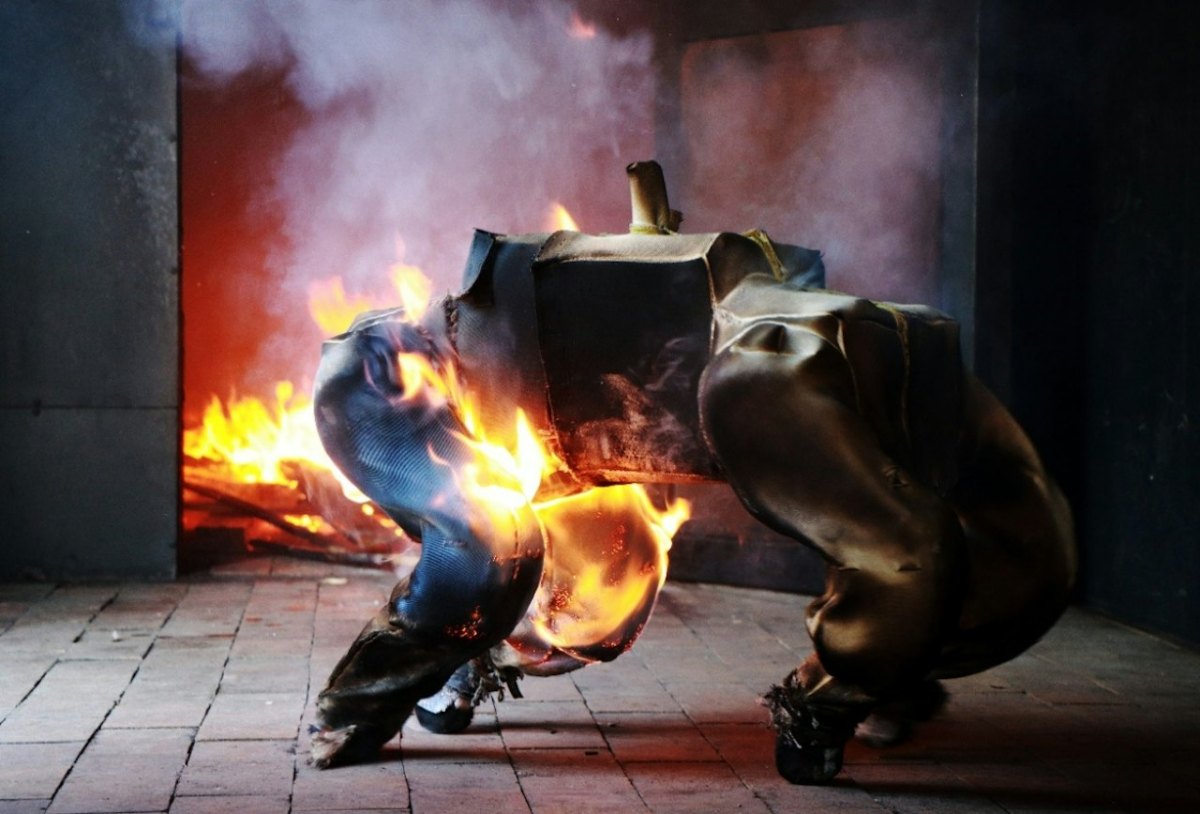
China has completed a field test of its first high-heat-resistant firefighting reconnaissance robot dog, designed to operate in environments reaching 1000°C. The test was carried out on Nov. 25 at the Fengyang Road Special Service Station under the Suzhou Fire Rescue Detachment.
In large building fires, conditions can quickly become fatal once a fire reaches its fully developed stage. Temperatures inside an enclosed fire scene can be between 300°C and 1100°C. Toxic gasses such as carbon monoxide and cyanides can be found in thick smoke and the visibility can be greatly reduced. Firefighters, who might be wearing as much as 20 kilograms of protective gear, may have to go into areas of extreme heat. Existing reconnaissance devices cannot survive at such temperatures. Firefighting robots currently in domestic use generally work at about 300 degrees Celsius.
A key challenge is battery safety. Lithium batteries can become dangerous at high temperatures, and without effective fireproofing and thermal insulation, equipment can turn into an additional hazard. The new robot dog is intended to provide a high-temperature-capable platform that can transmit real-time images from inside a fire scene.
The robot dog itself is not inherently fireproof. Its heat resistance comes from a specialized "fireproof cotton coat" made from a composite fabric derived from aerospace thermal-protection materials. The flexible protective layer measures about five to six millimeters thick and uses multiple stacked materials: the outer layer is burn-resistant, while inner layers insulate, absorb heat, and reflect thermal radiation. The design aims to block external heat from reaching the internal components while also managing heat generated by the robot's motors.
With this protective suit, the system can work continuously for 10 minutes in a 1000°C environment, a capability intended to cover about 95% of fire-scene types. It also uses laser-gated imaging to see through dense smoke and features redundant 5G and video-transmission links. The platform is designed to remain controllable and able to send back high-definition video even inside high-rise buildings above 30 floors, helping responders pinpoint fire sources and locate trapped people in real time.
Developers also see potential for the same fireproof material to be woven into firefighters' protective gear to reduce weight, lowering operational risk. The material is expected to move toward mass production, alongside plans to enable routine deployment of the robot dog in both single-unit and multi-unit coordinated operations at fire scenes.




Comment