






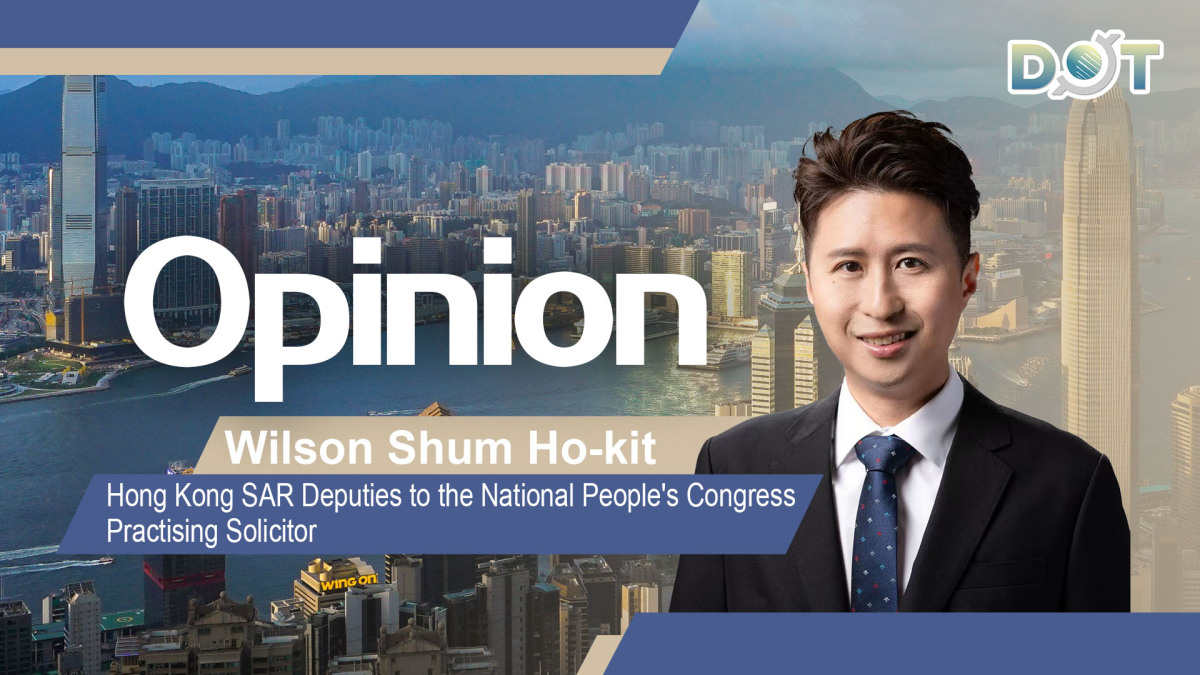
By Wilson Shum Ho-kit
The 2026 Election Committee Subsector Ordinary Elections of the Hong Kong Special Administrative Region have concluded smoothly. Spokespersons for the Hong Kong and Macao Affairs Office of the State Council and the Liaison Office of the Central People's Government in the HKSAR issued statements successively to affirm the outcomes and far‑reaching significance of the elections. As the second Election Committee election following the improvement of the HKSAR electoral system, this poll marks another solid practice of Hong Kong's distinctive high‑quality democracy. It fully proves that the new electoral system is effective and has remarkable strengths, injecting strong impetus into Hong Kong's continued advancement from stability to prosperity.
The core value of the new electoral system lies in steadfastly implementing the principle of "patriots administering Hong Kong", while delivering broad representativeness, political inclusiveness, balanced participation and fair competition. Statistics and observations from this election offer a vivid illustration of these four attributes. Among the 36 subsectors with elected members, 31 held contested elections, an increase of 18 from the previous term. A total of 856 validly nominated candidates vied for 723 seats, with some subsectors seeing vigorous multi‑candidate contests. The overall turnout reached a record high of 98.79%. The strong turnout and ample room for competition demonstrate that voters from different sectors recognise this democratic model and are willing to exercise their democratic rights rationally to select capable persons.
The pool of candidates is diverse and inclusive, breaking narrow boundaries and truly enabling the selection of the best talents. Candidates include seasoned industry veterans and rising young talents; locally born Hong Kong residents as well as "new Hongkongers" who have come to develop in the city from the mainland and overseas. They comprise representatives of mainland‑funded, Hong Kong‑funded and foreign‑funded enterprises, spanning traditional industries and emerging innovation sectors. Apart from eminent figures from business and professional circles, there are research scholars, young lawyers and engineers, Olympic medallists, young disabled musicians, and even senior executives from foreign banks running as political newcomers. Aspirants of different ages, backgrounds and sectors took part side by side. Competition is no longer empty confrontation, but a "gentlemanly contest" focused on Hong Kong's development. Through election platforms, forums and voter meetings, candidates laid out proposals around major priorities including the National 15th Five‑Year Plan, Hong Kong's First Five‑Year Plan, the Northern Metropolis development, industrial transformation and upgrading, and the development of the "four centres and one hub". They sought public recognition through sound platforms, proven competence and a sense of responsibility, fostering a pragmatic, development‑oriented new electoral culture.
This election was held at a pivotal juncture: as the practice of "One Country, Two Systems" enters a new phase, Hong Kong's First Five‑Year Plan is being rolled out, and the city is approaching the 30th anniversary of its return to the motherland. It therefore carries profound historic meaning. The term of the new Election Committee aligns broadly with the implementation cycle of the First Five‑Year Plan. Members shoulder the important mission of working with the Government and all sectors to turn the blueprint of the plan into tangible development results. Since the new electoral system came into force, Hong Kong has held a series of key elections. Consensus on safeguarding national sovereignty, security and development interests has been steadily consolidated, and "patriots administering Hong Kong" has evolved from a principle into a solid governance reality. Society has refocused on growing the economy, pursuing development, improving people's livelihoods and advancing reforms. The strife and confrontation of the past are gone, and a rational, orderly and pragmatic governance atmosphere has taken root — this is the most precious transformation brought by the new electoral system.
The Government fulfilled its primary statutory responsibility and organised all electoral arrangements rigorously, transparently and smoothly, with voting and counting procedures conducted in an orderly manner. Voters cast their sacred votes with care, and the media provided objective, balanced coverage, jointly safeguarding a fair electoral environment. Practice has repeatedly shown that this electoral system is not imported from elsewhere. Rooted in "One Country, Two Systems" and tailored to Hong Kong's unique circumstances, it is a sound institutional arrangement that safeguards national security and governance bottom lines while opening channels for all sectors to participate in public affairs, underpinning good governance.
The close of voting marks the start of a new chapter. Society expects members of the new Election Committee to uphold their patriotic love for Hong Kong, fully and faithfully implement "One Country, Two Systems", unite different sectors, support the Chief Executive and the Government in law‑based administration, actively advance the Northern Metropolis and Greater Bay Area collaborative development, and steer Hong Kong toward deeper integration into and better service of the national development landscape.
Hong Kong is enjoying a precious golden period of development. As high‑quality democracy continues to mature and all sectors work in unison to deliver on the development blueprint, Hong Kong will further consolidate its transition from stability to prosperity. The Pearl of the Orient will shine even brighter as it contributes to national development and the great rejuvenation of the Chinese nation.
The views do not necessarily reflect those of DotDotNews.
Related News:
Opinion | Accountability and reform with determination: A united effort to safeguard building safety




Comment