






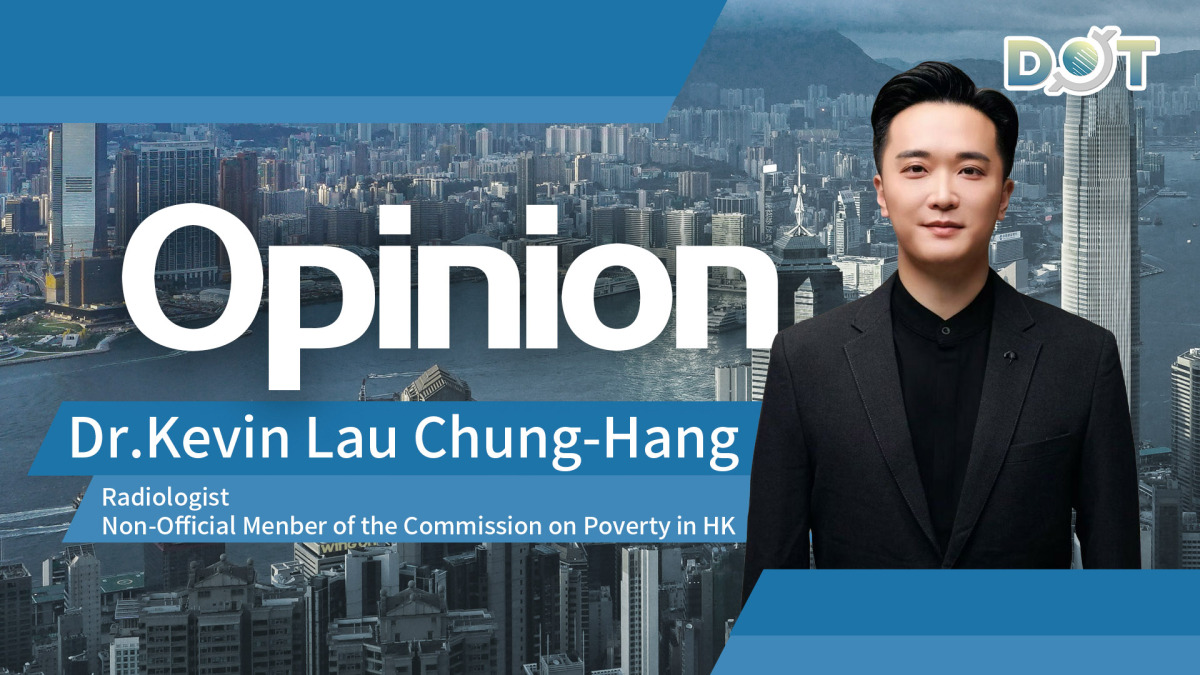
By Kevin Lau
By leveraging its distinct institutional strengths and deepening integration within the Greater Bay Area, Hong Kong can translate regional cooperation goals into tangible economic and social benefits for the wider Asia-Pacific.
President Xi Jinping's keynote address at the APEC CEO Summit in Shenzhen on Nov 18 offers Hong Kong an important strategic opportunity. His four proposals — upholding peace and stability, building bridges of opening-up and cooperation, stimulating innovation-driven growth, and expanding pathways for mutual benefit — establish a coherent framework for regional development. For Hong Kong, the responsibility is not simply to endorse these objectives. It is to determine how the city's distinctive institutional capabilities can help translate them into practical outcomes for the country and the wider Asia-Pacific.
The underlying relationship is clear. Peace provides the stability that investment requires. Openness enables capital, knowledge and enterprise to move toward productive opportunities. Innovation creates new sources of economic value. Shared benefits give cooperation the public support necessary to endure. These objectives should therefore be pursued together, rather than treated as separate policy aspirations. Hong Kong's contribution will be strongest when its financial, professional and technological services support this complete development process.
The city has a direct interest in the success of that approach. According to Chief Executive John Lee Ka-chiu, trade with other APEC member economies accounts for 87 percent of Hong Kong's external trade value. The figure demonstrates the depth of Hong Kong's regional connections, although it should not be confused with a measure of the city's dependence on any single market. APEC cooperation concerns the commercial relationships through which enterprises secure customers, arrange financing and sustain employment.
Hong Kong should consequently approach openness as an operational responsibility, not merely an economic principle. Businesses need more than assurances that markets remain accessible. They need clear regulatory guidance, reliable contractual arrangements and affordable professional support. A smaller enterprise considering an unfamiliar overseas market may find compliance uncertainty more discouraging than a lack of commercial ambition. Reducing that uncertainty is one way Hong Kong can turn international connectivity into measurable economic value.
Empowering global expansion
The first priority should be to strengthen the city's role in supporting enterprises expanding internationally. The objective should not be limited to helping companies establish an address or arrange an introductory meeting. Hong Kong should help them build a sustainable overseas presence through coordinated legal, accounting, financing, insurance and market-entry services. Support should distinguish between different industries and destinations, because a medical technology company, a logistics operator and a consumer business face materially different regulatory requirement.
Such services should also encourage responsible business conduct. International expansion is not simply the transfer of products and capital across borders. Enterprises must understand employment obligations, environmental requirements, data protection and the expectations of local communities. Hong Kong's professional organizations could develop practical, destination-specific guidance and referral networks. This would strengthen the city's value as a service platform while helping participating enterprises establish the credibility on which durable commercial relationships depend.
Catalyzing an innovation ecosystem
The second priority is to deepen the Greater Bay Area's innovation ecosystem. The World Intellectual Property Organization's 2026 innovation cluster ranking places Shenzhen-Hong Kong-Guangzhou first globally. This recognition is important, but its policy significance lies in the combined capabilities of the cluster rather than in the ranking alone. Hong Kong should ask how these capabilities can generate more commercially viable technologies, stronger enterprises and wider opportunities for its own workforce.
A successful innovation system requires more than excellent research. A promising discovery must pass through testing, financing, production, regulatory assessment and market adoption. Weakness at any stage can prevent an otherwise valuable technology from reaching users. Hong Kong's policy response should therefore focus on the connections between these stages. Research funding, investment promotion, industrial development and professional services should operate as parts of a common commercialization pathway.
The Hetao Shenzhen-Hong Kong Science and Technology Innovation Co-operation Zone provides a concrete setting for this approach. The government's development outline brings together the Hong Kong Park and the Shenzhen Park within a cross-boundary cooperation framework. The institutional purpose is as important as the physical development: collaboration must allow the strengths of the two sides to complement one another while respecting their respective legal and regulatory requirements.
Rather than pursuing administrative convergence in the abstract, the two sides should identify specific obstacles encountered by actual projects. These may concern research materials, contractual responsibilities, intellectual property ownership or access to specialist facilities. Joint project teams should document the relevant procedures, identify the authorities responsible and establish clear escalation arrangements. Progress should be assessed by whether projects move more efficiently from research to application, not simply by the number of cooperation agreements signed.
Healthcare innovation offers a useful direction for carefully designed pilot projects. Drawing on my public health and public administration background, I would place particular emphasis on how new technologies are evaluated and adopted. A proposed diagnostic tool should be assessed not only for commercial potential but also for safety, reliability, affordability and its effect on professional workflows. Innovation becomes socially valuable when it addresses genuine needs rather than creating an additional layer of expenditure.
Hong Kong and its Greater Bay Area partners should therefore consider collaborative evaluation platforms for selected medical technologies, subject to applicable requirements on ethics, privacy and regulatory approval. These platforms could help developers understand the evidence needed for adoption and allow service providers to assess practical usefulness. Such cooperation should never imply automatic recognition of an unproven product. Its purpose should be to improve the quality and efficiency of evaluation without weakening public protection.
Financing a sustainable future
The third priority concerns finance. Hong Kong hosted the APEC Finance Ministers' Meeting for the first time on Oct 20 and 21. The occasion offered a valuable platform for regional financial cooperation. Its longer-term significance, however, should be judged by the partnerships and practical initiatives that follow. Convening decision-makers is an advantage; converting their discussions into investable, well-governed projects is the more demanding task.
For innovation financing, public policy should concentrate on gaps that private markets cannot readily address alone. Early-stage technologies may require patient investment, specialist assessment and access to testing facilities before commercial viability becomes clear. Any public participation should nevertheless be disciplined. Investment decisions should have transparent objectives, appropriate private-sector involvement and explicit arrangements for reviewing performance. Supporting innovation does not remove the obligation to safeguard public resources.
The same discipline should guide development of the Northern Metropolis. The government has linked its development with deeper innovation cooperation and opportunities for enterprises entering the mainland market. The next challenge is to ensure that infrastructure, employment space and community provision advance coherently. Development should be understood as the creation of a functioning economic and social environment, rather than the delivery of isolated buildings.
Researchers, entrepreneurs and professional workers need transport, housing, education and accessible services. Existing residents must also be able to see how development will improve their prospects. Training partnerships with employers, paid placements and clearly defined career pathways should form part of the implementation framework. Otherwise, the public may encounter the disruption of development well before experiencing its benefits. Economic transformation requires social participation, not simply investment commitments.
Expanding international dimensions
The fourth priority is to give bay-area cooperation a practical international dimension. Xi's support for establishing a world bay-area economic cooperation alliance creates an opening to exchange experience and develop joint initiatives. Hong Kong should contribute proposals with identifiable participants, defined responsibilities and realistic objectives. Cooperation should begin with problems that participating regions genuinely share, rather than an institutional structure whose activities remain unclear.
Possible areas include sustainable infrastructure, technology commercialization, professional training and healthy aging. Hong Kong could help bring together universities, service providers, investors and public authorities around a limited number of demonstrable projects. Smaller enterprises and younger professionals should have routes to participate. The purpose should not be another series of ceremonial exchanges, but a sustained process through which knowledge becomes institutional capability and commercial opportunity.
Across these priorities, implementation must remain the central test. The government should establish a focused follow-up program identifying the responsible agencies, participating partners and expected outcomes. Reporting should distinguish announcements from agreements, agreements from investment, and investment from projects that are operating. It should also identify obstacles honestly. A review mechanism is valuable precisely because circumstances change and some measures require adjustment.
Hong Kong's place in national development and regional cooperation will not be secured by institutional advantages alone. Those advantages must be actively deployed to solve problems, reduce transaction costs and create opportunities. The APEC agenda provides direction; the Greater Bay Area provides a platform. Through disciplined execution, responsible innovation and sustained attention to livelihoods, Hong Kong can turn both into an enduring contribution to Asia-Pacific prosperity.
The author is the founding convenor of the Hong Kong Global Youth Professional Advocacy Action, a specialist in radiology, a master of public administration, a master of public health of the University of Hong Kong, and an adviser of the Our Hong Kong Foundation.
The views do not necessarily reflect those of DotDotNews.
Read more articles by Kevin Lau:
Opinion | Hong Kong maritime week at ten: A safe harbour in an uncertain world
Opinion | HK Gourmet Month: Savouring the city's soft power one table at a time




Comment