






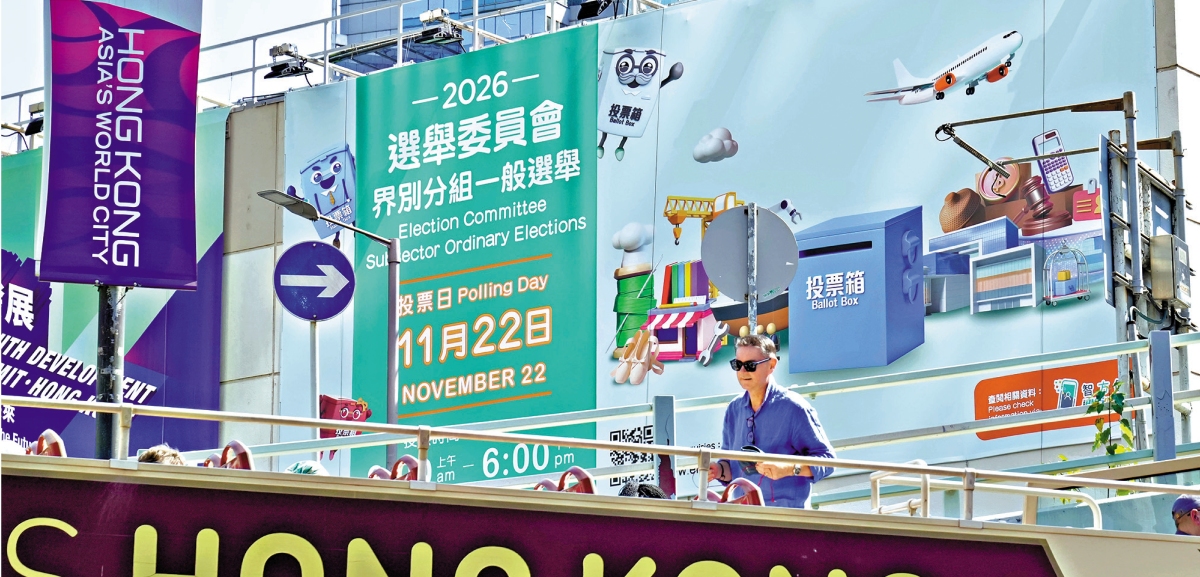
As Hong Kong moves from stability to prosperity, the Election Committee elections have drawn public attention.
Stanley NG Chau-pei, FTU President and LegCo member, said the FTU's participation is not merely about taking part in governance but about shouldering the expectations of workers and the public, integrating grassroots voices into governance, and helping Hong Kong achieve high-quality development.
He said the labour sector is the cornerstone of Hong Kong's stability. The FTU will continue deepening national education and patriotic publicity, guiding workers—especially young people—to understand the country's development and strengthen their sense of national identity.
On the SAR government's first five-year plan, Ng said labour rights protection, skills upgrading and employment improvement are closely tied to the city's development. He hopes to work with FTU Election Committee members to promote an employment-first approach and establish a tripartite consultation mechanism among labour, employers and the government. The FTU will also follow up on legislation for gig workers to improve work injury and occupational safety protection.
Ng noted the Northern Metropolis will create 500,000 new jobs. The FTU plans to set up labour service points in industrial parks in Hung Shui Kiu, San Tin and the Loop, replicating experience in the Loop, Nansha and Qianhai, and providing skills training to help workers seize Greater Bay Area opportunities.
He stressed that labour protection is an ongoing effort, calling for improved maternity and paternity leave, full-pay protection and stronger employment protection during pregnancy. In the long run, Hong Kong needs a population policy covering the whole life cycle to address the declining fertility rate.
On talent policy, Ng said Hong Kong needs talent at all levels, but importing labour for construction and catering should be handled prudently. On AI, he believes workers should learn to use it rather than be dominated by it, and the FTU will provide AI skills training for young, middle-aged and elderly people.
Related News:




Comment