






The repatriation to China of two stolen stone sculpture heads from the Gongyi Song Mausoleums, which had been overseas in Australia, has sparked widespread online discussion over where the relics will be kept. Netizens have raised questions: Will they return to Gongyi? Can the heads be reunited with their original bodies to achieve a “reunion of head and torso”? Do the stone carvings exposed in farmland require special protection? Experts addressed these hotly debated questions at the International Symposium on the Song Mausoleums and Song Culture held in Gongyi, Henan Province.
Sun Xinmin, research fellow at the Henan Provincial Institute of Cultural Relics and Archaeology, explained that stone figures of humans and animals arranged along the spirit way (shixiangsheng) is the professional term covering all human and animal stone figures along spirit paths. The Song Mausoleum spirit-way stone figures form the largest surviving assemblage of Song-dynasty stone carvings, representing the pinnacle of stone sculpture art of that era. Regarding the final custodianship of the repatriated stone heads, Sun expressed confidence that the National Cultural Heritage Administration will send the two stone heads back to Gongyi. He favors housing them in a museum so the public can better learn the story of their repatriation. He also disclosed that this is not the first time lost relics from the Song Mausoleums have returned home. In 1998, the United States returned the head of an envoy statue from the Yongtai Mausoleum. It is now on permanent display at the Gongyi Museum, serving as key evidence of Henan’s work to trace and recover lost cultural relics.
Sun told reporters that successful recovery of relics trafficked abroad relies on two pillars: precisely locating the artifacts overseas and building a complete, robust evidence chain proving their illegal outflow.
Zhu Jin, Vice Dean of the School of Archaeology and Cultural Heritage at Zhengzhou University, also supports museum display for the returned relics. Asked whether the recovered heads would be physically rejoined with their bodies, Zhu warned that physical assembly could inflict secondary damage to the relics from a conservation perspective. He recommends applying advanced digital technology to carry out 3D scanning of the heads for digital exhibition, allowing the public to visualize the original appearance and arrangement of the stone sculptures along the spirit way.
Responding to Public Enthusiasm for the Song Mausoleums: Gongyi Builds a Four-Season Landscape for the Site
The Song Mausoleums constitute the largest and best-preserved imperial burial complex of the Northern Song Dynasty in China. The eight mausoleums of seven emperors in Gongyi embody the dynastic ethos of more than 160 years of the Northern Song, distilling supreme achievements in Song ritual systems, stone carving art, feng shui aesthetics, and social life. Around a thousand stone sculptures stand amid the fields, silently witnessing the passage of time, forming a one-of-a-kind, irreplicable “open-air museum of stone sculpture."
Nonetheless, the vast and scattered layout of the Northern Song imperial stone carvings means many statues remain exposed to field conditions, posing major challenges to on-site conservation. The recent repatriation has reignited public debate over protection strategies: should the carvings be fitted with protective casings or remain in situ?
Zhu Xingli, Director of the Gongyi Bureau of Cultural Relics, noted divergent online proposals. Some suggest glass enclosures, railings, or overhangs to shield the statues from wind, sun, and rain; others propose moving the carvings into museums for safekeeping. While these ideas come from good intentions, a glass case would trap moisture like a plastic greenhouse and accelerate deterioration. He stressed that the entire spatial arrangement of the Song Mausoleums is itself heritage. For example, the 34-meter gap between two rammed-earth ceremonial platforms reflects the prescribed layout of an imperial mausoleum, while that for an empress may only stretch 16 meters. Once removed from a museum, a carving becomes an isolated artifact. Standing in its original setting, it carries integrated historical, artistic, scientific, and aesthetic value. This cultural heritage also includes institutions, customs, and ways of life, which must not be arbitrarily altered.
Under the master conservation plan, management of the Song Mausoleums avoids a one-size-fits-all approach. A site-specific strategy is adopted for each mausoleum according to its surroundings. Zhu outlined four conservation typologies. The first category is urban park sites, such as the Yongzhao Mausoleum and Yonghou Mausoleum located in the city center. The second includes suburban sites represented by the Yongding Mausoleum. The third group, including the Yongchang Mausoleum and Yongxi Mausoleum, lies in rural settlements. The fourth type refers to mausoleums situated in open agricultural fields. “These four categories carry different positioning. When the national archaeological site park is completed, visitors will encounter distinctive imperial mausoleum landscapes,” Zhu said. Gongyi is developing a vision of “one mausoleum, one scene, one signature feature," crafting a four-season tableau: blossoms in spring, wheat waves in summer, sorghum in autumn, and spirit-way stone figures dusted with snow in winter. The millennia-old stone relics are being revitalized, and the profound Song culture is gaining wider popularity.
Song Imperial Mausoleums advance in China's world heritage nomination process.
Imperial mausoleums rank as the highest-tier material manifestation of ancient Chinese state civilization and the most concentrated carrier of ritual heritage. As one of China’s largest surviving imperial mausoleum groups with well-preserved above-ground remains, the Song Mausoleums broke ground in 963 AD and took shape over more than 160 years. The eight mausoleums for seven emperors, together with over 300 associated tombs of empresses, imperial consorts, members of the imperial clan, and meritorious officials, form a comprehensive embodiment of Northern Song political institutions, feng shui concepts, funeral rituals, and architectural art. Mei Zhigang, Chief Engineer of the Henan Provincial Administration of Cultural Heritage, stated in his opening address that the Song Mausoleums’ layout of “mausoleum complexes integrated into the surrounding natural landscape and walled mausoleum precincts situated within sight of one another” inherited norms from Han and Tang imperial tombs while establishing new paradigms for the Song era. Together with the Dongjing (Kaifeng) city site, they constitute a complete spatial reference for understanding state structure and social life under the Song.
Han Guohe, Director of the Mausoleum Archaeology Committee under the Chinese Society of Archaeology, commented that the Upper Palace and Lower Palace precincts (shanggong and xiagong) of the imperial mausoleum complex of the Gongyi Song Mausoleums vividly illustrate the cultural logic of “family-state isomorphism” in Chinese civilization. The Gongyi Song Mausoleums (including the Southern Song Six Mausoleums in Shaoxing), alongside imperial tombs of the Liao, Jin, and Western Xia dynasties, reflect an “harmony amid diversity” of cultural exchange and integration, a hallmark of the pluralistic and unified Chinese civilization. The Song Dynasty marked a peak in ancient Chinese culture. The stone sculptures of the imperial mausoleums, including elephants and their handlers, auspicious birds, mythical luduan beasts, foreign envoys, and statues of civil and military officials, mirror the ritual system and foreign exchanges of the Song court and exemplify the combination of naturalistic representation and expressive stylization in Song stone carving. In particular, the Song Mausoleums absorbed the legacy of Han and Tang tomb architecture and set precedents for imperial mausoleums of the Ming and Qing dynasties, standing as striking evidence of the continuity of Chinese civilization.
Sun Xinmin revealed that the National Cultural Heritage Administration updated the Tentative List of World Heritage in 2025, with the Northern Song Capital and Imperial Mausoleums project included in China's national tentative list for World Cultural Heritage nomination. A joint nomination encompassing the capitals of the Northern and Southern Song dynasties and their associated imperial mausoleum site would strengthen the bid. “I sincerely look forward to the Song Mausoleums being inscribed on the World Heritage List at an early date.”
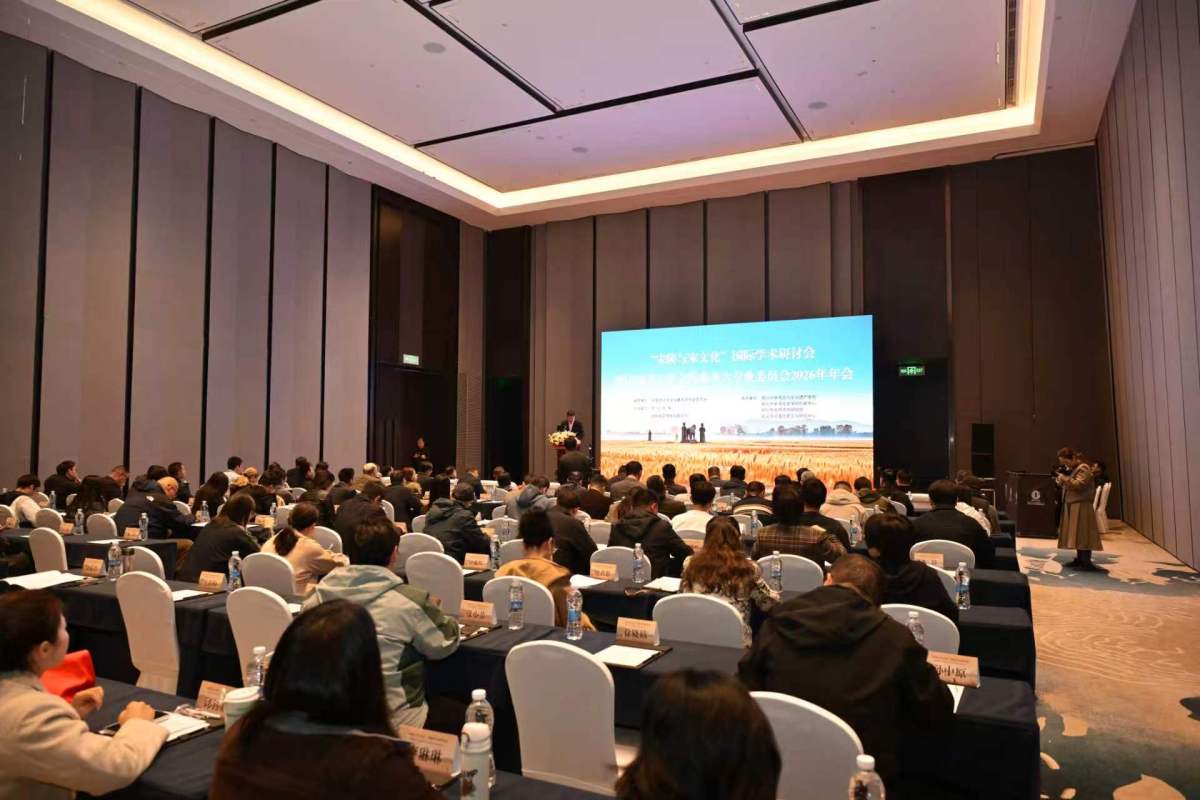
Guided by the Mausoleum Archaeology Committee under the Chinese Society of Archaeology, the symposium was co-hosted by Zhengzhou University and the Henan Provincial Institute of Cultural Relics and Archaeology. Co-organizers include the School of Archaeology and Cultural Heritage of Zhengzhou University, the Research Centre for Historical and Cultural Heritage Conservation of Zhengzhou University, the Songyang Advanced Research Institute of Zhengzhou University, the Zhengzhou Municipal Institute of Cultural Relics and Archaeology, and the Gongyi Heluo Historical and Cultural Research Centre. Rooted in Gongyi, home to the Northern Song imperial mausoleums, the event builds a high-end academic platform for cross-regional, interdisciplinary, and international exchanges.
(Reported by Liu Rui from Henan)




Comment