






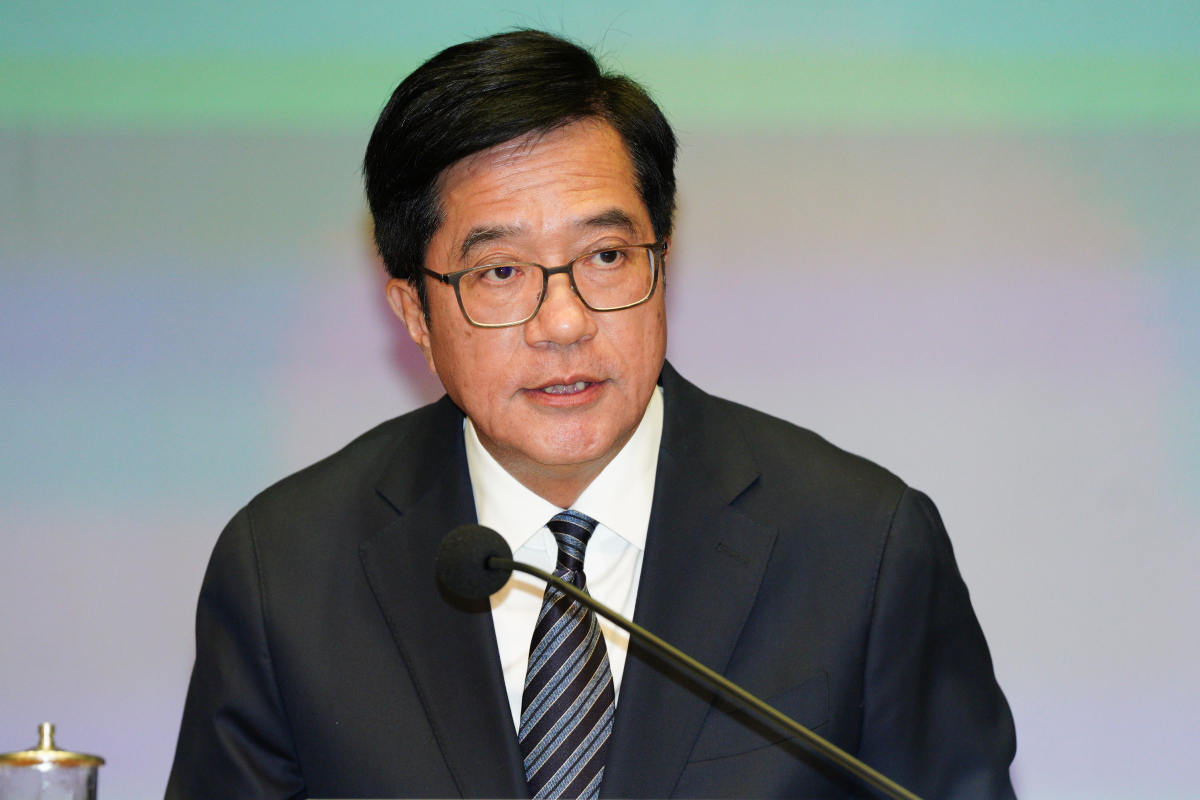
Hong Kong's Deputy Financial Secretary Wong Wai-lun on Friday (Oct. 30) outlined five key considerations guiding the government's efforts to reform the building maintenance regulatory system and support services, pledging to make every effort to advance the reforms following the fire at Wang Fuk Court in Tai Po.
An independent committee established to investigate the fire formally submitted its report to the government last Thursday (Oct. 22). The government held a press conference on Friday morning to introduce reforms to the regulatory system and support services for building maintenance, and elaborate on measures proposed in response to the report's recommendations.
Speaking at the press conference, Wong, who is also acting secretary for housing, said the fire had caused immense grief to those affected.
He said his team would spare no effort in fulfilling its responsibilities, in accordance with the chief executive's instructions to make every effort to advance the reforms, properly handle the substantial workload ahead, learn profound lessons from the tragedy and step up the implementation of the governance philosophy of "result-oriented" governance.
Wong said that, in response to the independent committee's observations and recommendations, his team had identified five key considerations in pursuing reforms to major building maintenance projects, which are closely related to the work of the Development Bureau and the Housing Bureau.
First, the reforms must directly address the independent committee's observations and recommendations, comprehensively overhaul the existing system, improve its effectiveness, and strengthen regulatory functions.
Second, the government should make effective use of resources within the industry while ensuring that industry practitioners strictly fulfil their responsibilities. The approach to project supervision must shift from relying on industry self-regulation to more proactive government oversight.
Third, the proposed reform measures must be practical and feasible. Initiatives that can be implemented as a priority will be launched immediately, while measures requiring longer preparation will be rolled out in reasonable phases.
Fourth, coordination must be precise and comprehensive. Regulatory measures and services should be delivered on a district-based or project-based basis, focusing on addressing different problems while strengthening communication with all relevant parties.
Fifth, the government must put people first and provide residents with comprehensive assistance in fulfilling their responsibilities for building maintenance.
Related News:
Wang Fuk Court homeowner welcomes criminalization of bid-rigging in building maintenance




Comment