






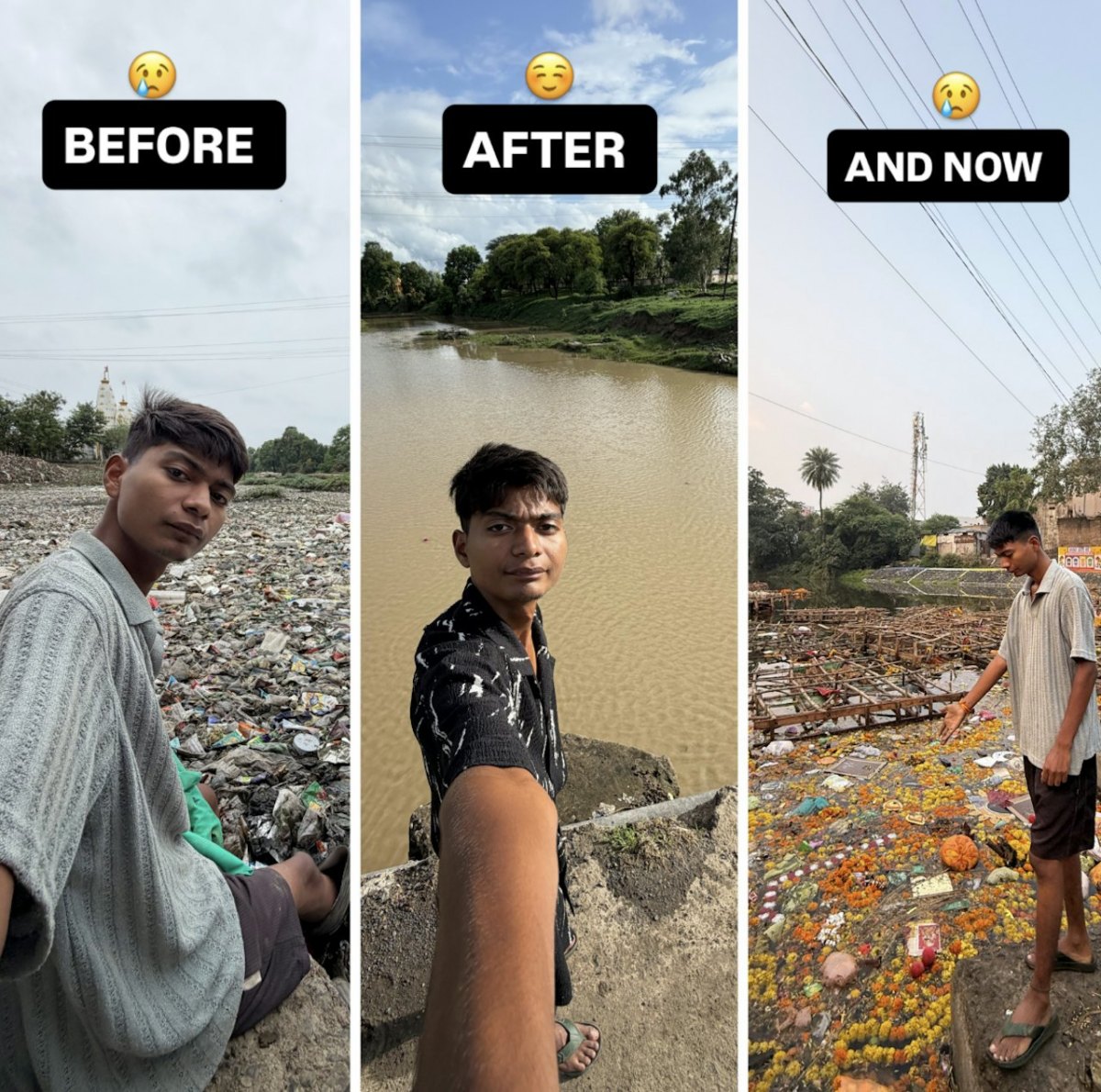
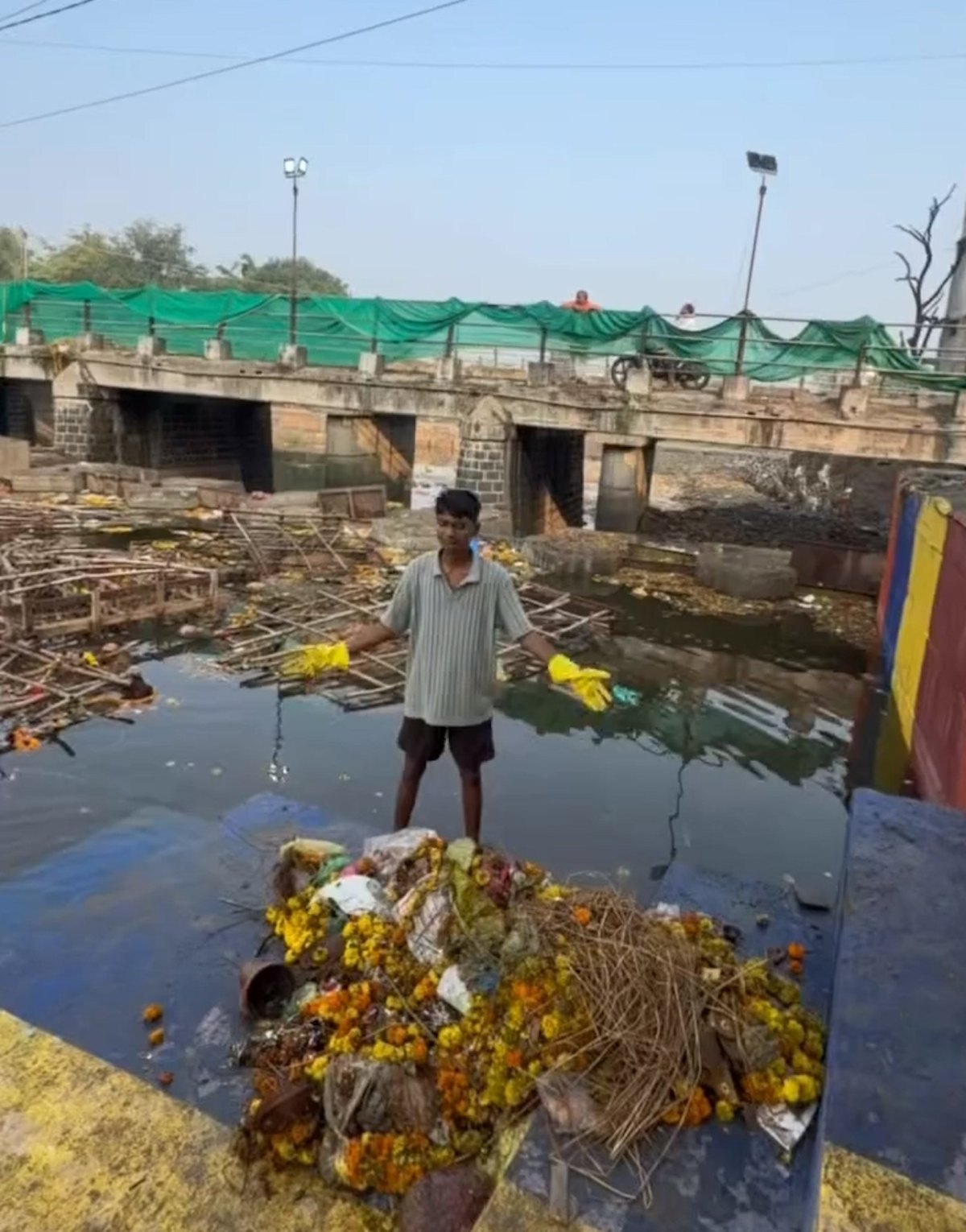
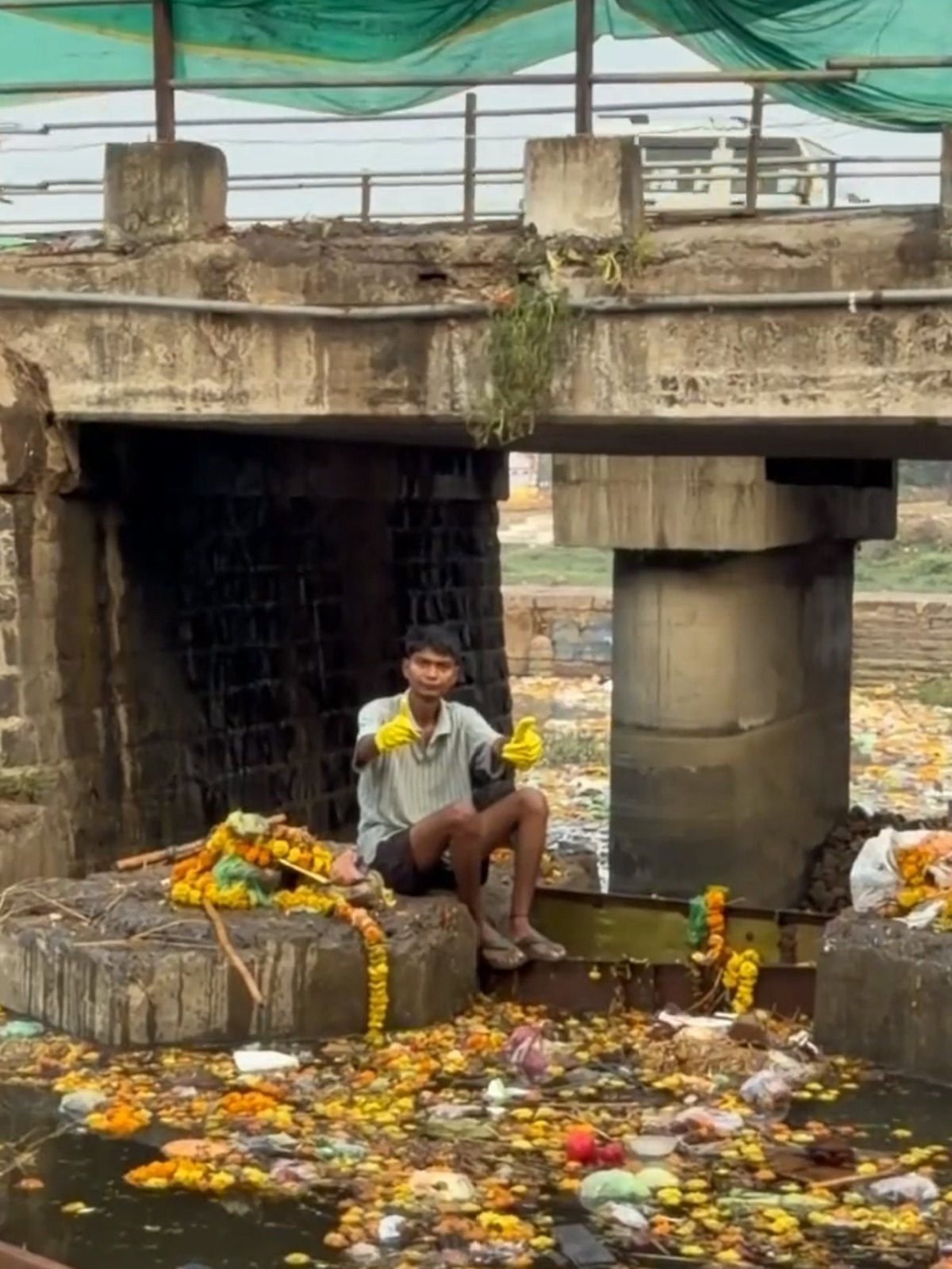
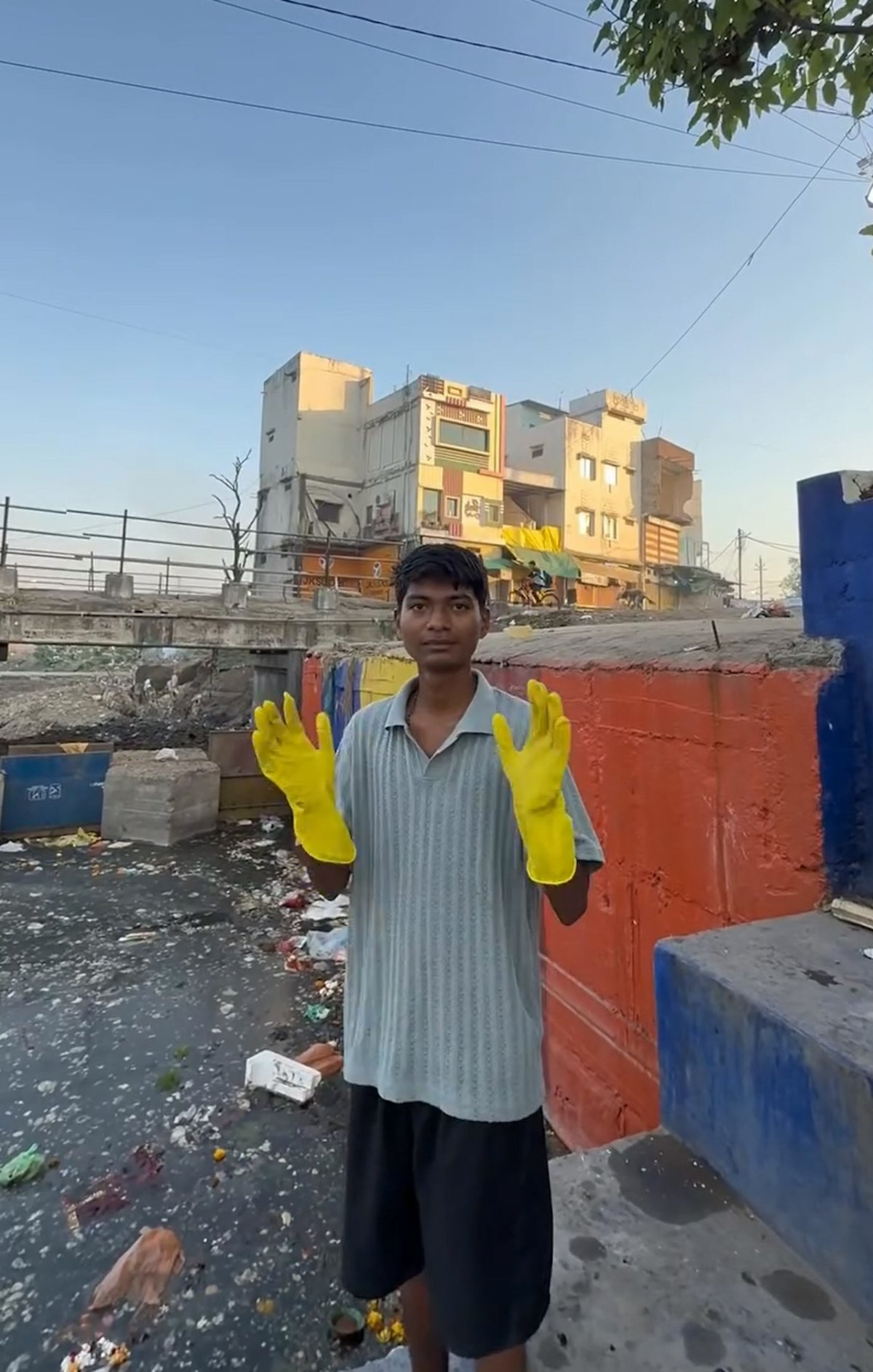
An Indian university student who spent about eight months clearing trash from a local riverbank by hand has seen the area littered again just weeks later and says even the basic tools he set out to help prevent dumping were quickly undermined.
The student, known online as Bittu Tabahi (reportedly Surendra Singh Choudhary), has been described by major Indian outlets as a 20-year-old college student from Biaora town in Rajgarh district, Madhya Pradesh. According to reports, he began cleaning the Ajnar River on Jan. 26, initially with several friends before continuing largely on his own.
Working with only basic equipment, Bittu appeared in social media videos hauling bag after bag of waste out of foul-smelling sludge. The cleaned stretch of river gradually improved, and his posts drew growing attention online. But the relief did not last: new plastic waste soon appeared again along the banks.
In a video posted in mid-October, Bittu said he was shocked that months of effort appeared to have been undone, writing that he never expected eight months of work to "go to waste." Despite not being a strong swimmer, he returned to the river to collect more trash and asked viewers for more effective cleanup ideas.
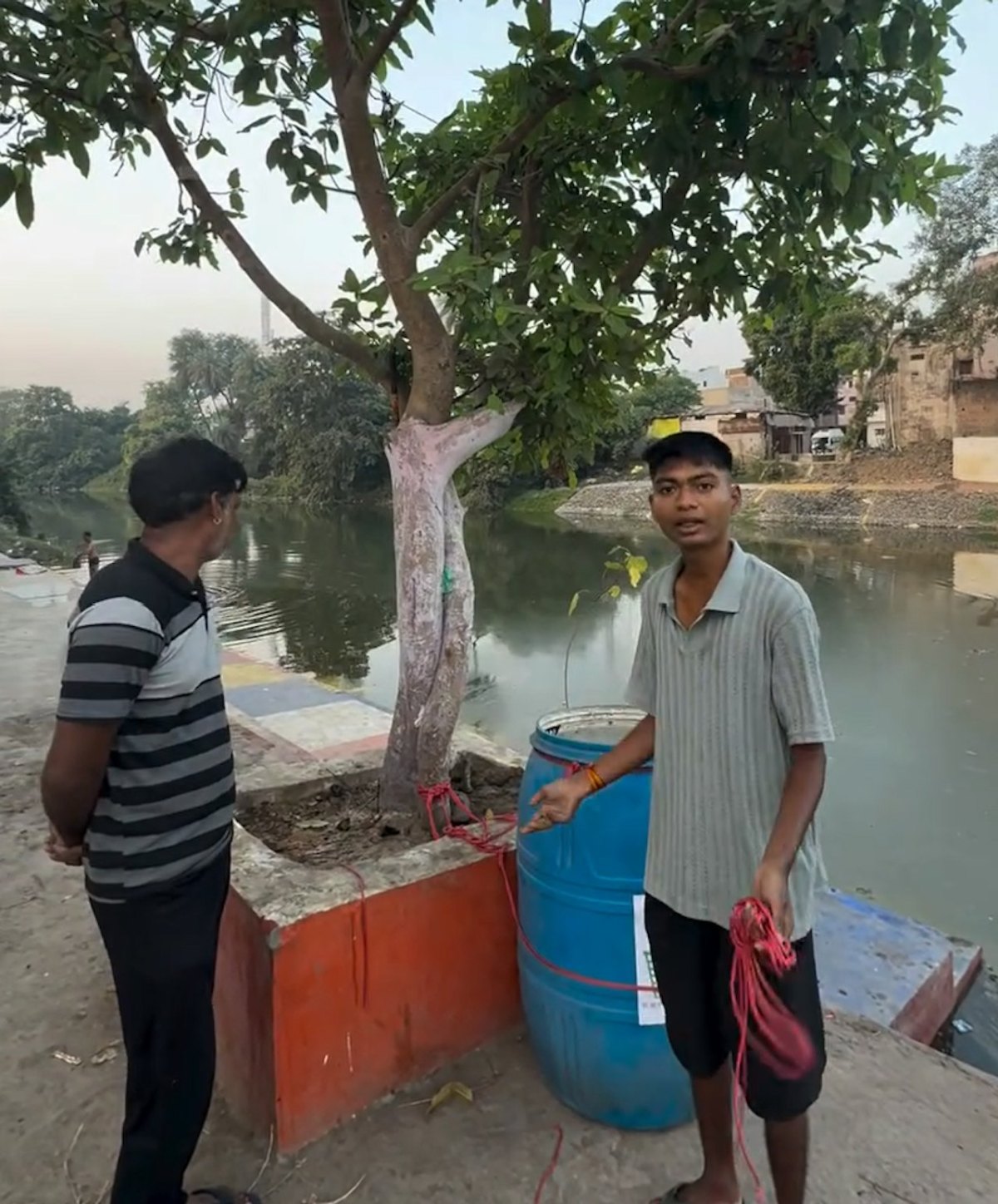
To slow the flow of litter into the river, Bittu also paid out of pocket to place two trash bins near a riverside tree for residents and passersby. But he later said that when he returned the next day, one bin was missing and the rope securing it had been cut. "Even a bin placed for public convenience was stolen," he wrote, expressing frustration that community cooperation was not keeping pace with individual effort.
The setbacks left him discouraged, and he considered stepping back from the cleanup to focus on his studies. However, the report said local authorities have since promised support. Rajgarh district's top official, Girish Mishra, met Bittu on Oct. 22 and said officials had been instructed to draft a plan to clean the entire river.
Bittu welcomed government involvement but stressed that official cleanup operations alone would not be enough if residents continue to dump waste. In his view, lasting change depends on improving public awareness and discouraging littering at the source.




Comment