






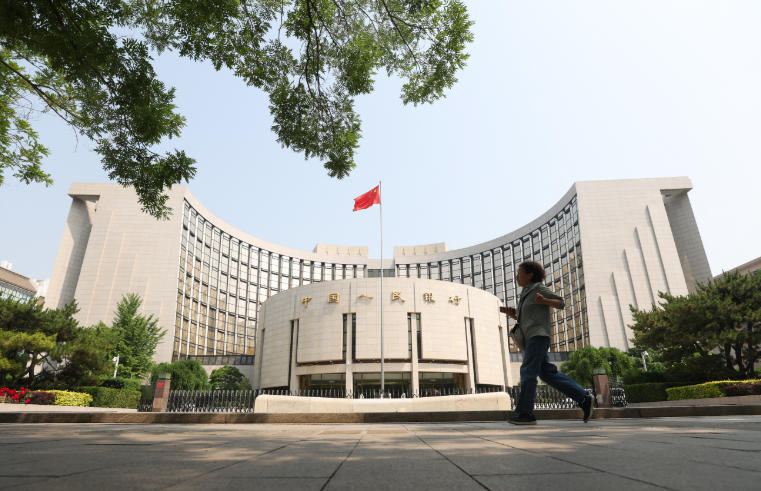
On Oct. 8, the People's Bank of China released a policy statement on the RMB exchange rate, setting out China's official position amid claims by some countries that the RMB is undervalued and should be forced to appreciate.
First, exchange rates are driven by multiple factors. China runs a managed floating exchange rate system based on market supply and demand and a basket of currencies, with the market playing a decisive role. It does not set target levels or intervene in long-term trends. Since exchange rate reform, the RMB has appreciated 23% against the US dollar, with three appreciation and three depreciation cycles since 2010. This year, both onshore and offshore RMB broke through 6.7 against the dollar. Despite currency depreciation in neighbouring countries, China did not resort to competitive devaluation. Claims of "currency manipulation" are baseless, and forcing RMB appreciation would be counterproductive and harm other economies.
Second, China welcomes IMF discussion but opposes misuse of its assessments. The IMF's 2026 External Sector Report described China's 2025 external balance as "stronger than justified," with a median real effective exchange rate gap of -21.3%. But the report is highly technical, depends on different models, and is not a strict basis for judgement. Using its External Balance Assessment results as proof that the RMB is undervalued is a distortion. Some countries are packaging their own declining industrial competitiveness as a China exchange rate problem. Trade imbalances are long-standing; deficit countries are largely the same, and the root cause lies in their own economic structures. Demanding RMB appreciation while once resisting similar demands is a double standard.
Third, current account surpluses are not a simple gauge of currency strength. Analysis should cover goods and services trade, current and financial accounts, fundamentals and expectations. China's current account surplus as a share of GDP has fallen from a peak of 9.9% in 2007, while its contribution to global growth has remained around 30%. China is a growth engine, not a source of imbalance. The real adjustment needed is in deficit countries with low savings, high consumption, and weak competitiveness. At the recent G20 meeting, China proposed that deficit countries cut fiscal deficits and raise savings, while surplus countries boost consumption and investment.
China said it will continue to manage its own affairs and remains ready to work with all sides for global economic balance and sustainable growth.
Related News:




Comment