






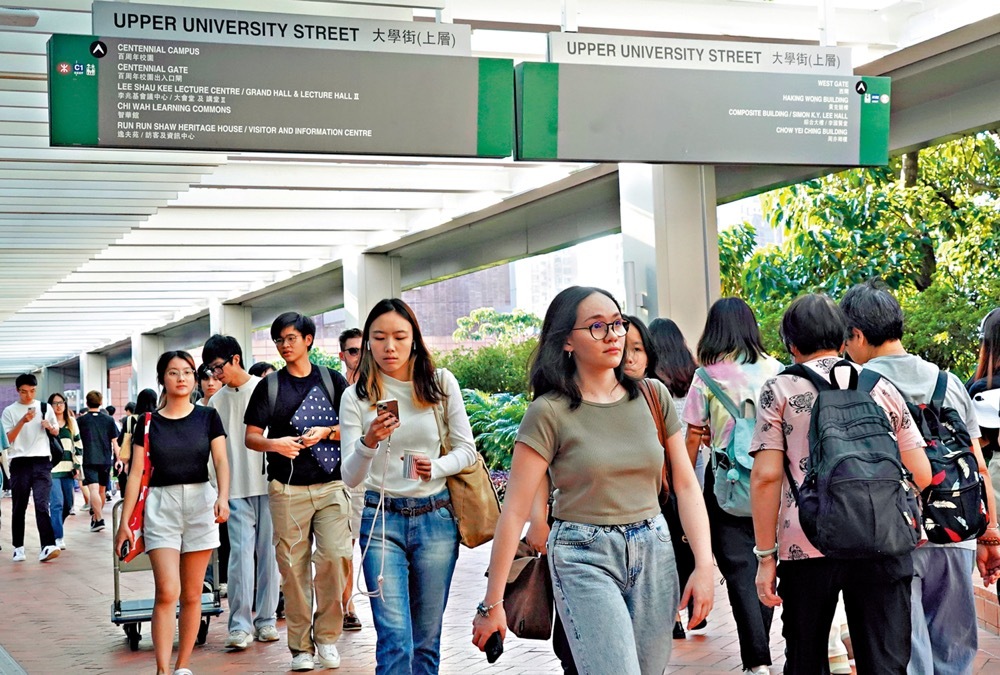
Hong Kong is actively positioning itself as a global hub for top talent, with notable results as a growing number of internationally influential scholars move to the city.
The trend is not accidental, but reflects the combined impact of HK's position as an international hub under the "one country, two systems" principle, its strong research ecosystem and the Hong Kong Special Administrative Region (HKSAR) government's talent-attraction policies. It also demonstrates the city's efforts to accelerate the development of a global hub for high-end talent, which is important for advancing HK's development as an international innovation and technology hub and supporting the country's pursuit of high-level scientific and technological self-reliance.
Japanese condensed-matter theorist Haruki Watanabe
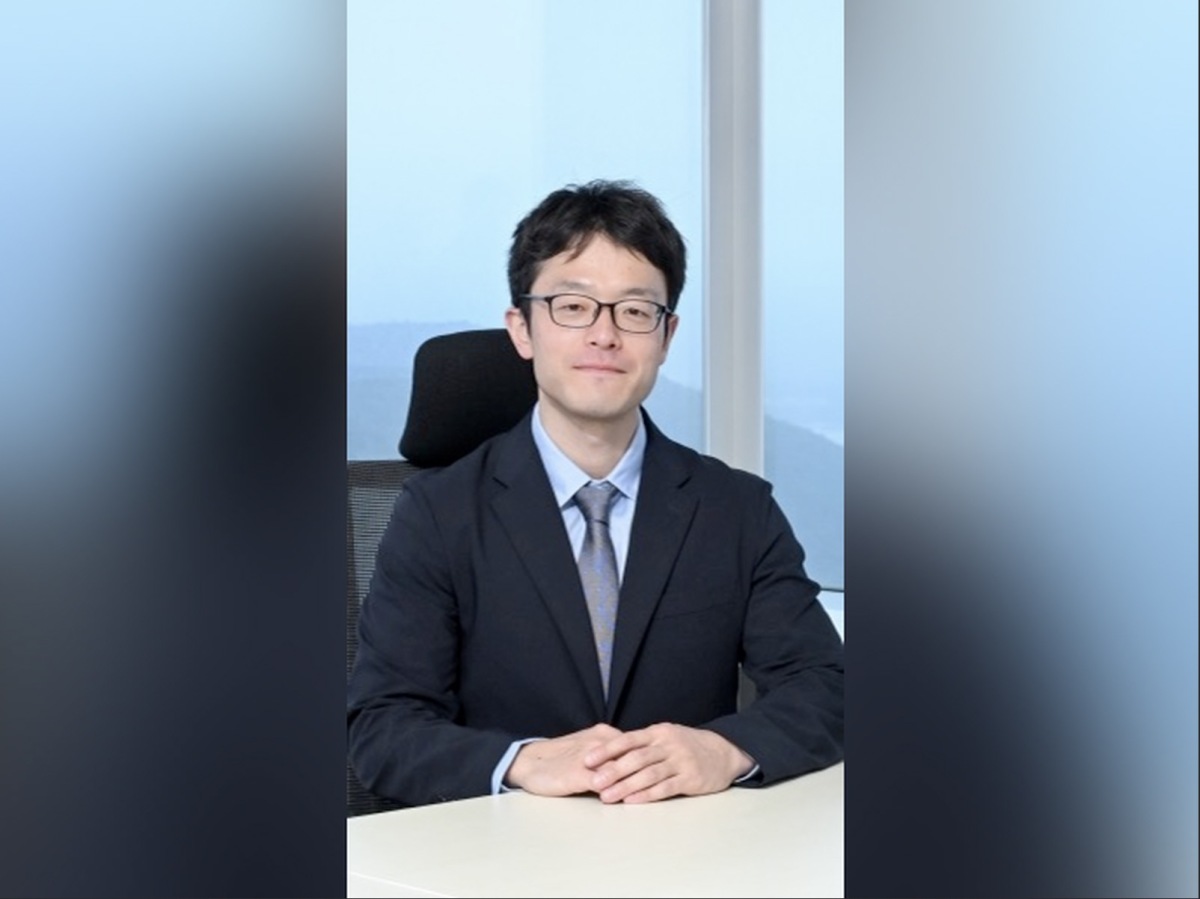
Renowned Japanese condensed-matter theorist Haruki Watanabe left the University of Tokyo in March 2026 to join the Hong Kong University of Science and Technology (HKUST).
Watanabe is an internationally recognized scholar in theoretical quantum condensed matter physics. He has received numerous honors, including the New Horizons in Physics Prize from the Breakthrough Prize Foundation in 2022, the Commendation for Science and Technology from the Minister of Education, Japan in 2024, and the Particle Physics Medal in 2025.
He was also described by renowned physicist Masaki Oshikawa as one of the world's top 10 early- to mid-career researchers in theoretical quantum condensed matter physics.
In a recent interview with Nikkei, Watanabe said HKUST had provided him with research funding totaling about HK$5 million over five years, equivalent to eight to nine times the level available to a professor at the University of Tokyo. The funding enables him to hire three postdoctoral researchers, while the entire laboratory, including graduate students, has grown to nine members.
He said research funding is difficult to secure at Japanese universities, while recruiting postdoctoral researchers is also challenging. Under budget constraints, he said, research teams in Japan are much smaller than those in HK.
Salary and position structures were also key factors. Watanabe said that when he previously applied for a position at HKUST, the university offered him a salary and allowances amounting to three times those at the University of Tokyo, prompting him to make the decision to work overseas without hesitation.
In addition, doctoral students at HKUST can receive a monthly salary of about 390,000 yen, with annual income of around 7.5 million yen, allowing them to achieve financial independence and focus on research.
Watanabe criticized Japanese universities, saying that regardless of how much research achievement an academic produces, promotion is impossible if there is no vacant professorship, while salaries also rarely increase. He said this creates a sense of uncertainty about the future and makes it difficult for colleagues to genuinely celebrate one another's promotions.
In HK, he said, researchers can be recognized, promoted and receive salary increases as long as they work hard. He said he had strongly experienced an attitude of collaboration and mutual growth among researchers.
Comparing the research environments in the two places, Watanabe said he "did not expect the difference in the environment to be so great." In particular, he said administrative support at HKUST was far greater than at the University of Tokyo, with professional staff handling non-research tasks such as equipment installation. High-performance computers can also be shared.
Watanabe also said he had experienced at HKUST the same kind of talent attraction that had helped the US rise by recruiting talent from around the world.
He noted that many researchers at leading US universities are originally from China, and that the trend of returning to the Chinese mainland or HK had already been underway for some time. HK now has a growing pool of talent, with both the quality and quantity of research improving, he said, adding that the position of the US is being reversed.
Watanabe said candidly that "under the current circumstances, I would not consider returning to Japan." He has also promoted HK on social media, hoping to attract Japanese researchers to the city.
Pioneer in theoretical and computational neuroscience Xiao-Jing Wang
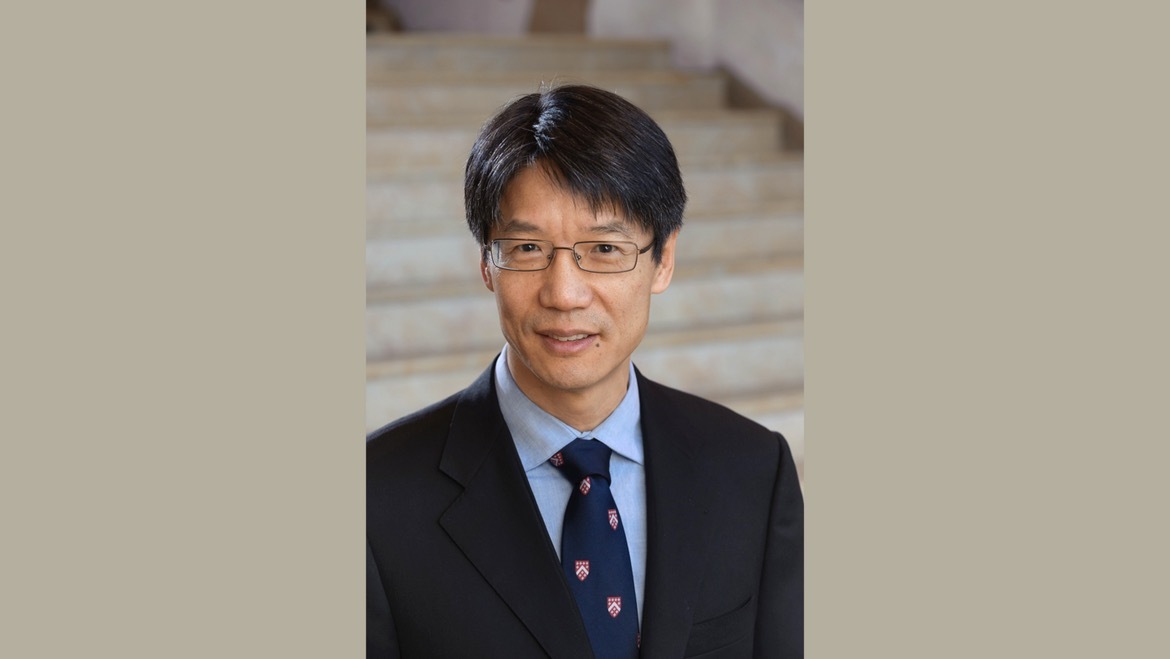
The University of Hong Kong (HKU) announced on Thursday (Sept. 3) that Professor Xiao-Jing Wang, a pioneer in theoretical and computational neuroscience, had joined the university in September as a chair professor.
Wang's research focuses on the prefrontal cortex, often described as the "CEO of the brain," which plays a central role in working memory, decision-making and executive functions. He was among the first scholars worldwide to use biophysical principles to construct mathematical models of neural circuits underlying cognitive functions.
After earning his PhD with the highest distinction as a member of Nobel laureate Ilya Prigogine's team at the Université Libre de Bruxelles in Belgium, Wang went on to establish and lead the Swartz Center for Theoretical Neuroscience at Yale University. He later served as founding Provost of NYU Shanghai and as Global Distinguished Professor of Neuroscience at New York University.
Wang said the synergy between HKU's two schools would provide a platform for interdisciplinary research. He said he hoped his research could inspire the next generation of artificial intelligence, advance computational models for the diagnosis and treatment of mental disorders, and help establish a global research hub for computational neuroscience and brain-inspired artificial intelligence in HK.
"Father of graphene" Andre Geim
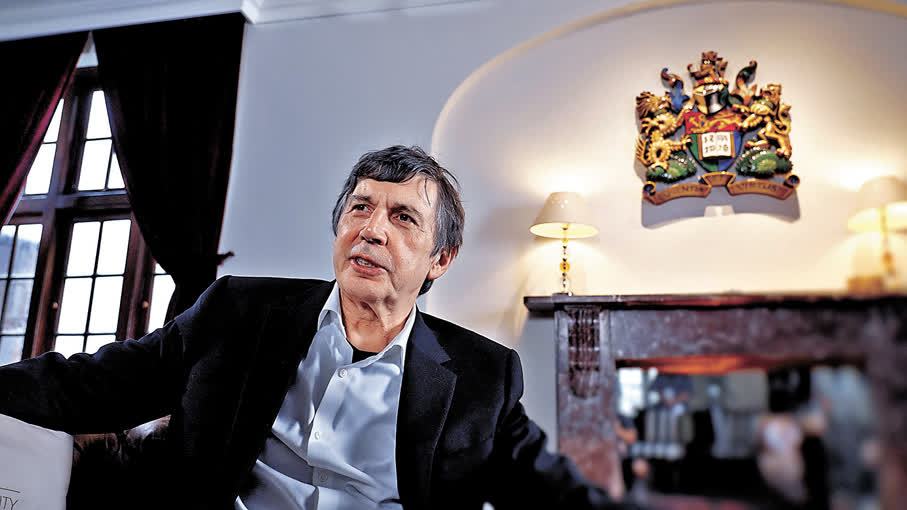
Nobel Prize-winning physicist Andre Geim, known as the "father of graphene," joined HKU in April 2026.
Geim successfully isolated graphene from graphite in 2004. The material is the thinnest known material in the world, and its emergence has brought major breakthroughs to industries including semiconductors, touchscreens and protective equipment.
However, two years ago, Geim encountered difficulties in his research work in the UK. At the time, his laboratory recruited six doctoral students and postdoctoral researchers, but none of the six ultimately obtained UK visas.
That became a major motivation for his move to HK: the freedom to hire the best talent.
Now a chair professor in HKU's Department of Physics, Geim believes HK's policy and talent advantages will help him set goals and build a research team. He also hopes the HKSAR government will provide further support for universities to improve their infrastructure.
After several months of working and living in HK, Geim said he had clearly experienced the city's potential everywhere and found that it had excellent talent, although its infrastructure remained below the world's top level.
Geim said he was surprised that HKU scholars were able to produce such high-quality papers with the infrastructure currently available. He also encouraged young local scholars to be willing to experiment and not be afraid of making mistakes.
Fields Medal winner Ngo Bao Chau
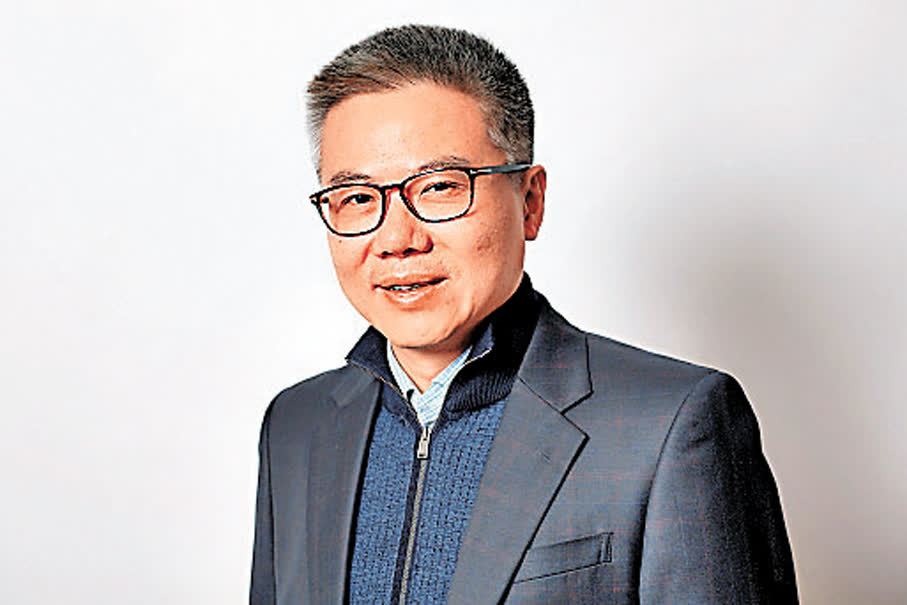
Vietnamese mathematician Ngo Bao Chau, formerly a professor at the University of Chicago, officially joined HKU's Department of Mathematics in the Faculty of Science in June 2026.
Ngo received the Fields Medal in 2010, an award often described as the "Nobel Prize of mathematics."
He said the University of Chicago was a world-class institution, but noted that measures in the US concerning visas for international students and other issues had made things more complicated.
Ngo said HK, where Eastern and Western cultures converge, brings together many top talents and offers many opportunities. He said the city felt more like home and that the development potential of mathematics in HK would allow him to collaborate and conduct research internationally.
Ngo said Asia has many top universities in mathematics, including Peking University in the mainland. He said the rapid development of mathematics in Asia had left a deep impression on him and was difficult to believe.
He hopes the HKSAR government will provide more funding to enable young local scholars to exchange and study around the world.
Nobel Physics laureate Ferenc Krausz
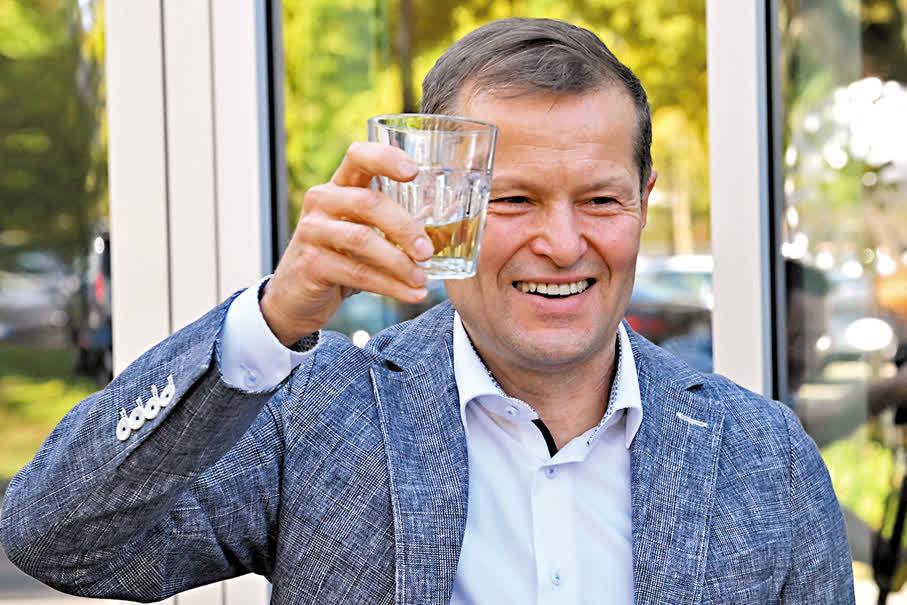
Ferenc Krausz, winner of the 2023 Nobel Prize in Physics, has served as a chair professor in the Department of Physics at HKU's Faculty of Science since November 2025.
Krausz is one of the leading pioneers in attosecond physics, a field focused on capturing the dynamics of electrons on extremely short timescales.
He has received numerous top scientific honors, including the 2023 Nobel Prize in Physics for his pioneering work in generating attosecond pulses, the 2023 Frontiers of Knowledge Award from the BBVA Foundation, the 2022 Wolf Prize in Physics and the 2013 King Faisal International Prize in Science. He is one of the most prominent physicists of his generation.
Krausz said HKU's vision for interdisciplinary research was highly aligned with his academic goals for the next stage of his career. He said he looked forward to working with the university's leading scholars to make breakthroughs in both fundamental research and technological innovation and to jointly explore the unlimited possibilities at the frontiers of science.
Related News:
Deepline | HK draws more than 31,000 foreign work visa applicants, challenging claims of its decline




Comment