







A massive ice avalanche occurred on the Nepalese side of the border on Aug. 26, triggering a major mudslide disaster at the Gyirong Port in Gyirong County, Xigaze, Xizang. As of Tuesday night (Sept. 1), at least 16 people had been killed and 546 remained missing on the Xizang side.
Xigaze has also been hit by other natural disasters in recent years. On Jan. 7, 2025, a magnitude-6.8 earthquake struck Dingri County near Gyirong County, killing 126 people and destroying more than 3,600 homes. People from across Hong Kong responded with donations to support earthquake relief and recovery efforts.
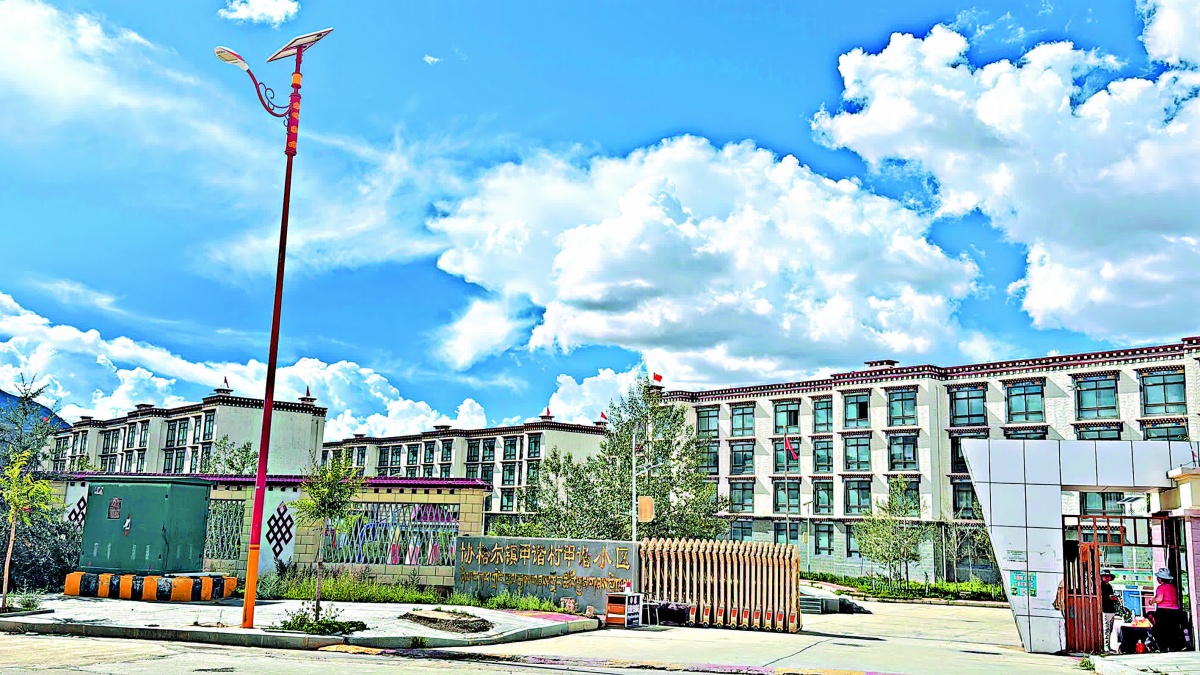
One year and eight months later, the reporter from Ta Kung Pao returned on Monday to Senga Village in Chamco Township, Dingri County, one of the areas hardest hit by the earthquake, to see firsthand the progress of post-disaster reconstruction.
Along the way, newly paved asphalt roads stretched through the area, with rows of utility poles lining both sides. Electricity and running water have been connected to homes, while new houses have been built across the village.
"We gradually moved into the new homes in less than a year, and we did not have to pay a single cent. The love and support of people in HK were part of that," a villager told the reporter.
The villagers said life in their new homes was more comfortable than before and expressed their gratitude for the support from HK. "HK, Tashi Delek [an expression meaning auspiciousness and good fortune in Xizang]!" they said.
Modern homes at the foot of Mount Everest
Dingri County is located at the foot of Mount Everest, with an average elevation of more than 4,000 metres above sea level. From Dingri County town to Chamco Township, the route runs through endless mountains and stretches of desert, with patches of low vegetation along the way.
The county covers approximately 13,800 to 14,000 square kilometres, an area roughly 12 times the size of HK. It is a large border county under the jurisdiction of Xigaze.
After driving for several hours, the Ta Kung Pao reporter finally reached an inhabited area. At the entrance to Senga Village stood rows of neat, newly built three-storey houses.
The roads throughout the village had been paved with asphalt, while utility poles stretched along both sides. The signs of the area's former underdevelopment had largely disappeared, with residents now living in modern homes equipped with running water and electricity.
Villager: Running water and electricity have made life much easier
"We gradually moved in less than a year after the disaster, and we did not have to pay a single cent!" a villager encountered on the road told the reporter.
He said his family moved into their new home at the end of August last year. With the lights on and modern utilities available, daily life had become much more convenient.
"In the past, we had to collect water at a designated place. Now we have running water and electricity in our homes. Of course, it is much more convenient," he said.
Pointing towards the village entrance, where residents used to collect water, the villager said the authorities had attached great importance to reconstruction after the earthquake.
He told the reporter that after the earthquake, residents lived in temporary prefabricated shelters. At the time, many believed it would be impossible to return home within a year. However, the houses were completed one after another in just six months, allowing residents to move back into their new homes.
"It all depends on support from different sides. This included assistance from our compatriots in HK and the deep affection and generosity of HK people," he said.
"Hong Kong, Tashi Delek [auspiciousness and good fortune], tuk je che [thank you]!"
Following the earthquake in January last year, people from various sectors of HK donated approximately HK$9.6933 million and RMB 500,000 to Dingri County through the Liaison Office of the Central People's Government in the Hong Kong Special Administrative Region (HKSAR). The donations also included supplies worth HK$5.3 million.
Collapsed homes turned into memorial park
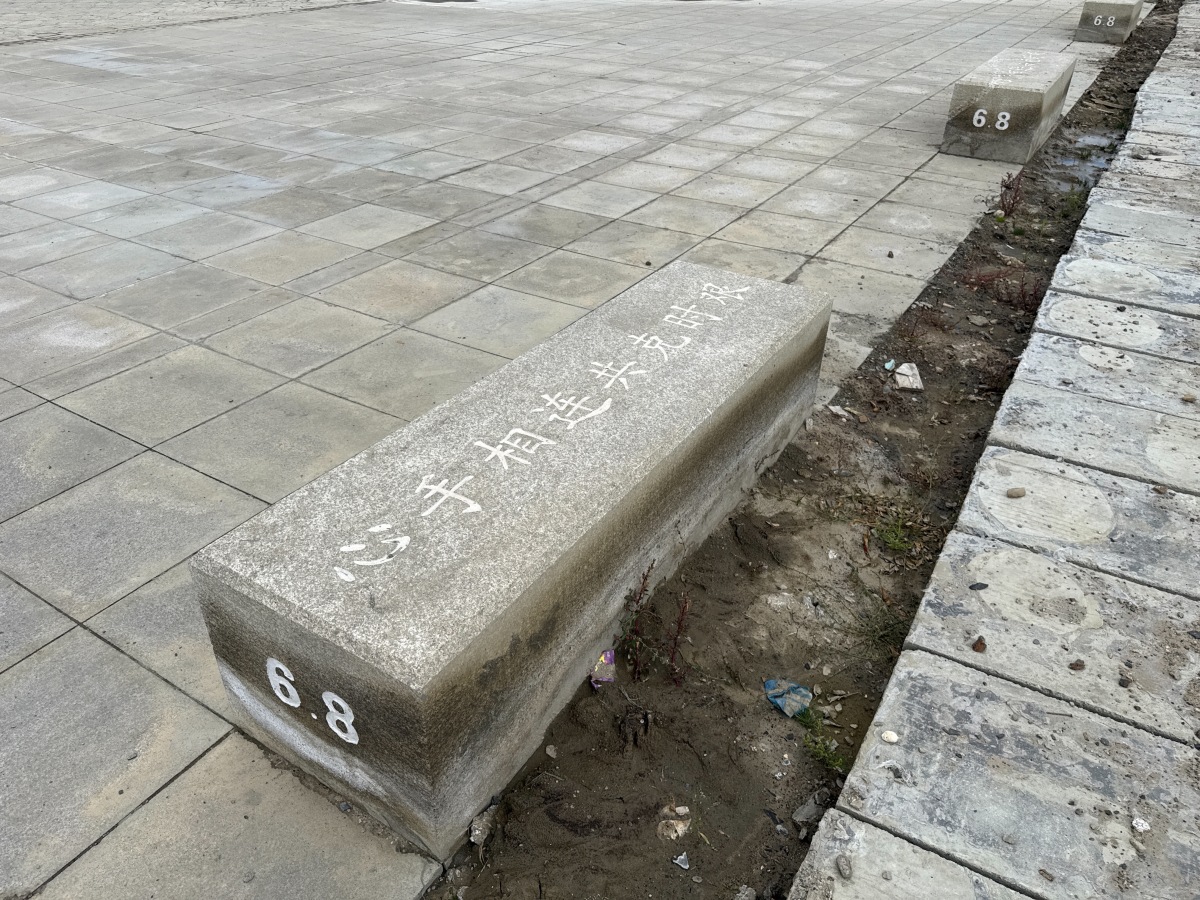
The sites of homes that collapsed during the earthquake have since been transformed into a memorial park.
Inside the park, the reporter saw a row of stone benches bearing inscriptions. One inscription read: "Hearts and hands joined together to overcome difficulties."
The inscription reflected Senga Village's determination to rebuild after the disaster and return to normal life, as well as its gratitude for support from across the country, including the HKSAR.
"After the disaster, local residents took part in reconstruction work while also receiving wages and earning an income. The construction work was tiring, but life kept getting better," another villager told the reporter.
He said the local government provided disaster-affected residents with transitional accommodation subsidies of approximately RMB 6,000 to RMB 7,000 per person each year after the earthquake. There were also special subsidies for furniture.
"By the time the houses were completed, we could use the money to buy some furniture. The government had thought of everything very carefully," he said.
According to sources, after the earthquake, an expert team from the country's Ministry of Housing and Urban-Rural Development travelled to the site to provide guidance, ensuring that newly constructed houses met the seismic standard for an intensity of eight degrees.
A total of 758 residential houses in the township were rebuilt after the disaster. Six types of housing were designed according to the number of residents in each household, ranging from 35 square metres for one-person households to 260 square metres for households of eight or more people.
Each household has its own independently built courtyard walls and enclosure.
New homes completed within months
After the earthquake struck in January last year, reconstruction planning began within less than a week, with construction officially starting in early March.
Companies including Shanghai Construction Group, which was involved in reconstruction assistance from Shanghai, were assigned to carry out construction work. By Aug. 15, three villages had completed the relocation of all residents into their new homes. The remaining eight villages had also moved into their new homes by Oct. 1.
Residents' production and daily lives began returning to normal in November last year.
According to available information, Dingri County, a major border county in Xizang and home to Mount Everest, currently relies mainly on agriculture as a source of economic activity.
Its main crops are highland barley and wheat. Livestock farming is also well developed, with nearly 290,000 livestock and poultry currently being raised across the county.
In recent years, Dingri has promoted the artificial cultivation of grass to ensure adequate supplies of forage. It has also introduced high-quality breeds including Jersey cattle, Gyra yaks and Holba sheep, while actively improving local yellow cattle breeds.
These efforts have significantly increased the production of meat, eggs and milk and helped drive the livestock industry towards higher-quality development.
Local villagers hope HK can help open up international markets for their agricultural and livestock products.
Magnitude-6.8 earthquake triggers nationwide relief effort
At 9:05 a.m. on Jan. 7, 2025, a magnitude-6.8 earthquake struck Dingri County in Xigaze, Xizang, at a depth of 10 kilometres. The maximum seismic intensity reached nine degrees, producing a surface rupture zone stretching about 26 kilometres.
Seven villages were located within five kilometres of the epicentre, while two townships were within 20 kilometres.
Parts of the affected area had relatively concentrated populations and houses with weak seismic resistance, resulting in severe damage to buildings. The earthquake affected seven counties, leaving about 200,000 people affected to varying degrees.
The earthquake killed 126 people, destroyed 26,900 houses and damaged 215,000 others, causing direct economic losses of RMB 8.945 billion.
Following the earthquake, the Chinese government rapidly activated its emergency response. Rescue forces including the People's Liberation Army and the People's Armed Police were deployed in relief operations.
More than a year later, Xigaze was hit by another major natural disaster. A mudslide on the Nepalese side caused significant casualties at the Gyirong Port in Gyirong County.
On Sept. 1, the Xizang Autonomous Region held a mourning ceremony for the victims at Gyirong Port.
The same day, restoration work on National Highway G216 had advanced to within 700 metres of the port. Communications had largely been restored, while the barrier lake had naturally begun to discharge and was largely drained, with the risk under control.
Search and rescue operations were continuing, with rescue teams from various sides racing against time.
Reporter's hands-on experiences: Emergency station offers a glimpse of warmth on the plateau
The journey from Xigaze to the Gyirong area is about 500 kilometres. Some sections run along winding mountain roads, with steep mountains on one side and long river valleys on the other.
Signs of landslides can be seen along the route, which also passes an observation platform for Mount Everest at an elevation of more than 5,000 metres.
On the way to the reporting location on Monday, the reporter had to stop from time to time to wait for large herds of sheep to slowly cross the road. Herdsmen rode horses across the gravel terrain, forming a distinctive landscape on the plateau.
There are almost no service areas along hundreds of kilometres of the route, leaving the reporter to rely on instant noodles carried in the vehicle for food.
The reporter also tried traditional Xizang noodles, which had a relatively strong flavour—"salty, savoury and rich"—offering a distinctive taste in the cold high-altitude environment.
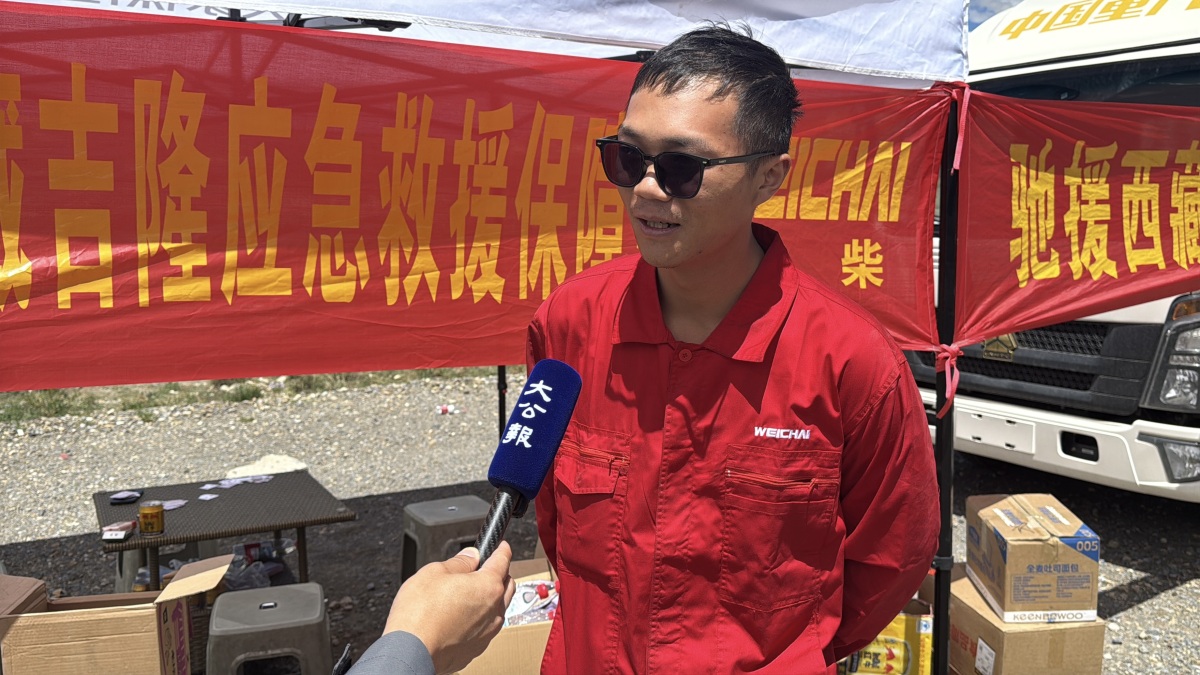
About one kilometre from the inspection station on National Highway 219, the Ta Kung Pao reporter encountered an emergency rescue support station made up of trucks and tents.
The station was operated by Mr. Guan, an employee of Weichai Power, who travelled from Sichuan to the disaster area with four colleagues the day after last year's earthquake.
They provided supplies and maintenance support for rescue vehicles.
Mr. Guan said they would not leave until the earthquake relief work had been completed. After learning that HK had made donations to the earthquake-hit area, he took the opportunity to express his gratitude to HK people through the camera.
Before parting, the team gave the reporter bottled water and energy drinks to express encouragement and support.
Dingri County experienced a magnitude-6.8 earthquake last year. When the Ta Kung Pao reporter returned to Senga Village, the epicentre area, almost all of the village's old houses made of earth and timber had been destroyed.
Today, newly built houses have gradually been completed. Their white walls and red eaves retain the distinctive Xizang-style architectural style, while the sites of collapsed houses have been preserved as a memorial park.
Reporting from the high-altitude plateau is challenging at every step, but the kindness and warmth encountered along the way left the reporter with a better understanding of "when disaster strikes one place, support comes from all sides."
(Source: Ta Kung Pao, A1)
Related News:
Watch This | Rescuers race against time to restore access to Gyirong Port
On the ground in Xigaze: Xizang resident says HK's concern brings warmth after deadly mudslides




Comment