






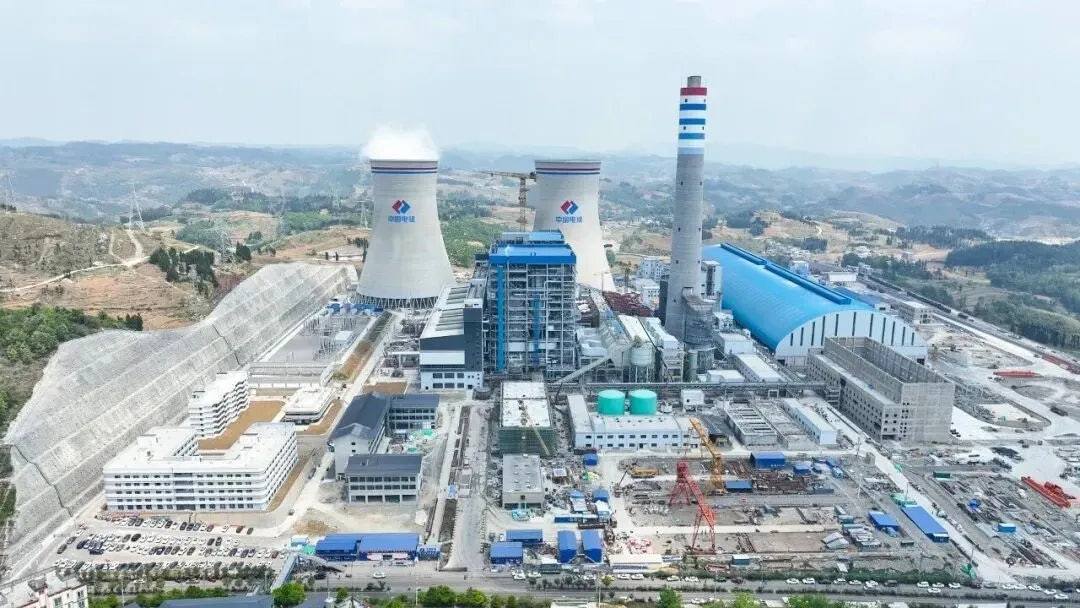
China's power demand has surged to new highs this summer, driven by widespread extreme heat and a rapid rise in electricity-hungry AI computing. According to the latest figures released by the National Development and Reform Commission (NDRC) and the National Energy Administration (NEA), renewable electricity generation in China exceeded 40% in the first half of the year, while coal-fired power's share fell below 50% for the first time—a milestone some analysts described as a historic turning point in China's energy transition.
The NEA said at a July 30 press briefing that since early July, a persistent heatwave has affected much of the country due to the subtropical high pressure system expanding and shifting north, along with southern regions ending the "plum rain" season. With both economic activity and scorching temperatures pushing demand upward, national peak power load hit record levels three times, reaching as high as 1.553 billion kilowatts (1.553 TW)—about 45 million kW higher than last year's peak. Officials warned that if large-scale heat persists, peak load could climb to around 1.6 TW.
Despite the strain, the NEA said overall supply remains stable. Since June, China has added around 400 million kW of new generation capacity, including 110 million kW of "supporting and flexible" sources such as hydro, gas, and coal. The commissioning of the Shaanbei–Anhui UHVDC transmission project has also strengthened long-distance delivery: China now operates 46 UHV transmission corridors, and "west-to-east power transmission" capacity exceeds 340 million kW. The NEA added that coal stockpiles at centrally dispatched power plants remain at a relatively strong level, with more than 30 days of usable inventory.
On the decarbonization front, the report said China made fresh progress in the first half of the year. Nationwide, renewables added 117 million kW of new installed capacity, accounting for 73.9% of all new additions. By the end of June, renewables represented over 60% of total installed capacity. In terms of output, renewable generation reached nearly 2 trillion kWh, up about 9% year-on-year, accounting for more than 40% of total power generation.
Coal's share of generation fell to 49.7% in the first half—marking the first time half-year data has dropped below 50%. Dong Xiucheng, executive dean of the China Institute for Carbon Neutrality at the University of International Business and Economics, said the shift suggests wind and solar have moved from being a "supplementary" source to a core pillar of generation. He added that coal power's role is expected to evolve from baseload supply to flexible support, including peak-shaving, backup, and "last-resort" capacity during demand spikes.
Addressing geopolitical disruptions affecting global oil and gas supply chains, NDRC spokesperson Jiang Yi said at a July 31 briefing that China achieved "air-conditioning freedom" and "electricity freedom" in the first half of the year—meeting domestic energy needs while helping stabilize global supply chains. He noted that nearly four out of every ten kilowatt-hours consumed nationwide now come from green electricity. The report also cited broader trends such as slower energy consumption growth relative to GDP, rising EV penetration (from 5% at the end of the 13th Five-Year Plan period to 48% by the end of the 14th), and efforts to diversify energy import channels.
The report highlighted that AI computing is becoming tightly intertwined with energy planning, as power availability increasingly sets the ceiling for data-center capacity and the growth of "new intelligent industries." Citing analysis from CCTV Finance, the report said the transition toward a source-grid-load-storage model could unlock opportunities across the full electricity value chain. Energy storage, in particular, is seen as moving from a secondary cost to a critical grid asset, while virtual power plants, a unified national power market, power trading services, and carbon-asset management could see growing demand.




Comment