






"Hong Kong has the DNA of both the East and the West."
That was how Professor Priscilla Leung Mei-fun described HK's role in the evolving international legal landscape at a forum on Saturday (July 18), where legal experts from across the region explored how closer legal cooperation could support businesses operating in the Guangdong-Hong Kong-Macao Greater Bay Area (GBA).
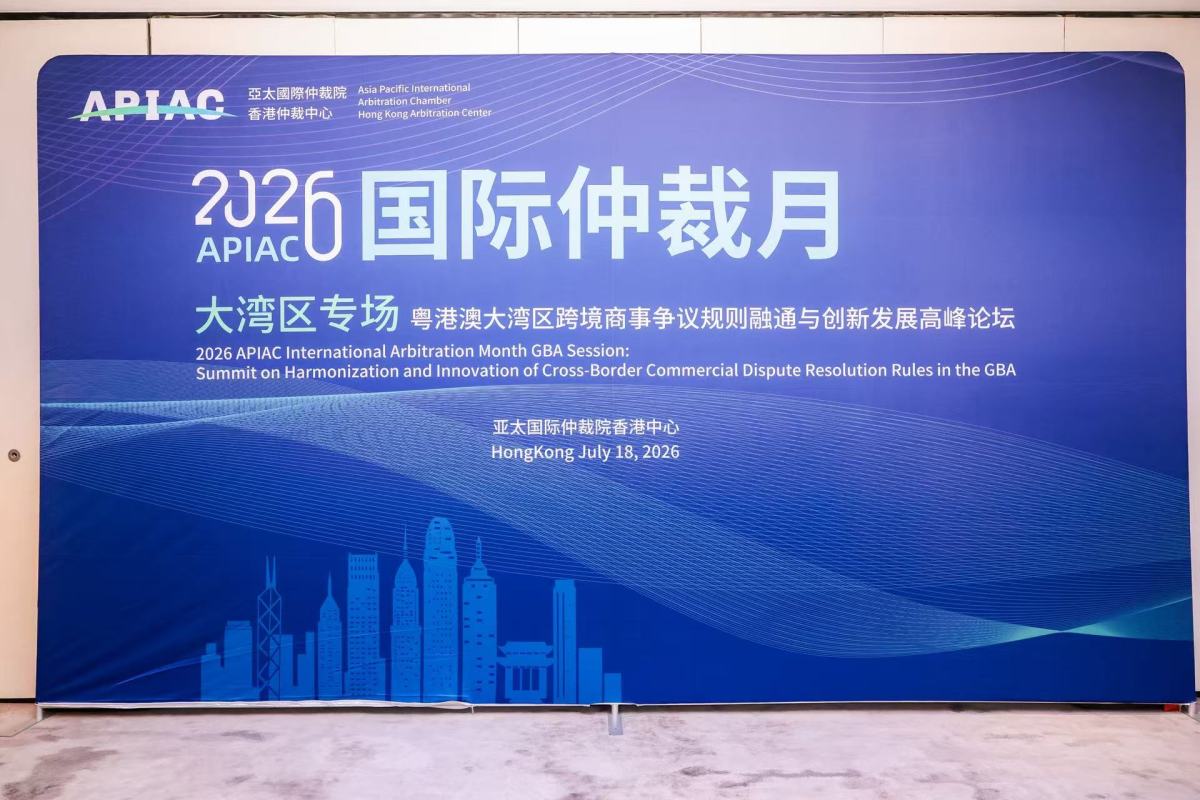
On July 18, the GBA session of the 2026 APIAC International Arbitration Month, "Summit on Harmonization and Innovation of Cross-Boundary Commercial Dispute Resolution Rules in the GBA", was held in Hong Kong.
Organized by the Hong Kong Arbitration Center of the Asia Pacific International Arbitration Chamber (APIAC), the summit brought together leading legal professionals to discuss cross-boundary commercial disputes, legal risk management for companies expanding overseas, artificial intelligence in arbitration, and greater convergence of arbitration and mediation rules across the GBA.
Leung said HK's century-long common law tradition, together with a deep pool of professionals familiar with both Chinese and international legal systems, enables the city to provide high-quality arbitration, mediation and litigation services for clients from around the world.
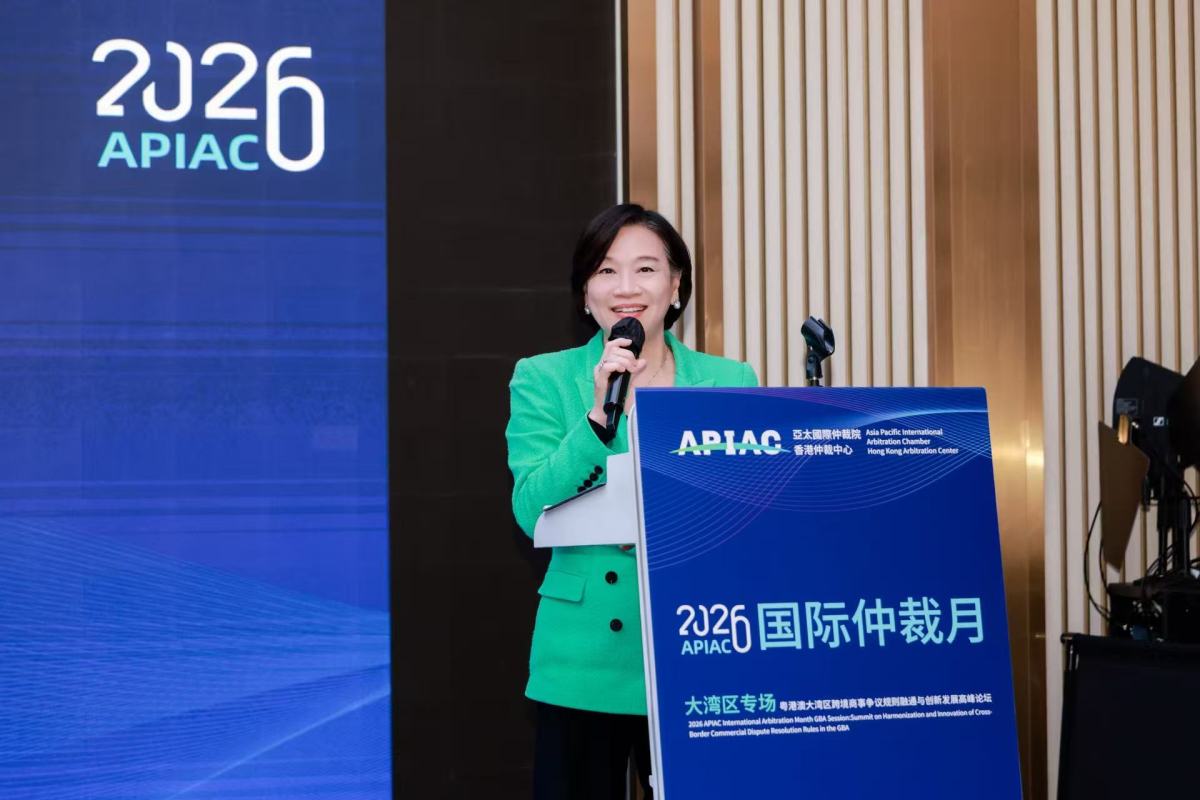
Leung added that the establishment of the International Organization for Mediation headquarters in HK and the planned international commercial court will further reinforce the city's position as a global dispute resolution hub.
She also stressed that HK's rule of law, low-tax regime and international outlook continue to attract businesses and investment from around the world. Backed by the country's development while maintaining its internationally recognized legal system, HK is well positioned to contribute to the formulation of international economic rules and support Chinese enterprises in expanding globally.
As regional economic integration accelerates and businesses increasingly operate across multiple jurisdictions, participants agreed that efficient, internationally compatible dispute resolution mechanisms have become a key pillar of a stable and competitive business environment.
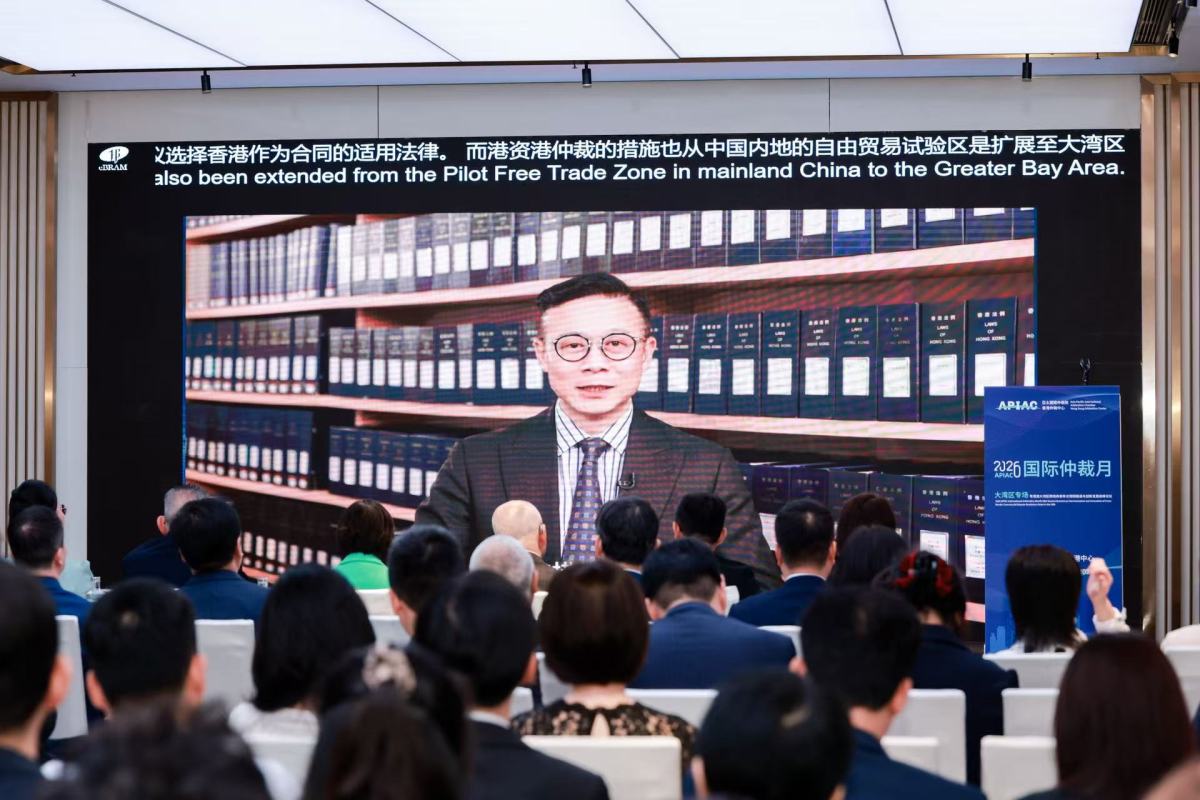
In a video address, Deputy Secretary for Justice Cheung Kwok-kwan said HK's unique advantages under the "one country, two systems" framework enable the city to play an increasingly important role as the country's international legal and dispute resolution services centre.
He noted that HK remains the country's only common law jurisdiction and has developed a comprehensive ecosystem of internationally recognized legal professionals and dispute resolution institutions. Measures such as the expansion of the "Hong Kong Law" and "Hong Kong Arbitration" arrangements in the GBA have enhanced legal certainty for HK-invested enterprises on the mainland, while ongoing cooperation among legal authorities across Guangdong, HK and Macao continues to promote greater rule connectivity and lower dispute resolution costs for businesses.
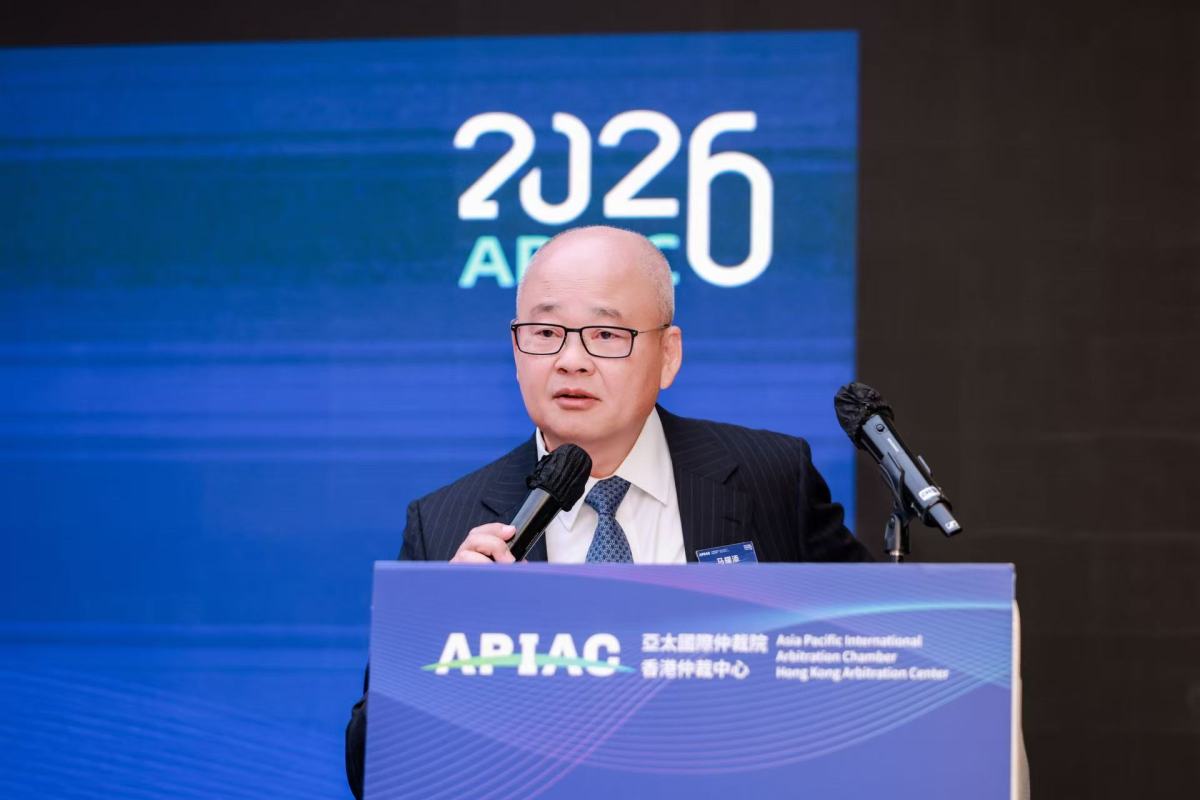
Delivering the opening remarks, barrister Ma Yiu-tim said the continued integration of the GBA is driving growing demand for dispute resolution services that are efficient, professional and cost-effective.
He described the establishment of the APIAC Hong Kong Arbitration Center as a strong vote of confidence in HK's common law system, arbitration-friendly legal framework and global reputation. A vibrant arbitration ecosystem, he said, benefits from healthy competition among institutions, ultimately providing businesses with more choices and higher-quality services.
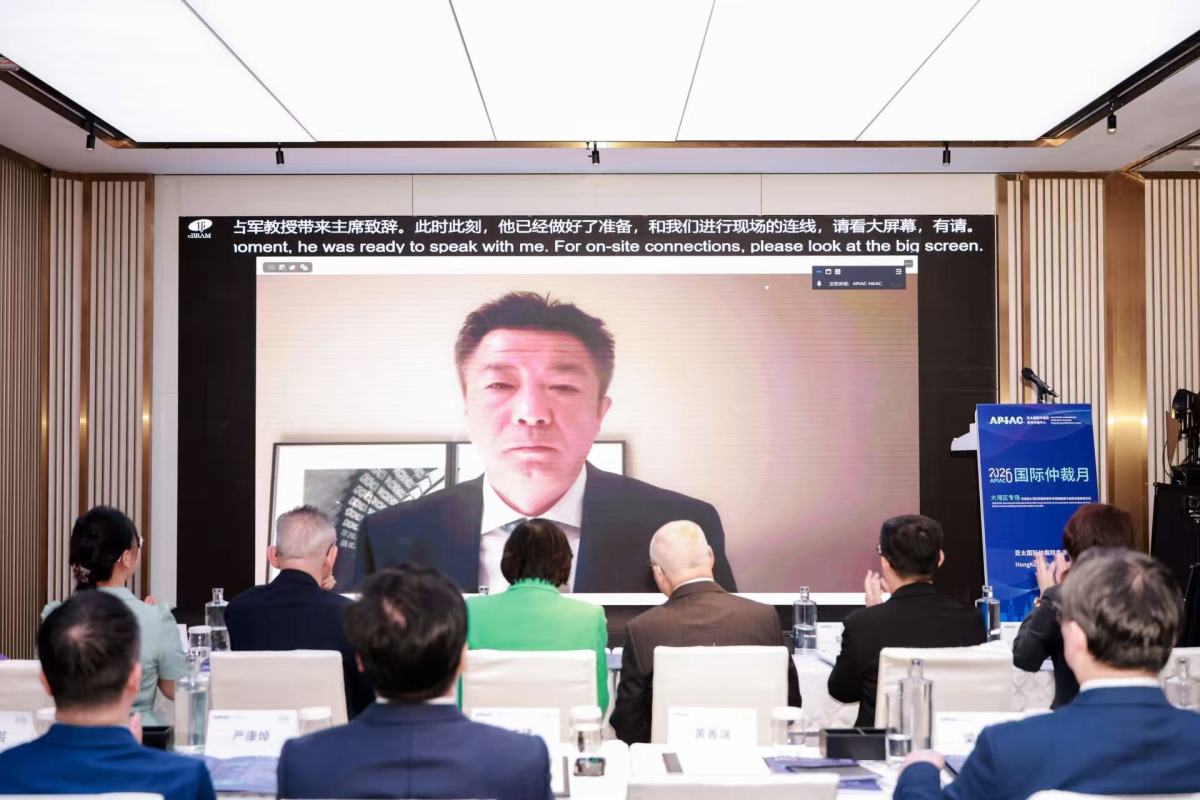
Professor Ma Zhanjun, Co-Chairman of APIAC, highlighted the institution's rapid international expansion. Since its establishment three years ago, APIAC has launched eight arbitration centres across Asia and plans to open additional offices, including one in London, this year. He said its cross-jurisdictional network helps meet growing demand for asset preservation, enforcement and other cross-border legal services while offering more flexible fee structures for different types of commercial disputes.
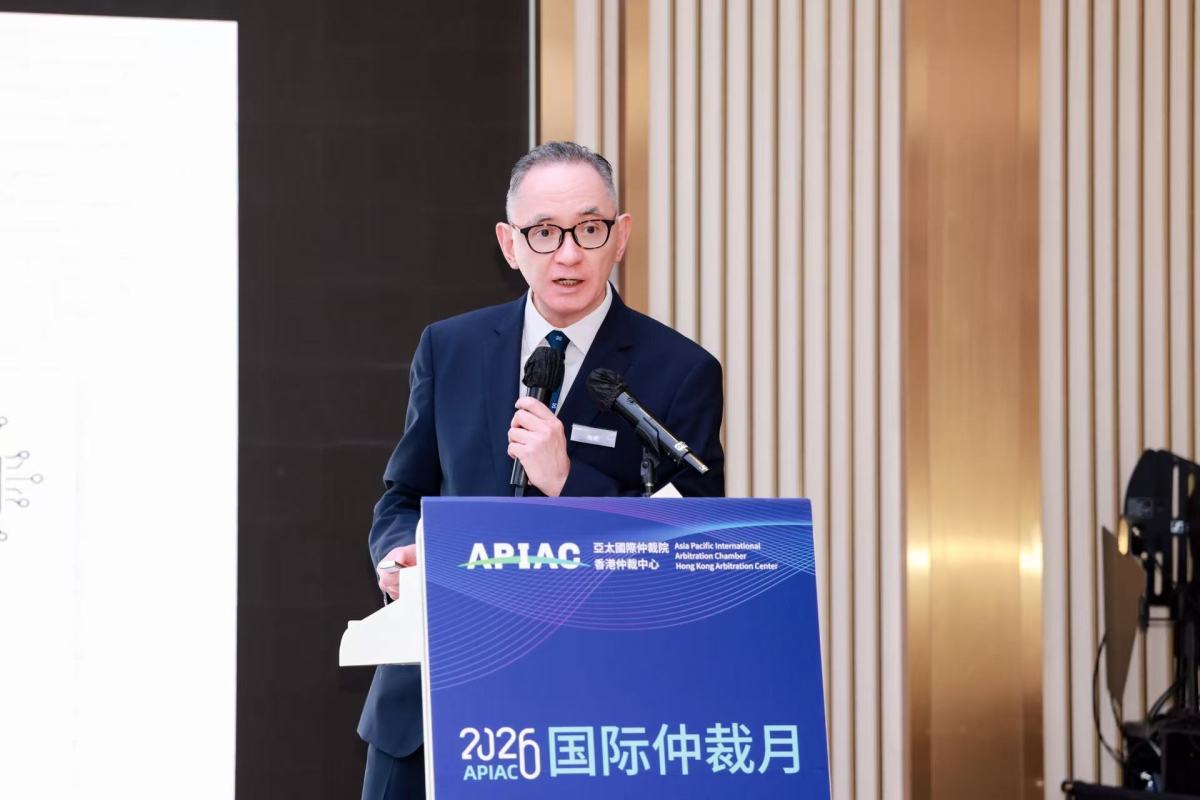
Addressing emerging trends in arbitration, barrister and arbitrator Professor Christopher To described the GBA as a testing ground for legal innovation. He said pilot measures have gradually expanded parties' ability to choose HK arbitration, while artificial intelligence is improving efficiency in document review, multilingual translation, legal research, transcription and case management. At the same time, he stressed that AI should remain a professional support tool rather than replace independent decision-making by arbitral tribunals or compromise confidentiality.
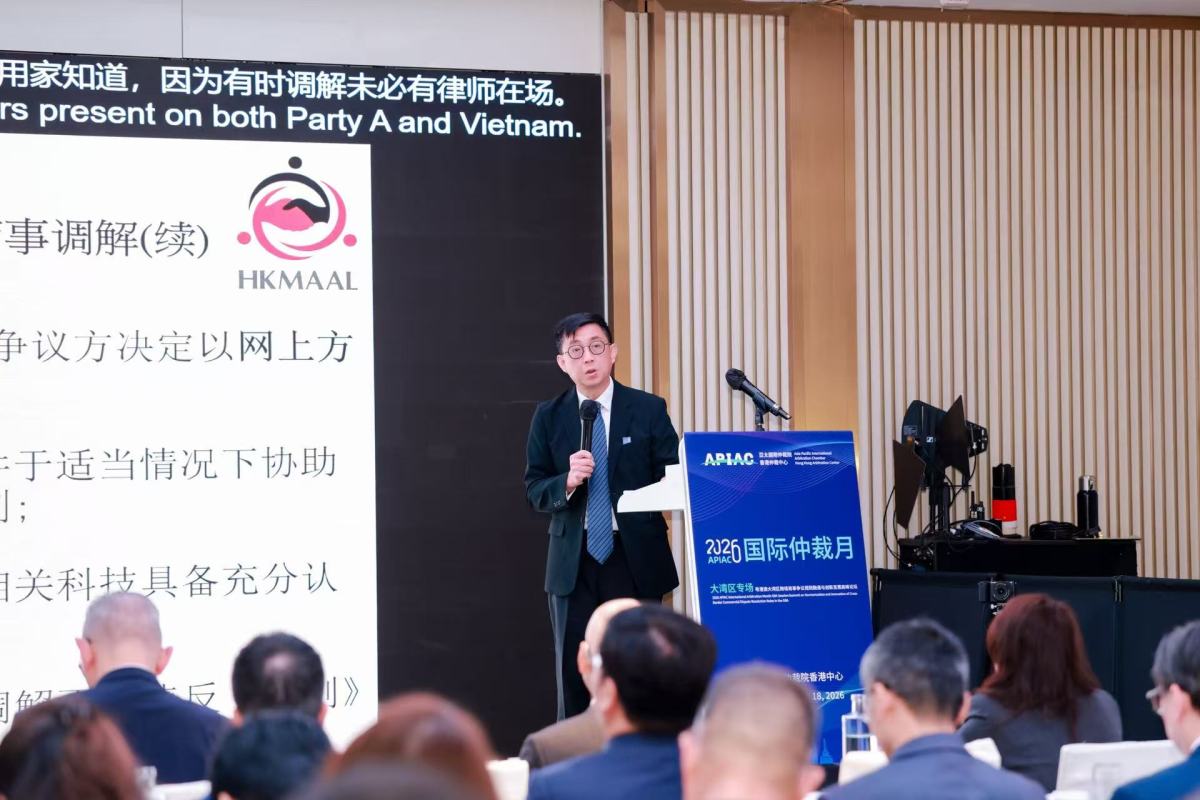
Professor Iu Ting-kwok, Chairman of the Hong Kong Mediation Accreditation Association, said the Hong Kong Mediation Code is helping establish common professional standards for cross-boundary mediation in the GBA. Unified principles on fairness, informed consent and confidentiality, together with internationally recognized accreditation, have strengthened confidence in mediation as a flexible and cost-effective solution for commercial disputes involving different legal systems.
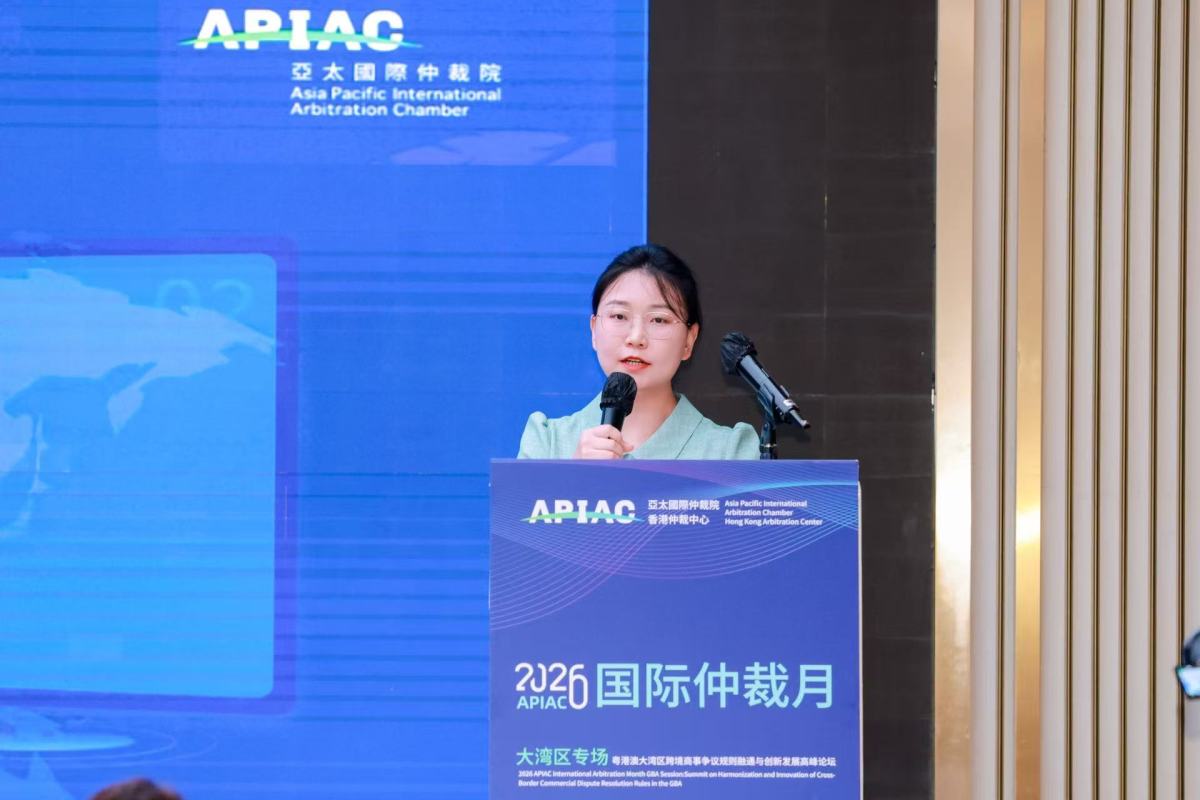
Meanwhile, Dr. Yeung Yuyuan, Vice Chairman of the APIAC Hong Kong Arbitration Center, focused on one of the practical challenges in cross-boundary arbitration—the service of legal documents. She called for harmonized service rules, clearer standards for electronic service and stronger procedural documentation to improve the enforceability of arbitral awards across jurisdictions.

The forum concluded with a panel discussion on new approaches to dispute resolution in the GBA, covering topics including online dispute resolution, arbitration-mediation collaboration, the drafting of arbitration clauses and legal risk management for cross-boundary investment.
Participants said that as economic cooperation within the GBA continues to deepen, closer legal connectivity and internationally aligned dispute resolution mechanisms will be essential to supporting regional integration, facilitating global business and reinforcing HK's role as a bridge between the country and the world.
Related News:




Comment