






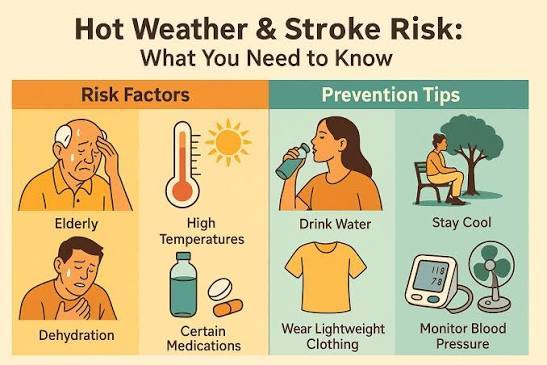
Many people associate stroke and heart attack with winter, but experts caution that summer dehydration can also increase the risk of ischemic stroke and myocardial infarction, especially among older adults and people with chronic conditions.
In an American Heart Association article cited by the report, Barry Franklin, a cardiology expert at William Beaumont Hospital, warned that increased sweating in hot weather can lead to inadequate body water, which may slow blood flow and contribute to blood clot formation. As people age, arteriosclerosis becomes more common, and conditions linked to lifestyle—such as obesity, hypertension, diabetes, and high cholesterol—can accelerate vascular changes, potentially raising the risk of clot-related events. Franklin noted that people with these conditions, or those at risk of developing them, should pay extra attention to hydration during the summer.
Why hot weather can be risky
The report explained that higher temperatures cause blood vessels to dilate, releasing heat and potentially lowering blood pressure. At the same time, sweating can reduce body water and make blood more concentrated, creating conditions that may increase the likelihood of clot formation. If a clot blocks a coronary artery, it can trigger a heart attack.
Three common situations where dehydration may be overlooked
The expert highlighted that dehydration can develop without being obvious:
- Hydration is not immediate: Even after drinking water, it can take about 20 minutes for fluid to distribute through the body—so waiting until you feel very thirsty may be too late.
- Water loss can be "invisible": Moisture can evaporate from the skin even without noticeable sweating, so regular intake is still needed.
- Sleep is a high-risk period: People may sweat around 200 ml during sleep, and more on hot nights—particularly among older adults who avoid air conditioning. Blood pressure also tends to drop at night, which may further increase clot risk.
Four rules for safe, effective hydration
While hydration can help reduce clot risk, the report also cautioned that drinking too much water at once may burden the heart and kidneys. Franklin's practical tips included:
- Drink a cup before bed and after waking: About 200 ml before sleeping, keep water at the bedside, and drink a little after nighttime bathroom trips; drink another cup in the morning.
- Account for water from meals: A common estimate cited was about 40 ml per kilogram of body weight per day. Since daily meals may already provide roughly 1 liter, the article suggested topping up the remaining amount rather than forcing excessive intake.
- Sip throughout the day: Spread total intake across multiple smaller servings to maintain balance and improve absorption.
- Be cautious with alcohol and caffeine: Coffee and beer should not be counted as hydration because both can have diuretic effects, potentially worsening dehydration.
- (Sources: American Heart Association; Japan Heart Foundation)




Comment