






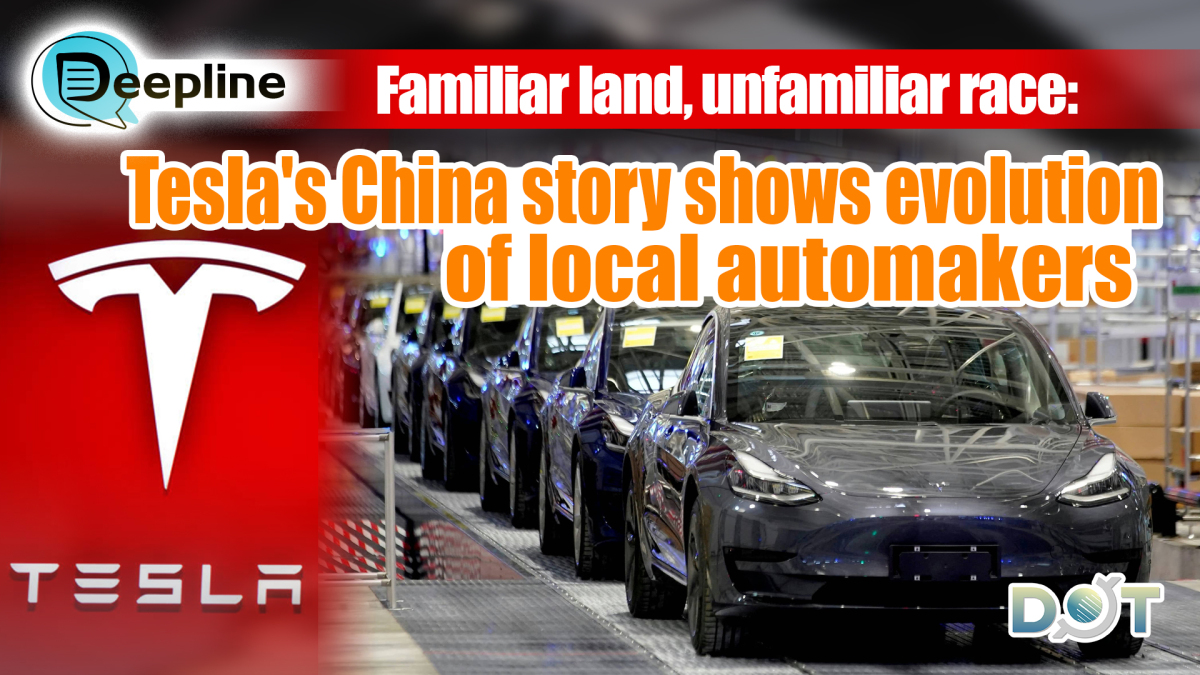
In May 2026, Musk lands in Beijing once again.
For him, this land is both familiar and unfamiliar. Tesla's Gigafactory is still running, but every time he comes, China's auto industry has already transformed into something entirely different.
Tesla was the first foreign catfish to swim into these deep waters. And now, it finds itself surrounded by the very school of fish it helped spawn.
On April 22, 2014, at the Hengtong International Business Park in Jiuxianqiao, Beijing, Musk, then 43, stepped onto the stage as CEO of Tesla and handed over the keys to the Model S to China's first batch of owners.
The list of names was impressive: Charles Chao, Yu Yongfu, Li Xiang. Among the early Tesla owners in China were also Lei Jun and He Xiaopeng.
It was a quintessential Musk-style entry into China: rich in tech flair, celebrity aura, and elite appeal.
At the time, Musk was already Silicon Valley's hottest entrepreneur. PayPal gave him the halo of a serial founder, SpaceX turned him into a real-life sci-fi hero, and Tesla transformed that persona into a consumer product. To enter China, Tesla poached top executives from Apple and Bentley's China operations, launched pre-sales with great fanfare, and even demanded a deposit of 250,000 yuan. Headquarters, buoyed by market enthusiasm, raised the 2014 China delivery target from 3,000 to 10,000 vehicles.
The outcome quickly proved that Tesla had chosen the right market—but arrived too early.
That year, Tesla actually registered only 2,499 vehicles in China, missing even its most conservative internal target. Musk later admitted that the company's sales performance in China was "unexpectedly weak."
In 2014, China was not ready for Tesla's new species. That year, the penetration rate of new energy vehicles (NEVs) in the country was below 0.5%, with total sales of pure electric and plug-in hybrids barely exceeding 70,000 units. For most consumers, "electric cars" still conjured images of low-speed golf carts. The charging network was woefully inadequate, range anxiety was a real issue, and problems like maintenance, resale value, safety perceptions, and consumer habits—none of these had been resolved. Even Beijing's NEV license policy, in its early stages, saw a strange situation where the number of available permits exceeded the number of applicants.
In other words, when Tesla first entered China, it faced a landscape that had yet to be truly cultivated.
But that doesn't mean it left nothing behind.
On the contrary, Musk's first appearance in China successfully sold a vision of the future of the automobile: electrification, intelligence, direct-to-consumer sales, and software-defined vehicles. In that same year, Jia Yueting, choking on his dream, set up an automotive project team and took personal charge. Li Bin took just 15 minutes to convince Richard Liu to invest in NIO. Shortly after, Li Xiang stepped down as president of Auto Home to start building his own car company.
In 2014, Musk lost in the market but won on another front. He didn't conquer the market immediately, but he lit a fire under it.
January 7, 2020. Lingang, Shanghai. At the delivery ceremony for the locally produced Model 3, Musk broke into what would later become a widely shared dance. The music stopped, but he kept dancing. When the track kicked back in, he grew more excited, eventually ripping off his blazer and tossing it onto the stage.
Before this, Tesla had been stuck in "production hell" for far too long.
Around 2018, Model 3 production was stalling, cash flow was under pressure, and capital market patience was wearing thin. Short sellers circled, and the media kept amplifying the signals that Tesla might fail. Musk relied on sleeping pills to get through his insomnia, his life consumed by work. For a car company, technological leadership alone does not buy safety—only production capacity, deliveries, and cash flow can.
And at that critical moment, China delivered the most crucial lifeline.
The Shanghai Gigafactory, from groundbreaking to production, moved faster than Musk ever expected—and faster than conventional wisdom in global manufacturing about large-scale plant construction would allow. More importantly, China gave Tesla more than just speed. Wholly foreign ownership, land support, financing access, an integrated supply chain, construction efficiency, regulatory coordination—a whole system of capabilities converged to turn an empty plot of land into a factory that could deliver vehicles, generate cash, and produce profits in record time.
This was a quintessential Chinese industrial strategy. China needed a true catfish to enter its local market: one strong enough, fast enough, and iconic enough to force local automakers and supply chains to accelerate at the same time.
The Shanghai Gigafactory pulled Tesla back from the ICU. Cost, efficiency, delivery capacity, and profit structure were all reshaped there. One key reason Tesla became the world's most profitable electric vehicle company was the Shanghai factory. The year Musk performed his celebratory dance—2020—Tesla turned its first full-year profit: US$721 million in net income. Production costs at the Shanghai plant were 65% lower than in the U.S.
But for China, the real importance was using Tesla to accelerate its own industrial transformation. The catfish had been released into the pond.
In late May 2023, Musk's private jet once again landed in Beijing.
Compared with his previous two visits, the atmosphere this time was entirely different. On the surface, he was still the most closely watched entrepreneur. His meetings in China yielded positive outcomes, the capital markets responded favorably, Tesla's stock price rebounded, and Musk regained the title of the world's richest person. On the surface, he still seemed to be controlling the rhythm.
But when we zoom out and look at the industry, another reality emerges: In 2023, China sold nearly 10 million new energy vehicles, with domestic brands dominating the market and a penetration rate exceeding one-third. BYD caught up with and then surpassed Tesla in pure electric vehicle sales. Li Auto established its dominance in the premium SUV segment. More and more Chinese automakers were simultaneously acquiring three capabilities: faster product definition, stronger cost control, and iteration speeds better attuned to Chinese consumers.
This means that the very things that once made Tesla uniquely valuable are now being dismantled, piece by piece.
Is it leading electrification capabilities? Others have them now. Is it a lean but highly efficient supply chain management? Chinese automakers have learned it quickly. Is its cost structure formidable in price wars? Local Chinese manufacturers are even more aggressive. The smart driving experience that once wowed consumers? Tesla is no longer the only provider. Increasingly capable competitors are now compressing the high premium Tesla once commanded by virtue of its lead.
The system that Tesla helped mature, together with the local automakers it has nurtured, has now pushed Tesla into a different kind of competition.
There's a classic saying: As soon as the second automobile was built, racing had already begun.
(Source: Insight)
Related News:
Global Lens | Wall Street Journal: CEOs accompanying Trump and their ties to China
Deepline | Building rockets on code: How does AI unicorn Cursor catch Musk's attention?




Comment