






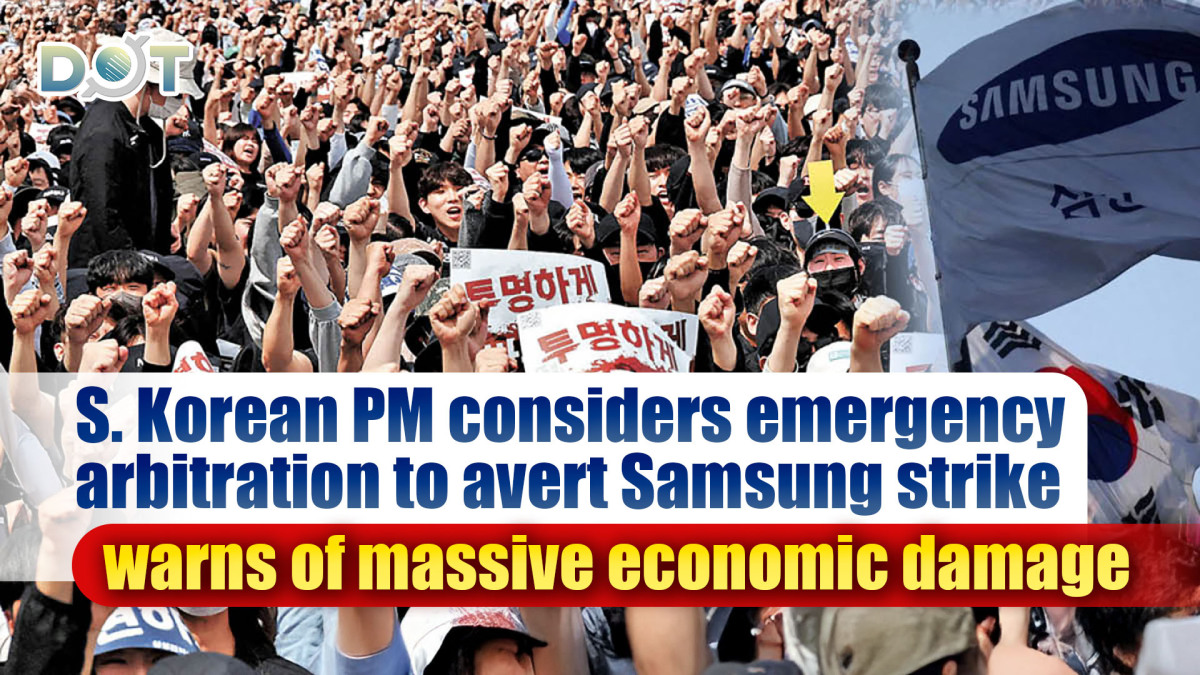
South Korean Prime Minister Kim Min-seok said on May 17 that the government will consider all available options, including emergency arbitration, to prevent a strike at Samsung Electronics. Should a strike still occur, he added, the government will do its utmost to minimise the damage.
Samsung's management and labour union have been deeply divided over performance bonuses tied to profits from the artificial intelligence (AI) boom. After the breakdown of previous negotiations, the union has announced an 18-day strike starting on May 21, with more than 50,000 workers expected to take part.
Speaking after an emergency meeting on May 17, Kim said, "A single day of strike at Samsung Electronics' semiconductor plant is expected to cause immediate losses of 1 trillion won (approximately HK$5.2 billion)." He also noted that even a temporary halt to semiconductor production lines could disrupt operations for several months. There are fears that if raw materials are scrapped due to the strike, total economic losses could balloon to 100 trillion won (about HK$520 billion).
Under South Korean law, if the government determines that a labour dispute could seriously harm the economy or public livelihood, the Minister of Employment and Labour can issue an emergency arbitration order, which immediately suspends the strike for 30 days and allows the National Labour Relations Commission to step in for mediation and arbitration. The South Korean government has traditionally been friendly toward unions, so invoking such a tough measure would signal an unusually serious situation.
Related News:
Labor talks break down: Samsung mass strike countdown begins
Deepline | Samsung faces potentially largest strike in history as labor talks collapse




Comment