






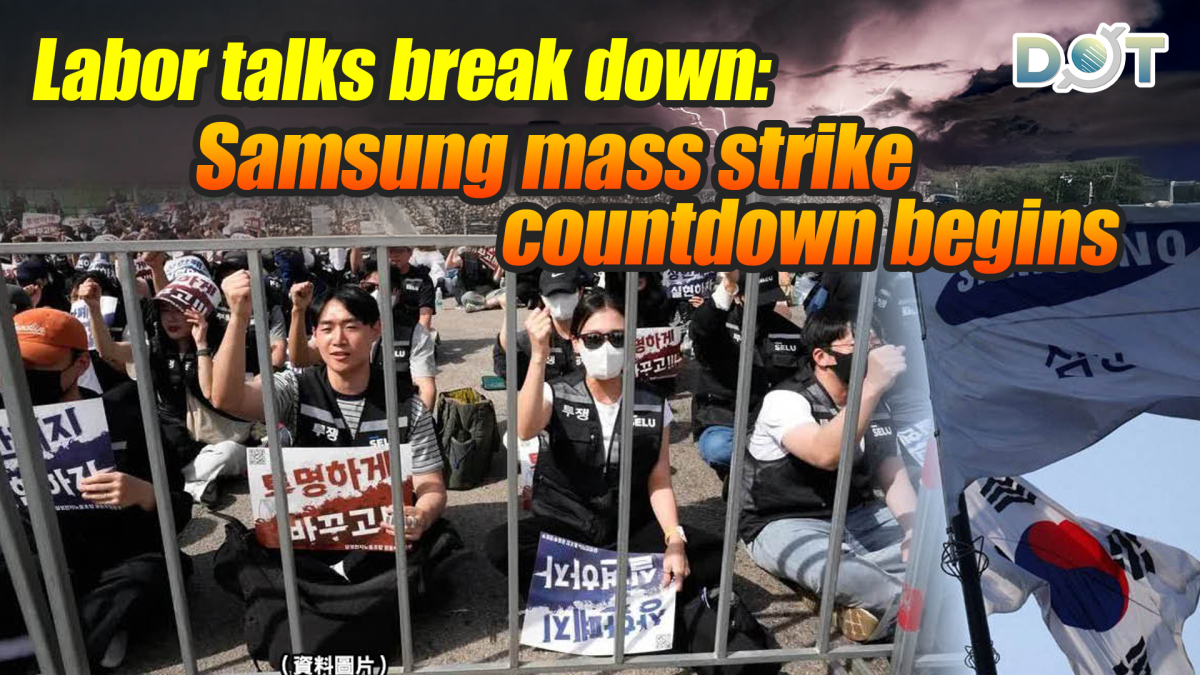
Management and the union at South Korean semiconductor giant Samsung Electronics failed to reach a wage agreement. After 17 hours of marathon negotiations on May 12, both sides announced that talks had broken down. The likelihood of the union launching a full-scale strike next week has increased, which could disrupt operations at the world's largest semiconductor manufacturer.
Samsung's management and labor representatives are at odds over performance bonuses tied to profits generated by the artificial intelligence (AI) boom. The union is demanding that Samsung abolish the current bonus cap system, allocate 15% of operating profit as employee bonuses, and formally incorporate these terms into employment contracts. Samsung, however, has proposed allocating 10% of operating profit as bonuses and offering an additional one-time special compensation package that exceeds industry standards. Company executives emphasize that the union's demands would be difficult to sustain in the long term.
The union had previously announced that if its demands were not met, it would launch an 18-day general strike starting on May 21. Choi Seung-ho, head of Samsung's largest union, said in the early hours of May 13, following a negotiation meeting, that approximately 41,000 union members had already pledged to participate in the general strike, a number that could subsequently rise to over 50,000. The strike is expected to cost Samsung up to 40 trillion won (approximately HK$210.2 billion). It could also lead to the loss of Samsung's customers and damage to its supply chain, escalating into a national economic issue. The semiconductor industry accounts for about 35% of South Korea's exports. According to statistics from the Korea Development Institute, a 10% decline in semiconductor exports would reduce South Korea's gross domestic product (GDP) by 0.78%.
It is reported that calls for the government to invoke its "emergency adjustment authority" are growing. Established under South Korea's "Labor Union and Labor Relations Adjustment Act," this system allows the Minister of Employment and Labor to immediately halt labor disputes—and prohibit their resumption for 30 days—when such actions threaten the daily lives of citizens or cause significant damage to the national economy. However, officials from the Ministry of Employment and Labor (MOEL), which holds the decision-making authority, stated that the emergency adjustment power is not currently under discussion. The ministry remains inclined to resolve the dispute through dialogue rather than direct government intervention.
Related News:
Deepline | Samsung faces potentially largest strike in history as labor talks collapse




Comment