






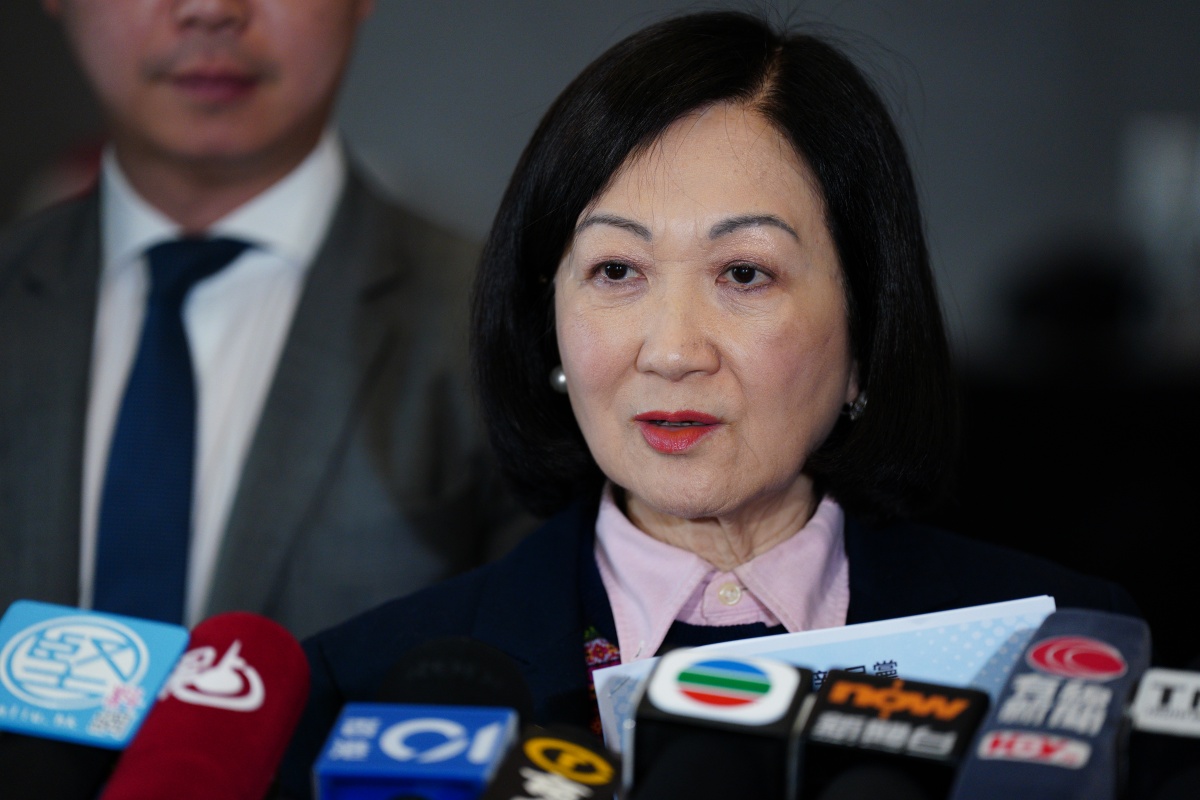
Executive Council convenor Regina Ip expressed concern over the impact of the Middle East war stalemate on inflation on Saturday (May 9), saying food prices will very likely go up in the long term.
While the supply of oil to Hong Kong has been largely unaffected as 80 percent of the SAR's needs are met by mainland sources, she said it was necessary to evaluate the longer-term impact of the fuel crisis on inflation.
"The Middle East war has affected the supply of many fertiliser and chemical products, which has an impact on inflation. I hope government economists can make some macroeconomic assessments," Ip said.
"Even though our economy did well in the first quarter, what about the longer-term impact on inflation? It's very likely that food prices will go up."
The government should carry out a detailed study on which small and medium enterprise sectors have been hit the worst and hand out industry-specific subsidies, Ip said.
The New People's Party chairwoman also said Hong Kong can play a vital role in the new global trade order by connecting mainland firms with the international market.
Ip pointed out that the SAR has forged many new trade and investment partners in Southeast Asia, instead of solely relying on the United States.
"Hong Kong is known for its flexibility," she said.
"I feel that our business community has continued to adapt to changes in world trading patterns.
"We need to diversify our trade and investment partners and adapt ourselves based on our country's trade situation. I think Hong Kong has done a very good job in this regard."
With Hong Kong in the process of formulating its first five-year plan to match the nation's development plan, Ip said she would be making proposals to the chief executive on how the SAR can support the development of the mainland's aerospace industry and explore business opportunities.
There are a lot of areas in which Hong Kong can help, she said, citing finance, arbitration as well as legal services.
(Source: RTHK)
Related News:




Comment