







As geopolitical tensions reshape global relations and dialogue becomes increasingly fragmented, one question emerges: what can still bring young people together across cultures and borders? Leonz Eder, President of the International University Sports Federation (FISU), offers the answer: sports, especially the Winter Universiade.
The 33rd Winter Universiade will be held in Changchun, China, from January 15 to 25, 2027. In Eder's view, this grand event is far more than a sports competition; it is a bridge to "reconnect" the world in a complex era, a contemporary response to the age-old proposition of "integrating sports with education," and a strategic move driving high-quality urban and regional development.
Changchun stands at this multifaceted intersection.
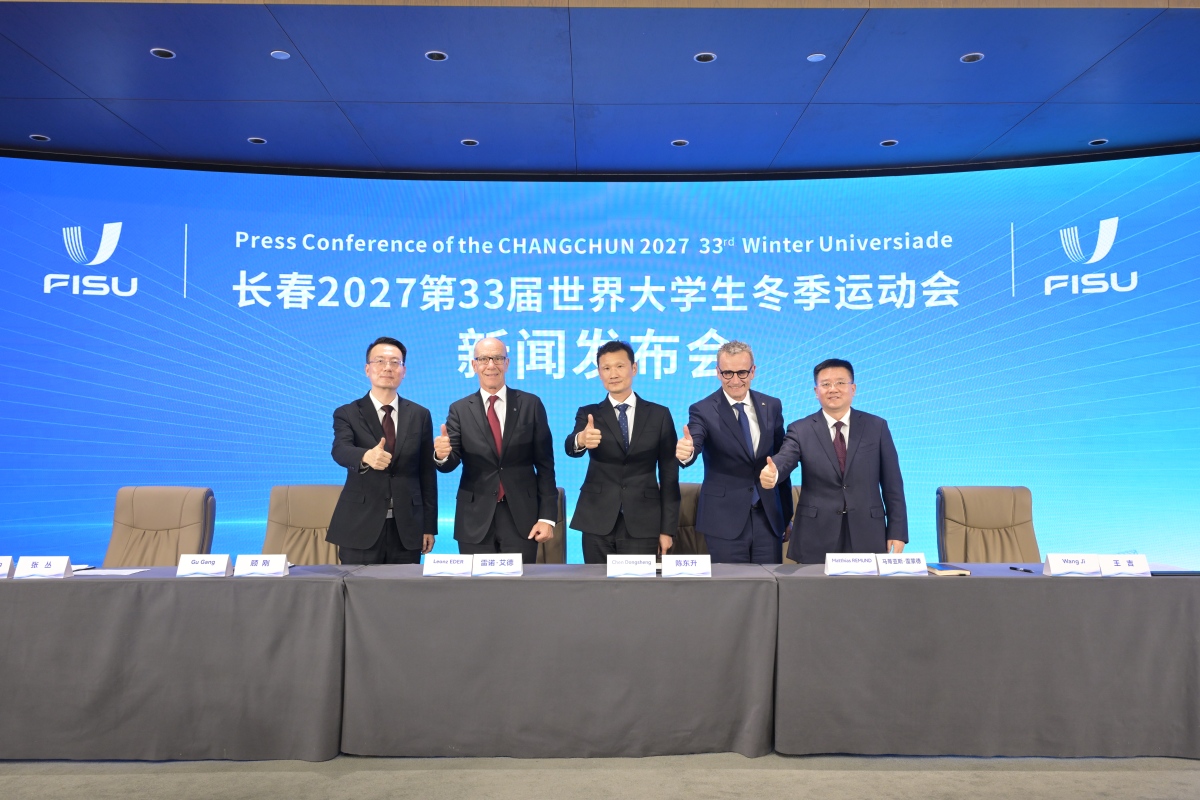
Connecting the World: Rebuilding a Bridge for Consensus in a Fragmented Era
"The Changchun Winter Universiade serves as a global bridge in multiple profound ways," Leonz Eder stated bluntly during a video call.
He noted that the value of this bridge is particularly prominent amid the current complex and volatile international environment. First, it directly connects young people. Student-athletes from diverse backgrounds will gather in Changchun, sharing stories, traditions, and dreams. The friendships forged through face-to-face interaction represent long-term cross-cultural capital irreplaceable by any online communication. Second, it connects global issues. Centered on global topics such as sustainable development and youth empowerment, the Games will engage participants as partners in shaping the future beyond competition through academic forums and cultural events.
"This proves that sports can be a powerful force for unity," Eder emphasized. The hosting of the Games in Changchun itself sends a strong signal—approved by President Xi Jinping, it not only highlights China's commitment to youth sports but also reaffirms, following the Beijing Winter Olympics, China's steadfast pledge as a responsible global power willing and able to host such international platforms.
Connecting Innovation: The Evolution of Games Where Tradition Meets Modernity
A successful world-class event honors tradition while courageously leading change. Asked about the unique features of the Changchun Winter Universiade, Leonz Eder highlighted a "pleasant surprise."
"The inclusion of cross-country running in this edition is a strategic innovation with deep historical roots," he explained. Originating in winter, cross-country running naturally aligns with winter sports. This innovation is not arbitrary but "rooted in heritage." More importantly, it positions the Changchun Winter Universiade at the forefront of trends—the World Athletics Federation is currently discussing its inclusion in the Winter Olympics with the International Olympic Committee.
This innovation reflects FISU's forward-looking vision for the Games' development. Eder believes it allows future host cities to explore more winter-inspired sports, diversifying and energizing the Universiade's event lineup. In the long run, this "open innovation while preserving winter sports' core" is key to maintaining the Universiade's appeal.
Connecting People and Values: Cultivating "Whole Persons" On and Off the Field
If connecting the world represents horizontal breadth, integrating sports with education embodies vertical depth—this, in Eder's view, is the soul distinguishing the Universiade from other events.
"The 'integration of sports and education' is more relevant than ever in today's world," he stressed. Sports foster discipline, teamwork, and resilience—core qualities untaught in classrooms yet scarce in future societies. The Changchun Winter Universiade serves as a unique platform: student-athletes build character on ice and snow, broaden horizons at academic conferences, and engage in cultural activities.
"The Universiade inspires young people around the world to prioritize their physical and mental well-being. It shows that sports and education are not mutually exclusive but rather complementary," Eder said. The fair play and mutual respect promoted by the Games embody not only sportsmanship but also the foundation of a harmonious society. Beyond faster athletes, the Changchun Winter Universiade aims to nurture "whole persons"—balanced in mind and body, with global perspectives and international competence.
Connecting Present and Future: From "Spectacular Games" to "Sustainable Legacy"
A successful grand event is measured not only by seamless operation during its ten-plus days but also by its enduring impact on the city and people. Leonz Eder outlined FISU's vision across two dimensions: "support" and "legacy."
For immediate support, it is about "teaching to fish." FISU provides detailed technical standards and information system solutions alongside two full-time on-site event managers stationed in Changchun to ensure seamless collaboration with the Organizing Committee.
For future legacy, it requires "systematic planning." Eder clarified that the Changchun Winter Universiade will leave a threefold legacy:
Infrastructure legacy: Renovated venues will serve the public and professional training long-term.
Economic legacy: The Games will boost tourism, employment, and investment, turning "ice and snow" into "mountains of gold and silver."
Spiritual legacy: Inspiring youth participation in winter sports and fostering social responsibility through volunteerism.
"It is crucial to have a comprehensive post-event plan and integrate the event legacy into the city's long-term planning," Eder noted—highlighting the critical transition from "event" to "urban development catalyst."
Connecting China and the World: Synergy Between a Games and a Nation's Winter Sports Era
Zooming out, what does the Changchun Winter Universiade mean for China's "golden age" of winter sports?
Leonz Eder offered an optimistic and grand vision: "The Changchun 2027 Winter Universiade plays a pivotal role in promoting winter sports in China." The Beijing Winter Olympics ignited national passion, and the Changchun Winter Universiade will provide emerging local stars with a world-class stage to compete at home, further solidifying this momentum.
More importantly, the Games will drive regional economic growth, helping Changchun and Jilin City enhance transportation, logistics, and global connectivity—consolidating their status as "winter sports hubs"— "With strategic planning, this is not just a sports event but a catalyst for high-quality urban and regional development."
Eder concluded: "It can create a lasting impact that benefits both the sports community and the local economy for years to come. This is also the significance and value of FISU's existence and its hosting of the Winter Universiade."
Youth as Vessels, Connecting the World and Future
A divided world needs bridges more than ever. In an era of uncertainty, the Changchun Winter Universiade builds bridges of ice and snow; sails on youth; and strives to reconnect a fractured world, overlooked values, and delayed futures. This event is sports' ultimate charm beyond competition—and the most vivid embodiment of the Olympic motto "united" amid ice and snow.
(Reported by LU YE)
Related News:
Watch This | Chengdu: Where Tradition and Trend Collide in the World of Sports




Comment